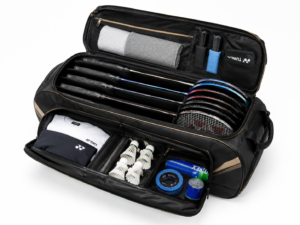
Quality control is one of the most critical factors in badminton bag manufacturing. Even well-designed products can fail in the market if production quality is inconsistent. For sports brands, poor quality leads to returns, negative reviews, and long-term damage to brand reputation.
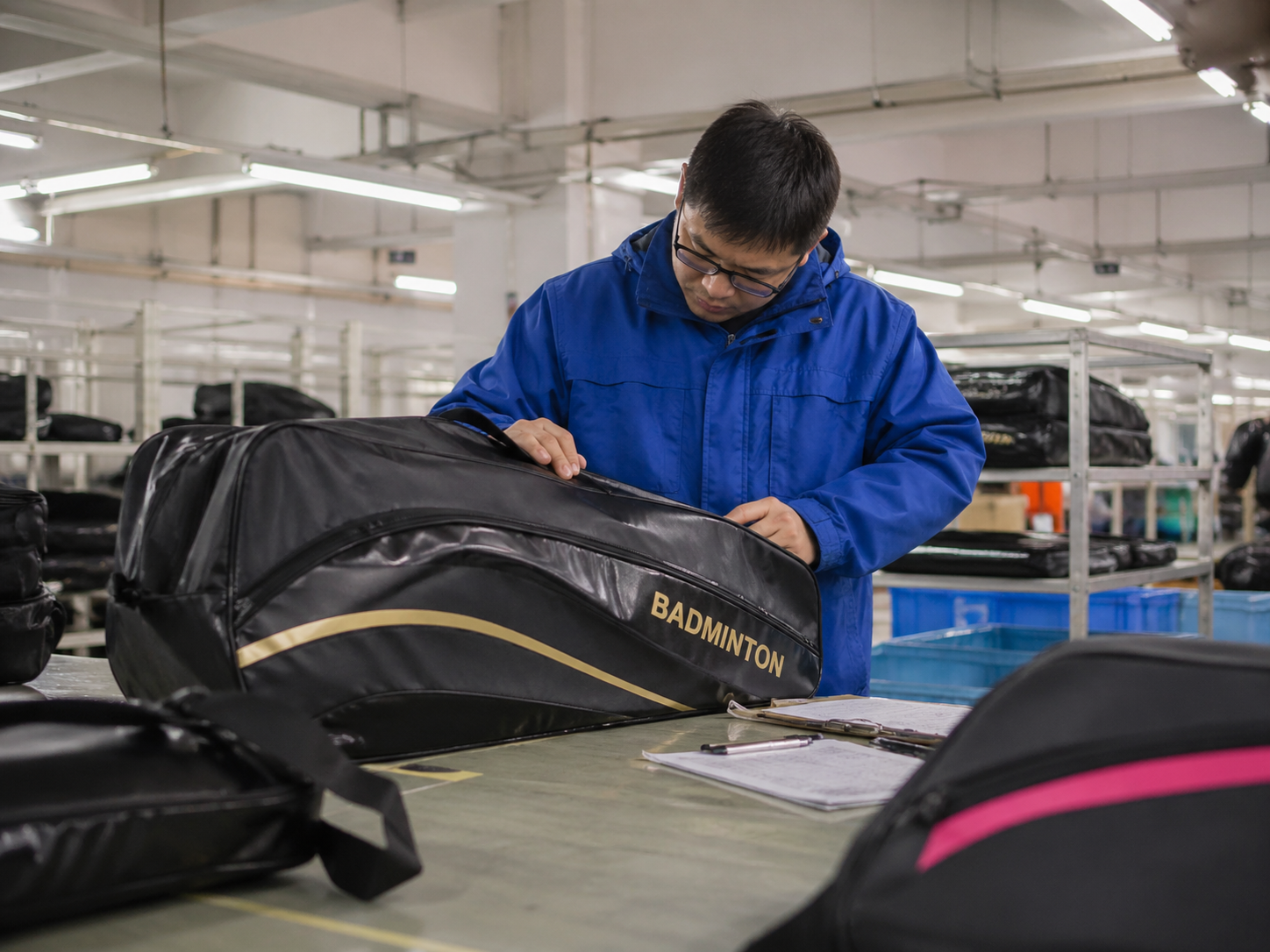
Effective quality control in badminton bag production requires strict material inspection, in-line process monitoring, and final product testing to ensure consistency between samples and bulk orders.
A structured quality management system helps prevent common defects and ensures reliable performance across large production volumes.
What Is the Quality Control Process in Badminton Bag Manufacturing?
Quality control must cover every stage of production.
A complete QC process includes incoming material inspection, in-line production checks, and final inspection before shipment.
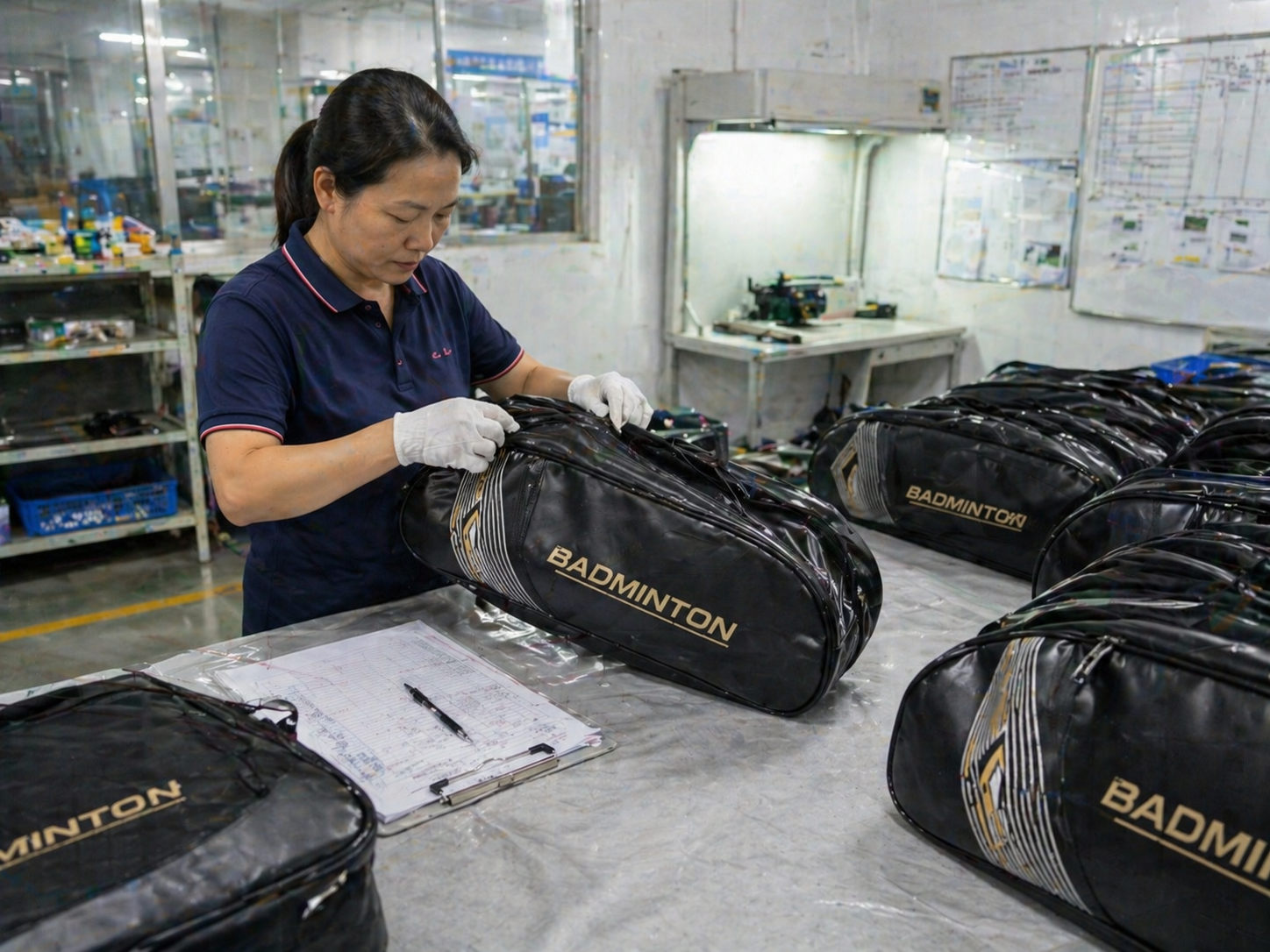
The first stage is material inspection. Fabrics, zippers, and accessories must meet specified standards before entering production. Many quality issues originate from inconsistent raw materials, so this step is essential.
In-line inspection follows during production. This includes checking stitching quality, alignment, and assembly accuracy. Detecting issues early prevents large-scale defects.
Final inspection ensures that finished products meet all requirements. This includes checking appearance, functionality, and packaging.
A structured QC workflow:
| Stage | Key Focus |
|---|---|
| Material inspection | Fabric, zippers, accessories |
| In-line QC | Stitching and assembly |
| Final inspection | Appearance and functionality |
Working with a professional badminton bag manufacturer ensures that these processes are implemented consistently across all production stages.
What Are the Most Common Defects in Badminton Bags?
Understanding common defects helps prevent them.
Typical defects include zipper failure, weak stitching, fabric inconsistency, structural collapse, and poor compartment design.
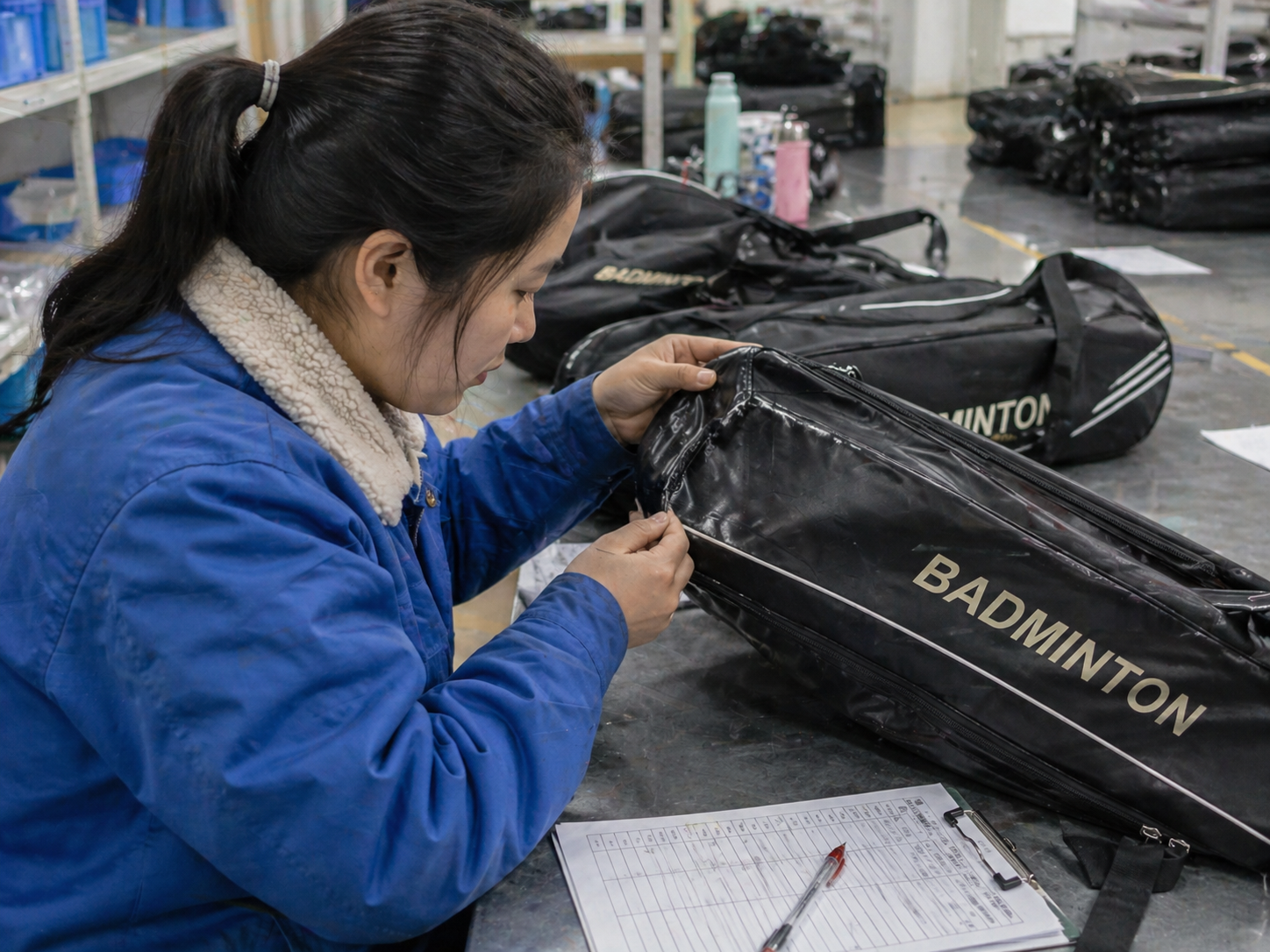
Zipper problems are among the most frequent issues. Low-quality zippers or poor installation can lead to breakage after limited use. Stitching defects, such as loose threads or uneven seams, reduce durability and affect product appearance.
Fabric inconsistency can result in color differences or reduced durability. Structural issues, such as bags not holding shape, often come from insufficient reinforcement.
Another common problem is poor compartment design, which reduces usability even if the product looks acceptable.
A defect overview:
| Defect Type | Cause |
|---|---|
| Zipper failure | Low-quality hardware or weak stitching |
| Stitching issues | Poor workmanship |
| Fabric inconsistency | Material variation |
| Structure collapse | Lack of reinforcement |
| Layout issues | Poor design execution |
A reliable sports bag supplier focuses on preventing these defects through both design optimization and strict QC processes.
What Inspection Standards Should Be Applied to Sports Bags?
Inspection standards define acceptable quality levels.
Standards should cover appearance, functionality, durability, and dimensional accuracy to ensure consistent product quality.
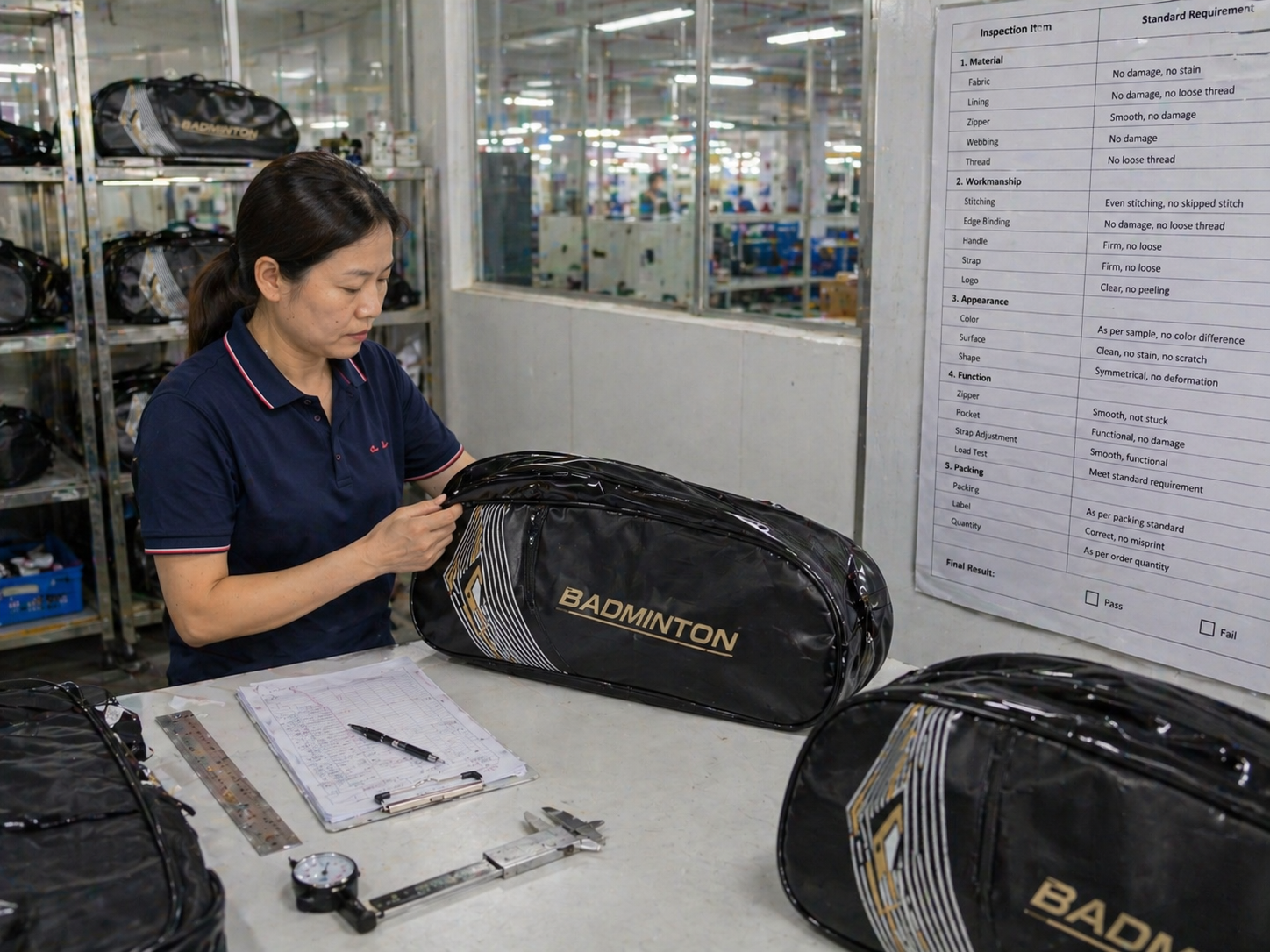
Appearance inspection includes checking for defects such as stains, scratches, or uneven stitching. Functional inspection ensures that zippers operate smoothly and compartments perform as intended.
Durability testing may include load testing, zipper cycle testing, and fabric strength evaluation. Dimensional checks confirm that the product matches specified measurements.
A structured inspection framework:
| Category | Inspection Focus |
|---|---|
| Appearance | Surface and stitching quality |
| Functionality | Zippers and compartments |
| Durability | Load and wear resistance |
| Dimensions | Size accuracy |
Clear inspection standards help ensure consistency between different production batches.
How Can Brands Ensure Consistent Quality in Bulk Production?
Consistency is the main challenge in large-scale manufacturing.
Maintaining consistent quality requires standardized processes, clear specifications, and continuous monitoring throughout production.
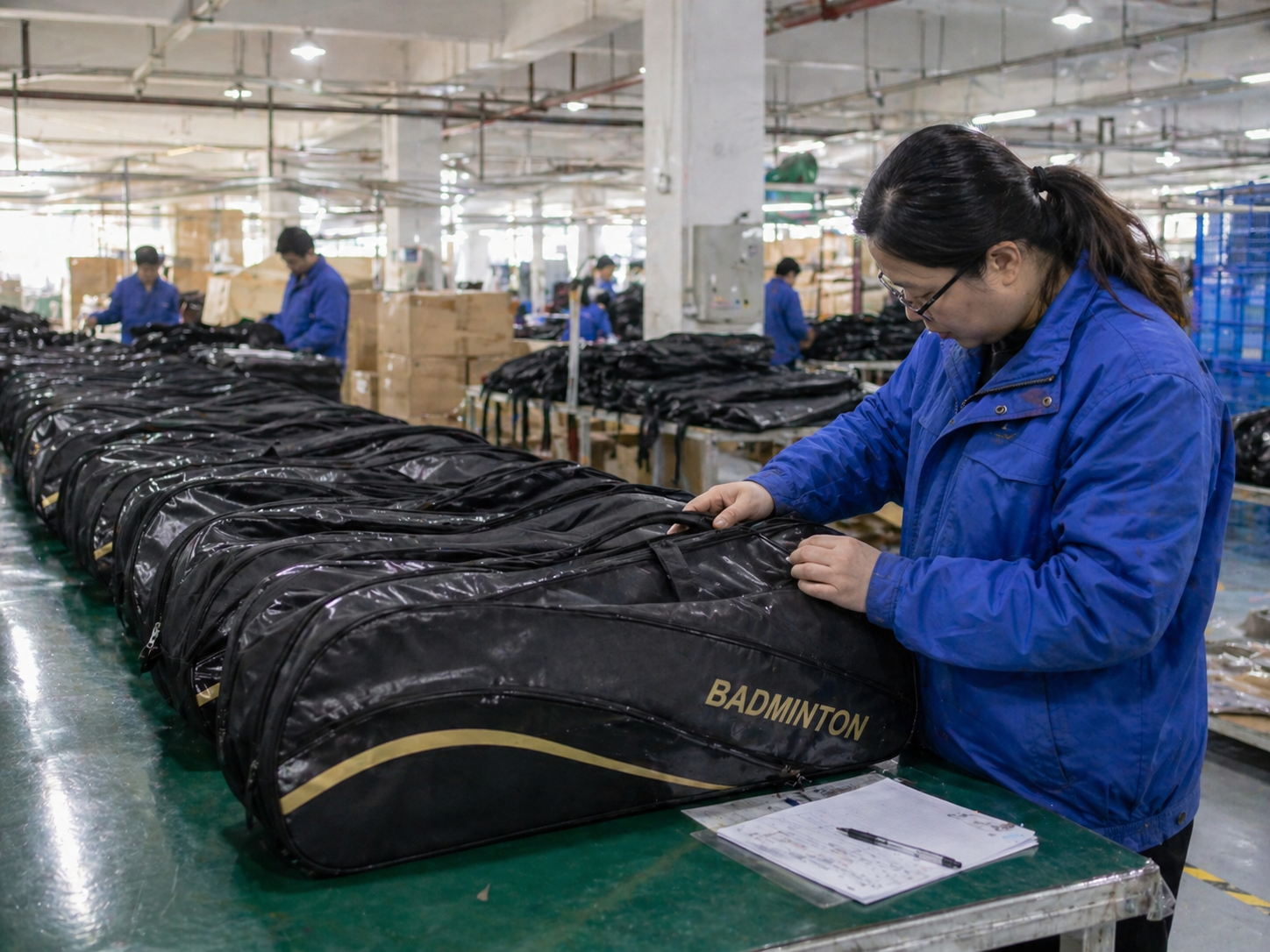
One of the most common problems is the difference between samples and bulk production. This usually happens when production standards are not clearly defined or enforced.
To ensure consistency, brands should provide detailed specifications, including materials, construction methods, and quality requirements. Pre-production samples should be approved before mass production begins.
Regular inspections during production help detect issues early. Third-party inspections can also provide independent verification.
Consistency also depends on stable supply chains. Using the same material suppliers and production processes reduces variation.
How Does Supplier Capability Affect Quality Control?
Supplier capability determines how well quality standards are maintained.
Factories with strong QC systems, experienced workers, and structured processes are more likely to deliver consistent quality.
Experienced factories understand common failure points and implement preventive measures. They also have trained QC teams and clear inspection procedures.
Production organization is another factor. Well-managed factories maintain better workflow control, reducing errors and improving efficiency.
Choosing the right supplier is therefore a key part of quality control strategy.
How Can Quality Issues Be Reduced Through Better Design?
Design plays an important role in preventing defects.
Optimized design reduces stress points, improves durability, and minimizes the risk of production errors.
For example, reinforcing high-stress areas such as handles and zippers reduces the risk of failure. Simplifying complex structures can also improve production consistency.
Proper compartment design ensures usability and prevents issues such as space conflicts or inefficient storage.
Design and production must work together. A well-designed product is easier to manufacture consistently.
How Should Brands Build a Long-Term Quality Control System?
Quality control should be a continuous process.
Long-term quality management requires standardization, regular evaluation, and continuous improvement based on market feedback.
Brands should establish clear quality standards and communicate them to suppliers. Regular audits and performance reviews help ensure compliance.
Feedback from customers should be analyzed to identify recurring issues and improve product design or production processes.
Long-term partnerships with reliable manufacturers also improve consistency and efficiency over time.
Conclusion
Controlling quality in badminton bag production requires a structured approach covering materials, processes, and inspections. Brands that focus on consistency and continuous improvement can reduce defects, improve customer satisfaction, and strengthen long-term competitiveness.