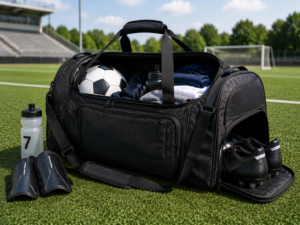
Most tennis players only see the finished product on a retail shelf or product page, but very few understand how much engineering, structural planning, and manufacturing work goes into producing a professional tennis bag.
Modern tennis bags are no longer simple racket carriers. Today’s players expect waterproof protection, thermal racket compartments, reinforced shoulder straps, organized storage systems, durable zipper construction, and long-term reliability during tournament travel and daily training.
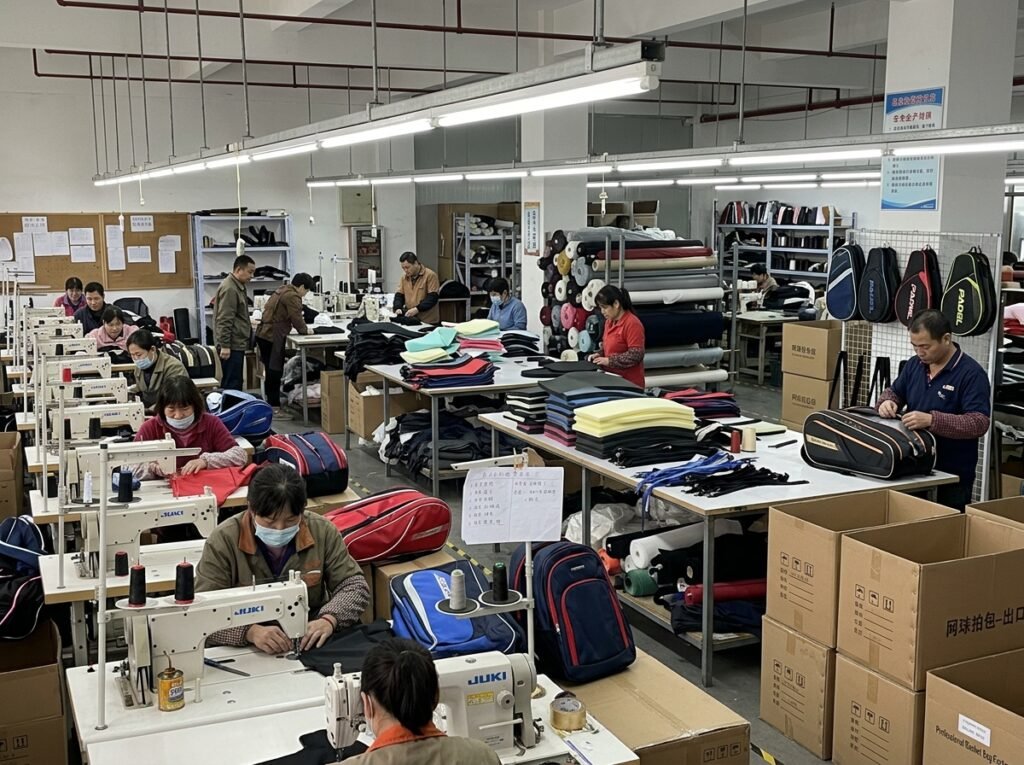
Because of this, professional tennis bag manufacturing has become far more advanced than basic bag production.
A low-quality tennis bag quickly creates problems during real-world use. Weak stitching causes shoulder straps to tear under heavy weight. Cheap zipper systems fail after repeated opening and closing. Poor structural support causes the bag to collapse or lose shape. Low-grade fabrics wear out under friction, sunlight, and moisture exposure.
Professional tennis bag manufacturers therefore focus heavily on durable materials, reinforced structure, waterproof construction, and quality control throughout the entire production process.
This article explains how modern tennis bags are manufactured, how thermal racket protection is added, which materials are commonly used, and why structural reinforcement and quality inspection directly affect long-term product performance.
Tennis Bag Manufacturing Starts With Material Inspection
Before production begins, all raw materials must pass inspection.
Professional sports bag factories carefully inspect:
- Outer fabrics
- Zippers
- Webbing
- Foam padding
- Thermal insulation materials
- Buckles and accessories
- Lining fabrics
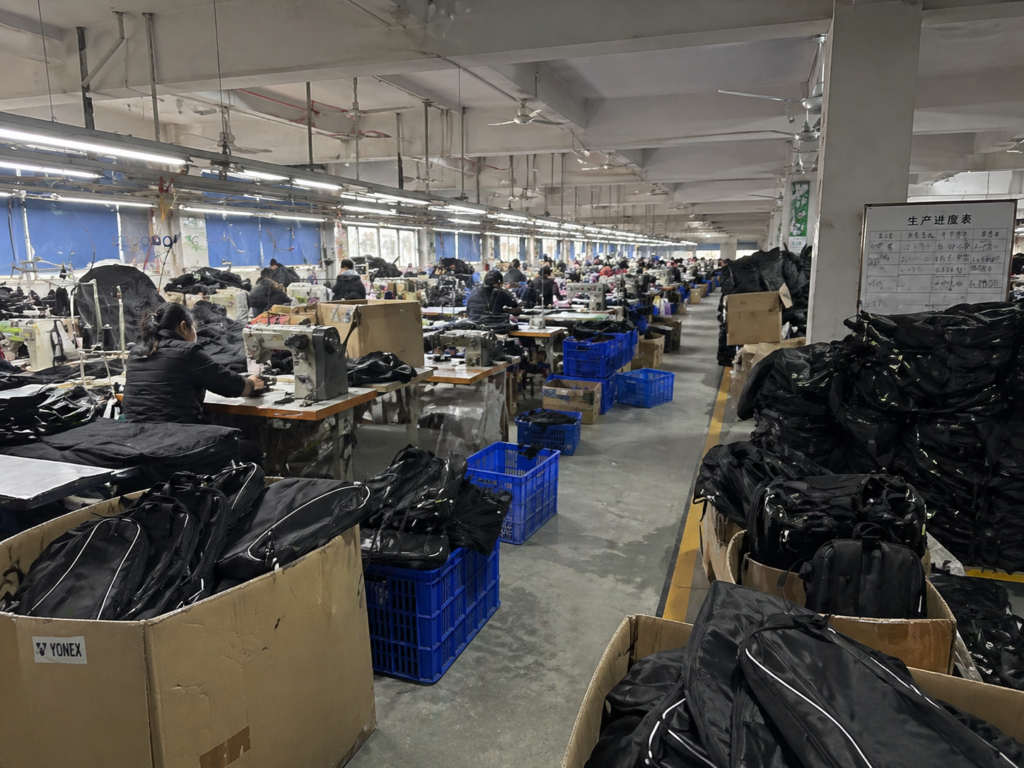
Material quality directly affects durability, waterproof performance, shape retention, and long-term reliability.
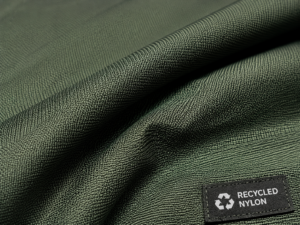
Modern tennis bags commonly use durable and waterproof materials such as:
| Material | Main Advantage | Common Application |
|---|---|---|
| 1680D Ballistic Nylon | Extremely durable & tear-resistant | Premium tennis bags |
| Polyester | Lightweight & cost-effective | Standard sports bags |
| TPU-Coated Fabric | Waterproof protection | Waterproof tennis bags |
| PE Board | Structural reinforcement | Side panels & bottom support |
| Hard Foam Padding | Shape retention & protection | Thermal compartments |
1680D ballistic nylon is especially popular in premium tennis bag manufacturing because it provides high abrasion resistance and excellent durability under heavy tournament use.
Polyester remains widely used because it balances lightweight construction and affordability, while TPU-coated fabrics are increasingly used in waterproof tennis bags because they offer better moisture protection and modern appearance.
Professional manufacturers inspect every batch of fabric before production to ensure color consistency, thickness accuracy, waterproof coating quality, and structural strength.
Design and Pattern Development Determine the Entire Bag Structure
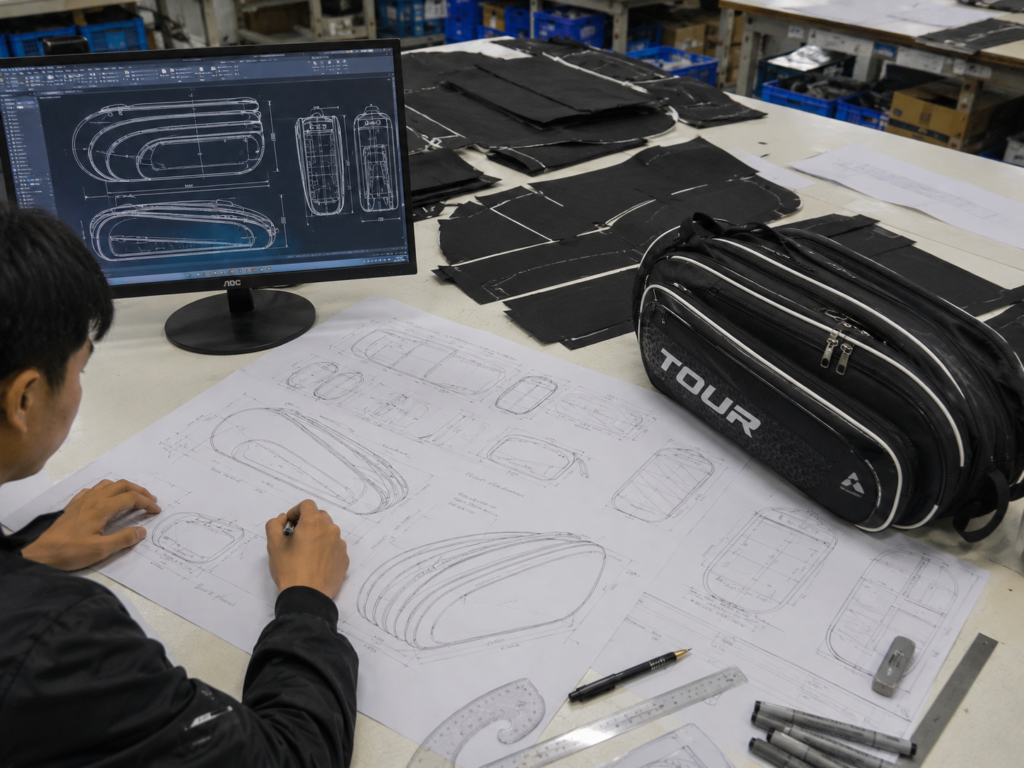
Once materials are approved, the production process moves into design and pattern development.
This stage is one of the most important parts of tennis bag manufacturing because it determines:
- Storage organization
- Weight balance
- Carrying comfort
- Structural stability
- Racket protection
- Waterproof performance
Modern tennis bags are carefully designed around real player usage rather than simple appearance alone.
Professional designers must plan:
- Main racket compartments
- Shoe storage sections
- Accessory pockets
- Thermal racket areas
- Shoulder strap positioning
- Weight distribution
Poor design creates major problems later during real-world use. Without proper structural planning, tennis bags may collapse under heavy weight, create uneven carrying pressure, or become uncomfortable during tournament travel.
Many professional tennis bags therefore include reinforced side panels, PE support boards, and hard foam structure to help the bag maintain shape and stability.
Precision Cutting Is Essential for Manufacturing Accuracy
After the design stage is completed, factories begin precision cutting.
Every panel, lining section, reinforcement layer, and compartment piece must be cut accurately before sewing begins.
Professional sports bag factories often use computerized cutting systems to improve:
- Cutting precision
- Production consistency
- Material efficiency
- Structural alignment
Precision cutting is extremely important because inaccurate panels create problems later during assembly.
Poor cutting accuracy may affect:
- Zipper alignment
- Structural symmetry
- Compartment sizing
- Waterproof performance
- Overall appearance
For custom tennis bag manufacturing, accurate cutting is especially important because logo positioning and compartment consistency must remain uniform across large production runs.
Thermal Racket Compartments Require Specialized Manufacturing
Thermal racket protection has become one of the most important premium features in modern tennis bags.
Inside parked cars or outdoor tournament environments, temperatures rise very quickly. Excessive heat gradually affects:
- String tension
- Grip texture
- Racket consistency
- Overall racket performance
To reduce heat exposure, manufacturers install insulated thermal lining inside dedicated racket compartments.
How Thermal Compartments Are Constructed
Professional thermal racket compartments usually include:
- Silver foil insulation
- Polyester thermal film
- Foam insulation layers
- Multi-layer protective lining
These materials help reduce temperature fluctuation inside the racket compartment and improve equipment protection during outdoor travel.
However, thermal construction is more complicated than standard compartment sewing. Manufacturers must carefully balance:
- Insulation performance
- Weight control
- Flexibility
- Structural stability
Poor thermal construction may create unnecessary bulk while providing limited actual protection.
This is why professional sports bag manufacturers optimize thermal compartment design carefully during development.
Sewing and Reinforcement Directly Affect Long-Term Durability
After all panels and materials are prepared, production moves into sewing and structural assembly.
This stage has one of the biggest impacts on product durability.
Modern tennis bags contain multiple components that must be assembled together accurately, including:
- Main compartments
- Thermal sections
- Shoulder straps
- Shoe pockets
- Accessory storage areas
- Carrying handles
- Waterproof lining sections
Professional factories usually assemble smaller sections first before final bag construction begins.
Reinforced Stitching Is Extremely Important
Certain areas of tennis bags experience much higher stress than others.
These include:
- Shoulder strap connections
- Carrying handles
- Zipper edges
- Bottom corners
- Main compartment seams
Professional manufacturers reinforce these areas using:
- Double stitching
- Reinforced webbing
- Structural foam support
- PE reinforcement layers
Without proper reinforcement, tennis bags may tear or deform during repeated heavy use.
This is why structural integrity is one of the biggest priorities during professional sports bag manufacturing.
Waterproof Construction Involves More Than Waterproof Fabric
Many buyers mistakenly assume waterproof fabric automatically creates a waterproof tennis bag.
In reality, waterproof performance depends on several manufacturing factors working together.
Modern waterproof tennis bags often include:
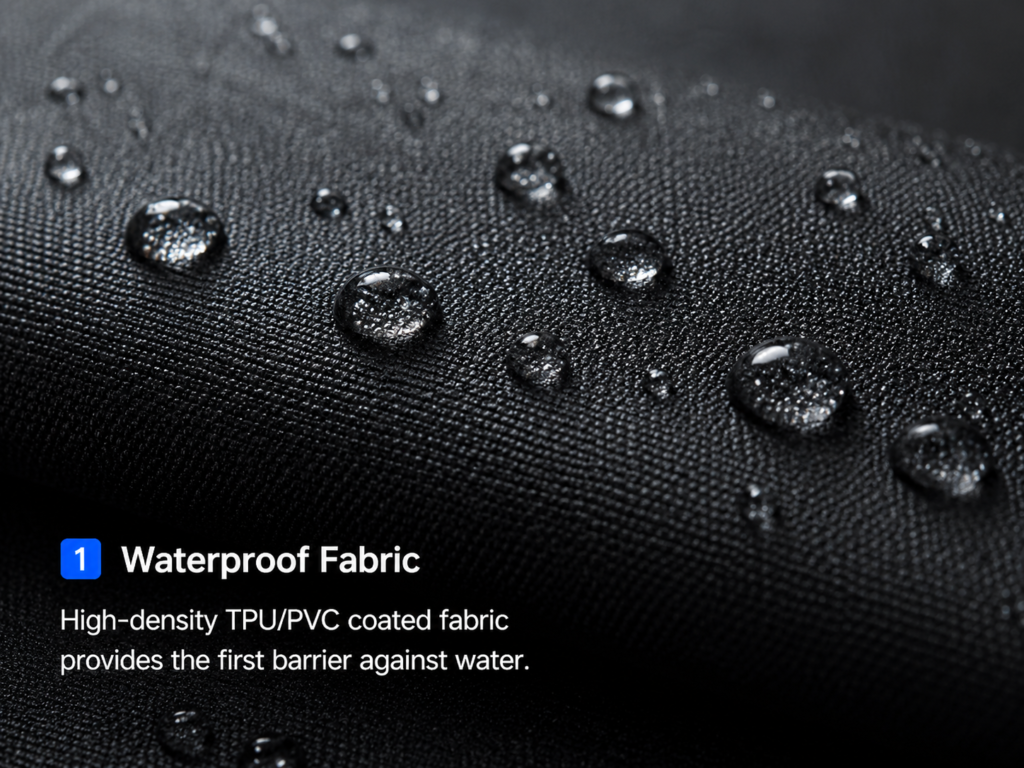
- TPU-coated outer fabrics
- Waterproof zipper systems
- Reinforced seam construction
- Moisture-resistant lining materials
- Water-repellent surface coatings
Seams are especially important because stitching holes can allow water penetration if not reinforced properly.
Professional waterproof tennis bag manufacturing therefore focuses heavily on seam reinforcement and zipper integration.
Outdoor tournament players increasingly prefer waterproof tennis bags because they provide better protection against:
- Rain exposure
- Humid environments
- Wet courts
- Moisture inside vehicles
- Damp training conditions
As sports equipment becomes more expensive, waterproof protection has become one of the most important selling points in modern tennis bag manufacturing.
Heavy-Duty Zipper Systems Are Critical for Sports Bags
Zippers are one of the first components to fail on low-quality sports bags.
Cheap zipper systems often create problems such as:
| Problem | Main Cause |
|---|---|
| Broken zipper teeth | Weak zipper material |
| Water leakage | Poor zipper sealing |
| Misalignment | Inaccurate installation |
| Difficult opening | Low-quality zipper tracks |
| Premature failure | Weak reinforcement stitching |
Professional tennis bag manufacturers therefore use heavy-duty zipper systems for main racket compartments and high-frequency storage sections.
Premium sports bags often include:
- Reinforced zipper stitching
- Waterproof zipper coatings
- Heavy-duty pull systems
- Smooth-glide zipper construction
These details greatly improve long-term durability and user experience.
Modern Tennis Bags Focus Heavily on Storage Organization
Today’s tennis players carry much more than rackets alone.
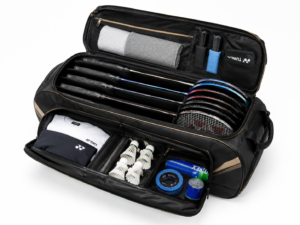
Professional tennis bags now include dedicated storage sections for:
- Shoes
- Towels
- Clothing changes
- Water bottles
- Electronics
- Grips and strings
- Personal accessories
Good storage organization improves convenience significantly during tournaments and travel.
Dedicated Shoe Compartments
Modern tennis bags often include separate shoe compartments to isolate:
- Dirt
- Moisture
- Odor
- Clay dust
from clean clothing and racket storage areas.
Some premium designs also include ventilated shoe tunnels to improve airflow and reduce moisture buildup.
Accessory Organization
Players increasingly expect organized storage for:
- Phones
- Chargers
- Keys
- Wallets
- Tape
- Snacks
- Recovery accessories
This is why modern custom tennis bag manufacturing focuses heavily on intelligent compartment planning.
Logo Printing and Custom Branding
Custom branding plays an important role in private label tennis bag manufacturing.
Sports brands pay close attention to logo appearance because branding strongly affects product positioning and visual identity.
Common Branding Methods
| Branding Method | Appearance | Common Use |
|---|---|---|
| Screen Printing | Clean & affordable | Standard logo branding |
| Embroidery | Premium texture | High-end tennis bags |
| Rubber Patch | Modern & durable | Waterproof sports bags |
| Heat Transfer | Sharp detail | Performance sports products |
Premium sports brands often combine multiple branding methods together for stronger visual impact.
Quality Control Ensures Product Consistency
Professional quality control is one of the biggest differences between reliable tennis bag manufacturers and low-cost suppliers.
Even small production mistakes can create major long-term problems during real-world use.
Professional factories inspect:
- Stitch alignment
- Structural symmetry
- Logo positioning
- Zipper smoothness
- Strap reinforcement
- Thermal lining installation
- Waterproof construction
- Material defects
Quality control ensures that every tennis bag meets consistent production standards before shipment.
For sports brands, product consistency directly affects:
- Customer satisfaction
- Return rates
- Brand reputation
- Long-term durability
This is why professional custom tennis bag manufacturers invest heavily in quality inspection systems.
Conclusion
Modern tennis bag manufacturing involves much more than simple sewing. Today’s players expect waterproof protection, thermal racket compartments, reinforced shoulder straps, organized storage systems, durable zipper construction, and long-term structural reliability from every tennis bag they use.
Material selection, structural reinforcement, waterproof construction, thermal insulation, zipper quality, and quality control standards all directly affect how a tennis bag performs during real-world use.
As player expectations continue increasing, professional tennis bag manufacturers must focus heavily on durability, comfort, organization, and equipment protection instead of appearance alone.
For sports brands, retailers, and private label buyers, working with an experienced custom tennis bag manufacturer can significantly improve product quality, customer satisfaction, and long-term competitiveness in the growing sports bag market.