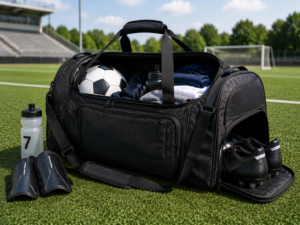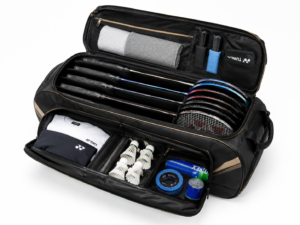
If you’re choosing between a pickleball bag and a tennis bag, the difference goes beyond the name on the label. While both are designed to carry rackets or paddles, balls, apparel, and personal essentials, their dimensions, storage layouts, and sport-specific features are built around different types of equipment.
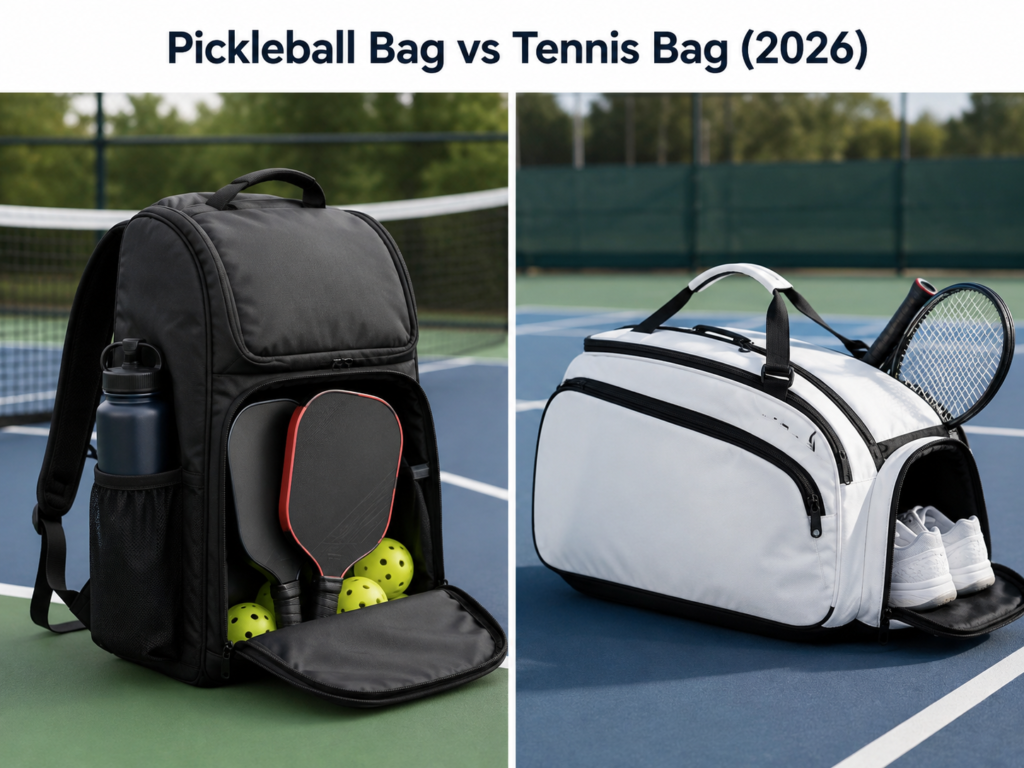
Pickleball paddles are generally shorter and more compact than tennis rackets, which allows pickleball bags to prioritize convenient storage and easy court-side access. Tennis bags, by comparison, are typically designed around longer rackets and often provide larger dedicated compartments for carrying multiple rackets and additional gear. Understanding these design differences can help you avoid buying a bag that is unnecessarily bulky or poorly suited to your equipment.
In this pickleball bag vs tennis bag comparison, we’ll break down five key factors that matter when choosing the right option: equipment fit, protection, court-side convenience, organization, and overall value. Whether you’re new to pickleball, transitioning from tennis, or simply deciding which bag better fits your needs, this guide will help you make a more informed choice.
Key Takeaways
- Bag dimensions reflect the equipment they carry. Pickleball paddles are significantly shorter than tennis racquets, so pickleball bags can use a more compact profile with paddle-specific storage. Tennis bags require longer compartments to accommodate full-size racquets.
- Protection is designed around different priorities. Many premium tennis bags feature insulated or thermo-lined racquet compartments intended to reduce exposure to temperature changes. Pickleball bags may instead include padded paddle sleeves, protective dividers, and insulated compartments for gear, drinks, or other court essentials.
- Pickleball bags often emphasize court-side convenience. Features such as built-in fence hooks, quick-access compartments, upright openings, and separate storage for shoes or damp clothing can make it easier to organize and access gear during play.
- Storage layouts are sport-specific. Pickleball bags commonly include dedicated paddle sleeves, ball storage, bottle pockets, and smaller compartments for valuables. Tennis bags are typically organized around racquet capacity, with options designed to carry anything from a few racquets to larger competitive setups.
- Choose capacity based on how you actually play. Beginners and recreational pickleball players usually don’t need an oversized bag. A well-designed sling or backpack can provide enough room for paddles, balls, a water bottle, and personal essentials while remaining lightweight and easy to carry.
Pickleball Bag vs Tennis Bag: Side-by-Side Comparison
Although pickleball bags and tennis bags serve a similar purpose, they are designed around very different equipment dimensions and playing needs. Pickleball bags generally prioritize compact storage, paddle organization, and convenient court-side access, while tennis bags are built around longer racquets and higher equipment capacity.
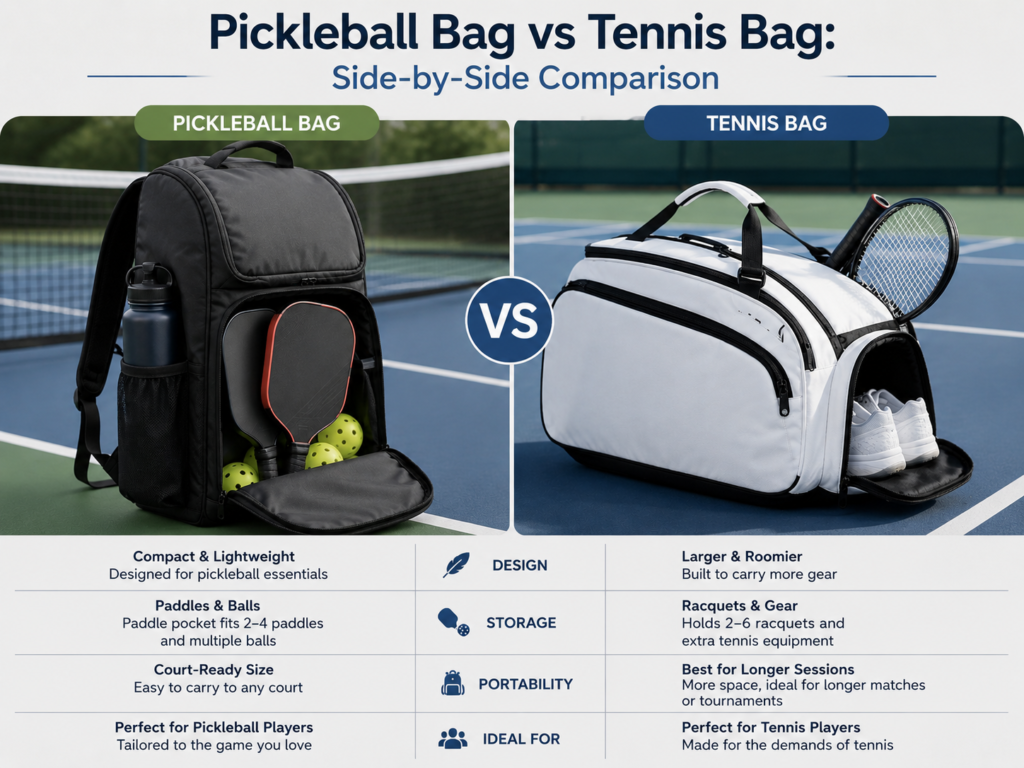
The comparison below highlights the key differences to consider when choosing between a pickleball bag and a tennis bag.
| Feature | Typical Pickleball Bag | Typical Tennis Bag | What to Check Before Buying |
|---|---|---|---|
| Overall Size | Compact sling, backpack, or medium duffel design | Longer backpack or racquet-bag profile designed around full-size tennis racquets | Make sure the overall dimensions suit both your equipment and preferred carrying style |
| Equipment Compartment | Shorter, paddle-specific sleeves or compartments | Longer racquet compartments with additional space around pickleball paddles | Compare internal dimensions with the length and width of your paddles or racquets |
| Equipment Capacity | Commonly holds 2–4 paddles; larger models may accommodate 6 or more | Available in a wide range of capacities, from a few racquets to large tournament configurations | Choose capacity based on the amount of equipment you regularly carry |
| Thermal Protection | May include insulated paddle sleeves or separate insulated storage | Premium models often feature thermo-lined racquet compartments | Check whether insulation is designed for equipment, beverages, or both |
| Shoe & Wet Storage | Separate shoe compartments and wet/dry sections are common on larger models | Frequently available on mid-range and premium tennis bags | Look for ventilation and separation from clean clothing and equipment |
| Court-Side Convenience | Fence hooks, quick-access pockets, and upright-access designs are common | Some models include hanging features, while larger racquet bags are often designed to rest horizontally | Consider how and where you normally store your bag during play |
| Organization | Paddle sleeves, ball storage, bottle pockets, and valuables compartments | Multiple large racquet chambers combined with accessory pockets | Look for dedicated storage for your phone, keys, eyewear, balls, and other essentials |
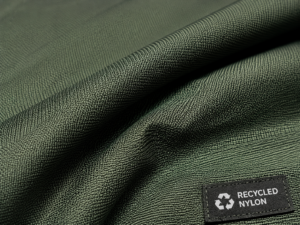
| Materials & Construction | Commonly made from durable polyester or nylon with water-resistant finishes | Similar performance fabrics, with premium models sometimes adding reinforced or molded panels | Evaluate fabric quality, stitching, zipper construction, and reinforced stress points |
| Empty Weight | Often lighter because of the smaller overall footprint | Larger multi-racquet bags can be heavier even before equipment is added | Consider a lightweight design if you regularly walk, cycle, or commute to the court |
| Price Range | Entry-level slings and backpacks are generally more affordable; premium tournament bags cost more | Prices typically increase with racquet capacity, insulation, materials, and brand positioning | Compare features and usable capacity rather than choosing by price alone |
| Cross-Sport Use | Well suited to pickleball but often too short for tennis racquets | Can often carry pickleball equipment, although the extra length may create unused space | If you play both sports, check compartment dimensions and internal organization carefully |
The biggest difference comes down to equipment geometry and intended use. A pickleball bag is usually the more practical choice for players who primarily carry paddles, balls, court shoes, and personal accessories. Its compact dimensions and paddle-focused organization can make everyday trips to the court easier and more efficient.
A tennis bag provides more length and, in many cases, greater overall capacity. This can be useful for players carrying multiple racquets or for athletes who participate in both sports. However, using a large tennis bag exclusively for pickleball may mean carrying unnecessary bulk and having more internal space than you actually need.
Note: Bag dimensions, capacities, materials, features, and prices vary by manufacturer and model. Product specifications can also change over time, so always check the latest information from the manufacturer or retailer before purchasing.
Organization and Access: Designed Around Different Gear
Good organization is about more than having enough storage space—it should make your equipment easier to pack, protect, and access throughout the day. This is where the design differences between pickleball bags and tennis bags become especially noticeable.
Pickleball bags are typically organized around smaller equipment and quick court-side access. Dedicated paddle sleeves help keep paddles separated, while easy-access pockets provide convenient storage for balls, overgrips, tape, keys, and other frequently used accessories. Many designs also include soft-lined compartments for phones, sunglasses, and other valuables. Because the internal layout follows the shape and size of pickleball equipment, gear is less likely to shift around unnecessarily while the bag is being carried.
Tennis bags, by comparison, are generally built around larger racquet compartments. Their multi-chamber layouts are particularly useful for players carrying several racquets along with balls, footwear, apparel, grips, and other match equipment. This additional capacity is valuable for competitive tennis players, but it can be more space than a recreational pickleball player actually needs.
For players carrying two or three paddles, court shoes, a towel, balls, and a water bottle, a compact pickleball backpack will usually provide a better balance of storage capacity and accessibility. Players carrying multiple tennis racquets or a larger tournament setup may benefit more from the longer, separated compartments of a dedicated tennis bag.
In practical terms, pickleball bags can be thought of as more compact, paddle-oriented alternatives to traditional racquet bags—but the difference is not simply size. Their compartment layouts and access points are increasingly designed around the specific habits and equipment requirements of pickleball players.
Paddle and Racquet Fit: Choosing the Right Level of Protection
Equipment fit is one of the most important factors when comparing a pickleball bag vs tennis bag. A compartment that is too small can place unnecessary pressure on the paddle or zipper, while one that is significantly oversized may allow equipment to move around during transportation.
Pickleball paddles are considerably shorter than standard tennis racquets, allowing manufacturers to design more compact storage compartments around the paddle profile. When choosing a pickleball bag, check that the dedicated compartment comfortably accommodates the full length and width of your paddle—particularly if you use an elongated model. There should be enough clearance for easy insertion and removal without forcing the paddle against the zipper or seams.
Tennis bags require substantially longer compartments because they are designed around full-size racquets. This makes many tennis bags physically capable of carrying pickleball paddles as well, but the additional length can leave unused space and provide a less secure fit unless the compartment includes dividers, padding, or adjustable organization.
Protection also extends beyond basic padding. Higher-end tennis bags may include thermo-lined or insulated racquet compartments designed to reduce direct exposure to temperature changes. This can be particularly relevant to tennis players because strings and racquet setups may be affected by environmental conditions.
Pickleball bags may also feature insulated or thermal-lined compartments, but their intended purpose varies by design. Some are specifically intended for paddle storage, while others function as insulated sections for water bottles, beverages, or snacks. If thermal protection is important to you, check the product specifications carefully rather than assuming every insulated compartment serves the same purpose.
Ultimately, the best protection comes from a combination of proper equipment fit, adequate padding, durable materials, secure closures, and appropriate compartment design.
Court-Side Convenience: Small Features That Make a Big Difference
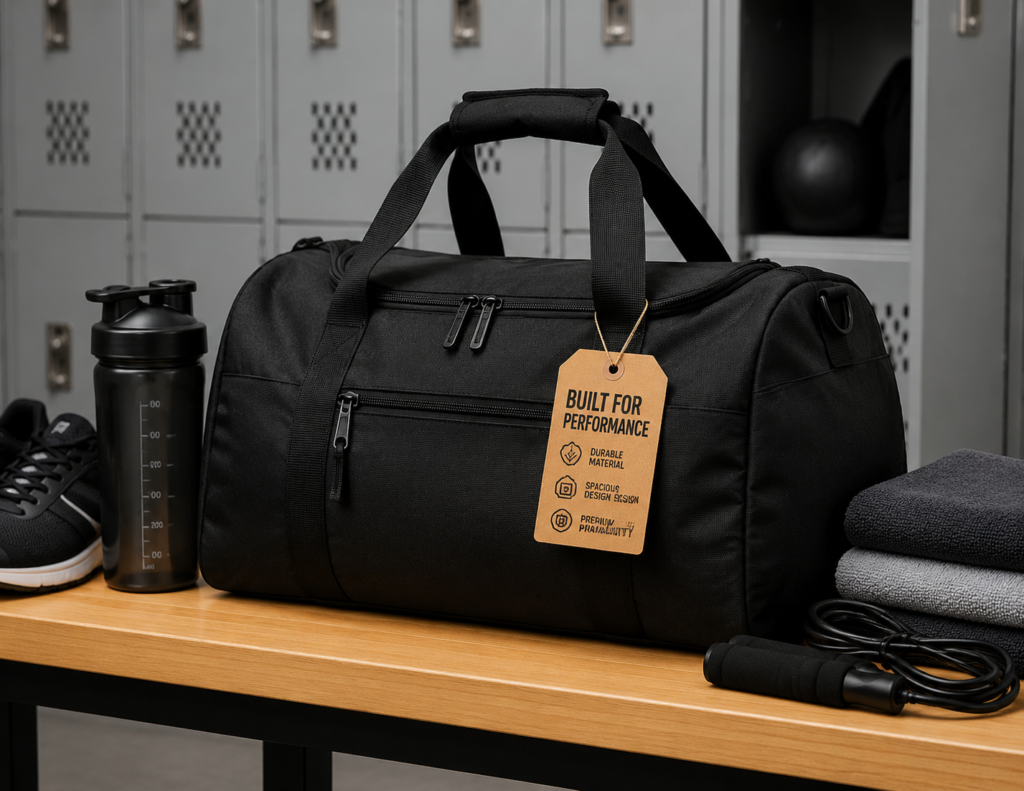
Storage capacity matters when packing your gear, but convenience matters once you arrive at the court. Pickleball bags often place greater emphasis on features designed specifically for frequent court-side access.
A built-in fence hook or hanging system, for example, allows the bag to stay off the ground while keeping equipment within easy reach. Quick-access pockets make it easier to grab balls, grips, towels, or personal items between games without opening the main compartment. Some backpacks are also designed to remain relatively upright, helping players access their gear without unloading the entire bag.
Separate shoe compartments are another useful feature, particularly when they include ventilation. Combined with dedicated wet/dry storage, these compartments can help separate used footwear, damp towels, and clothing from clean gear, paddles, electronics, and personal items.
Tennis bags can certainly offer many of the same features, especially in premium backpacks and tournament-oriented models. However, their primary design objective is generally to provide sufficient length, capacity, and protection for tennis racquets. Pickleball bags have more freedom to prioritize compact organization and quick access because they do not need to accommodate the same racquet dimensions.
For recreational and beginner pickleball players, features such as fence hooks, ventilated shoe storage, quick-access pockets, dedicated paddle compartments, and wet/dry separation may ultimately provide more everyday value than simply choosing the largest bag available.
Carry Comfort and Ergonomics: What Matters on the Move
A bag that feels comfortable in the store can feel very different once it is loaded with paddles or racquets, shoes, balls, water, and clothing. If you regularly walk, cycle, or use public transportation to reach the court, empty weight, strap design, and overall weight distribution deserve just as much attention as storage capacity.
Pickleball backpacks generally have a smaller footprint, which can help keep the load closer to your body. Look for padded, adjustable shoulder straps, breathable back panels, and balanced compartment placement. These features can make a noticeable difference when carrying your gear for longer periods or riding a bike to the court.
Larger tennis bags are designed to distribute heavier equipment loads across longer compartments. Backpack-style straps, reinforced carry handles, and—in some models—additional stabilization straps can make it easier to transport several racquets and a full match-day setup. The trade-off is greater overall size and potentially more weight.
For short trips and everyday pickleball sessions, a compact, lightweight backpack is often the more practical option. If you routinely carry several racquets, extra apparel, footwear, and tournament equipment, the additional capacity of a tennis bag may justify the extra bulk.
Price and Value: Pay for the Features You’ll Actually Use
Price differences between pickleball and tennis bags are influenced by more than size. Materials, construction quality, capacity, padding, insulation, ventilation, hardware, zipper quality, and brand positioning can all affect the final cost.
Entry-level pickleball slings and backpacks are often among the most affordable options. They typically provide enough room for a few paddles, balls, a water bottle, and personal essentials, making them suitable for beginners and recreational players.
Moving into the mid-range usually adds better organization and comfort features, such as dedicated paddle compartments, ventilated shoe storage, improved padding, wet/dry separation, insulated pockets, and more durable fabrics. Premium pickleball bags may add higher-grade materials, larger capacities, reinforced construction, and more specialized storage for frequent or competitive players.
Tennis bags follow a similar progression, although racquet capacity is a major price driver. Smaller backpacks and racquet bags are typically more affordable, while larger 6-, 9-, or tournament-capacity bags may command higher prices due to additional compartments, structural reinforcement, premium materials, and thermo-lined racquet storage.
Rather than choosing a bag based solely on price, consider cost per useful feature. A less expensive bag that fits your equipment properly and includes the storage you use every week may offer better value than a premium model filled with features you rarely need.
Note: Bag prices vary significantly by brand, region, retailer, season, and promotion. Always check current product specifications and pricing before making a purchase.
Which Bag Should You Choose? Common Use Cases
The best choice depends less on which sport has the “better” bag and more on how much equipment you carry, how you travel to the court, and how often you play.
For beginner and recreational pickleball players:
A dedicated pickleball backpack is usually the most practical choice. Look for space for 2–3 paddles, balls, a water bottle, and personal items. A fence hook, separate shoe compartment, and quick-access pockets can add useful convenience without making the bag unnecessarily large.
For frequent tennis players and tournament use:
A larger tennis bag makes more sense when you regularly carry multiple racquets, spare clothing, footwear, balls, grips, and other match equipment. A 6- or 9-racquet configuration can provide useful separation between equipment and personal gear, while thermo-lined compartments may offer additional protection in changing environmental conditions.
For players who enjoy both tennis and pickleball:
You may not need two separate bags. A smaller tennis backpack or racquet bag can often accommodate pickleball paddles along with tennis equipment. However, check the compartment dimensions and internal organization carefully. Because tennis compartments are longer, paddle covers or internal dividers can help limit unnecessary movement.
For budget-conscious beginners:
Start with the essentials rather than buying the largest or most feature-rich option. A compact pickleball sling or backpack that securely carries your paddles, balls, water, and valuables is often enough for regular recreational play. You can always upgrade later if your equipment collection or playing frequency increases.
Quick Buyer Checklist: What to Check Before You Buy
Before choosing between a pickleball bag and a tennis bag, use this checklist to make sure the design matches your equipment and playing routine:
- Check equipment dimensions. Measure your longest paddle or racquet and compare it with the bag’s published dimensions whenever available.
- Choose the right capacity. Think about what you normally carry—not the maximum amount of gear you might carry occasionally.
- Inspect equipment protection. Look for padding, secure sleeves, internal dividers, and reinforced construction where needed.
- Check shoe and wet storage. If you carry court shoes or used clothing, a ventilated or separated compartment can help keep them away from clean equipment.
- Understand thermal features. Confirm whether an insulated compartment is designed for paddles or racquets, beverages, or both.
- Evaluate carrying comfort. For walking, cycling, or commuting, prioritize manageable empty weight, padded straps, ventilation, and balanced weight distribution.
- Consider court-side access. Fence hooks, upright openings, and quick-access accessory pockets can make frequent play more convenient.
- Match features to your budget. Pay for the functions you will regularly use rather than choosing a bag simply because it offers the most features.
A Simple Way to Decide
If you mainly play pickleball and carry a few paddles plus everyday court essentials, choose a pickleball backpack for its compact size, paddle-focused organization, and convenient access.
If you regularly carry multiple tennis racquets or need substantial capacity for tournaments and long match days, choose a tennis bag with enough dedicated racquet storage and appropriate protection.
If you play both sports recreationally, a smaller tennis backpack or multi-purpose racquet bag can be a practical crossover option—as long as your pickleball paddles fit securely and the additional compartment length does not compromise organization.
The goal is simple: choose the smallest bag that comfortably protects, organizes, and carries everything you regularly bring to the court.
Final Thoughts
Choosing between a pickleball bag and a tennis bag comes down to equipment size, storage capacity, protection, and how players use their gear on and off the court. For brands, distributors, and sporting-goods businesses, these differences also create opportunities to develop products for specific player needs and market segments. As a professional pickleball and tennis bag manufacturer, we provide OEM/ODM customization covering bag dimensions, materials, colors, compartment layouts, thermal insulation, hardware, logos, and other functional details. Whether you are developing a new pickleball bag collection, expanding your tennis accessories range, or sourcing customized sports bags for your brand, we can help turn your requirements into practical, market-ready products. Contact us to discuss your custom bag project and manufacturing requirements.