Choosing between a soccer backpack and a soccer duffel bag is not simply a matter of style—it depends on how much gear a player carries and where the bag will be used. A youth player heading to weekly practice may only need space for cleats, shin guards, socks, a water bottle, and a few personal items, while competitive players may carry multiple uniforms, warm-up clothing, towels, recovery gear, and extra footwear. Goalkeepers and coaches often require even more capacity for gloves, protective apparel, balls, cones, training bibs, first-aid supplies, and other equipment.
That is why there is no single soccer bag that works best for every player. The right choice depends on age, equipment volume, carrying distance, training frequency, tournament schedule, and intended use. Storage layout also matters: dedicated cleat compartments, ventilated sections, bottle pockets, and quick-access storage can be just as important as overall capacity.
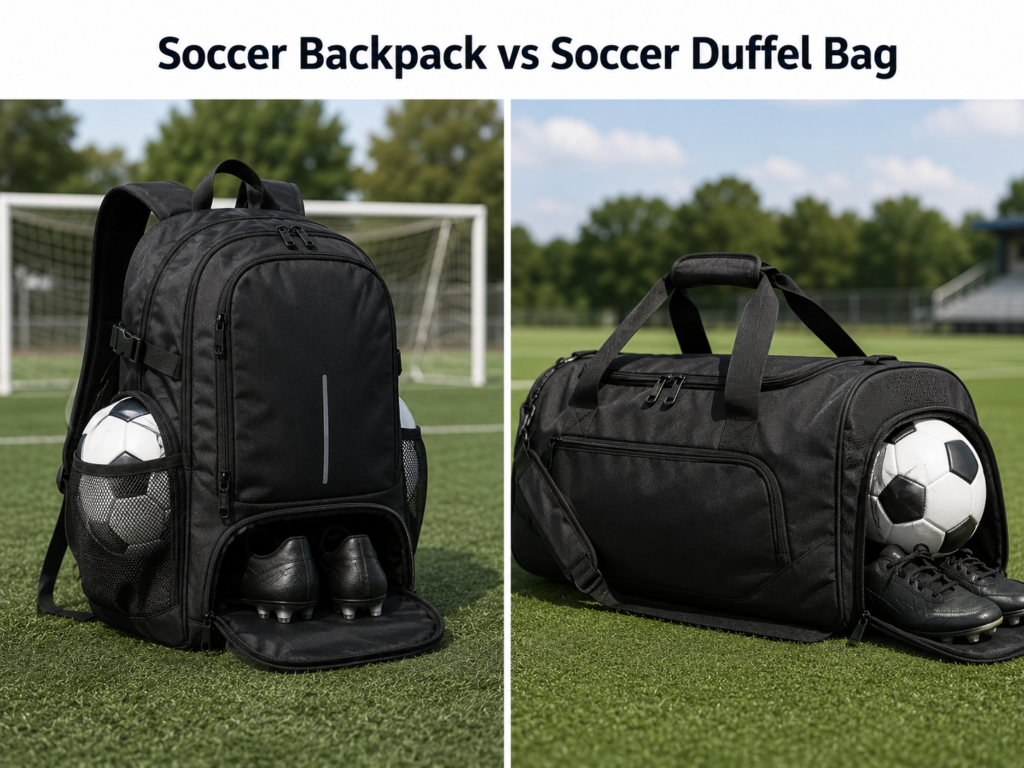
In this soccer backpack vs duffel bag comparison, we’ll look at the key differences in capacity, organization, carrying comfort, equipment access, and ideal use cases. In general, backpacks offer compact organization and hands-free portability for everyday training, while duffel bags provide greater flexibility and open storage for larger equipment loads, tournaments, goalkeepers, coaches, and team use.
Quick Answer: Soccer Backpack or Duffel Bag?
The right choice depends primarily on how much gear you carry, how far you need to carry it, and how the bag will be used. Soccer backpacks are generally better for everyday training and players who value hands-free mobility, while duffel bags provide more flexible capacity for tournaments, goalkeepers, coaches, and larger equipment loads.
| User or Scenario | Recommended Bag | Why It Works |
|---|---|---|
| Youth Soccer Players | Soccer Backpack | Lightweight, easy to manage, and comfortable for carrying personal gear |
| School Practice | Soccer Backpack | Compact design fits basic equipment and works well around lockers and school facilities |
| Walking Between Fields | Soccer Backpack | Two-strap carrying system distributes weight more evenly and keeps both hands free |
| Daily Training | Soccer Backpack | Provides organized storage for cleats, uniforms, shin guards, water, and personal items |
| Tournament Days | Duffel Bag or Large Backpack | Extra capacity accommodates spare uniforms, towels, footwear, snacks, and wet gear |
| Goalkeepers | Soccer Duffel Bag | Larger main compartment provides more room for gloves, padded apparel, and backup equipment |
| Coaches | Duffel or Team Equipment Bag | Better suited to carrying cones, training bibs, balls, first-aid supplies, and coaching accessories |
| Clubs & Sports Brands | Both | Different player groups and use cases require different capacities and carrying systems |
For most players, a soccer backpack is the more practical everyday option because it combines organization, portability, and hands-free carrying. A soccer duffel bag, however, becomes more useful when capacity is the priority—especially for tournaments, goalkeepers, coaches, and players carrying additional clothing or equipment.
For soccer clubs, academies, retailers, and sports brands, offering both formats can also make sense. A well-planned soccer bag collection may include compact backpacks for youth players, larger backpacks or duffels for competitive players, goalkeeper bags, separate cleat bags, and high-capacity equipment bags for coaches and teams. This approach allows different bag designs to address specific user groups rather than relying on a single format for every situation.
What Is a Soccer Backpack?
A soccer backpack is a two-shoulder-strap sports bag designed around the equipment players regularly bring to training and matches. Unlike a general-purpose school backpack, a purpose-built soccer backpack typically combines a main clothing compartment with dedicated storage for footwear, a soccer ball, hydration, and smaller accessories.
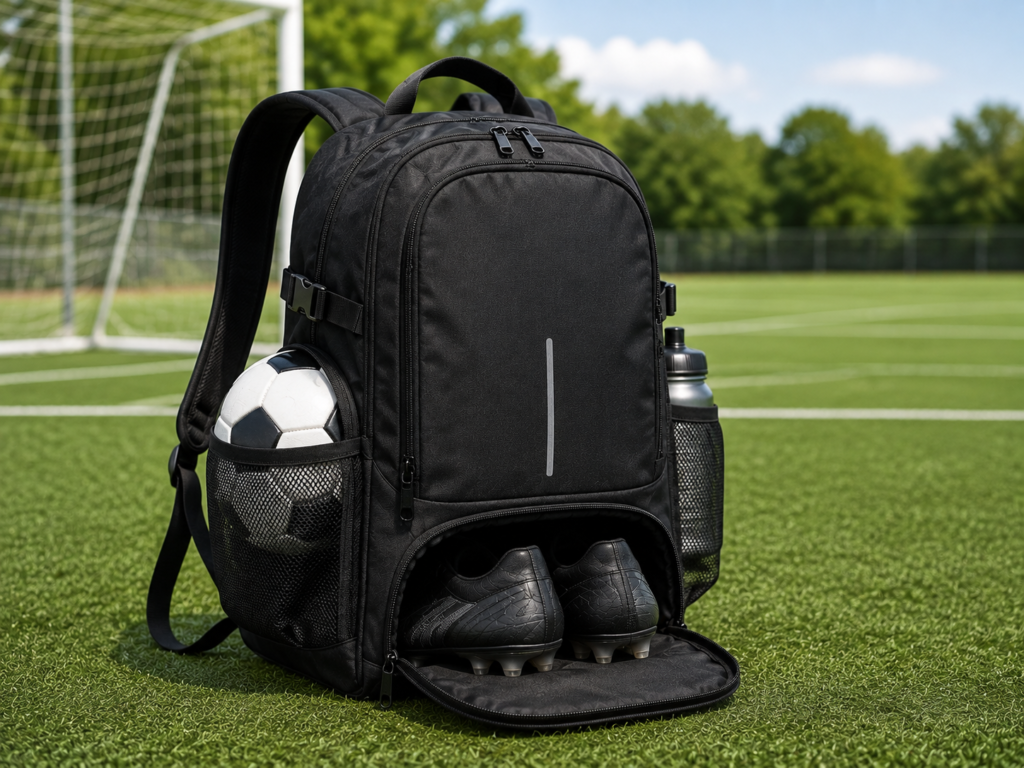
Depending on the design and target player, a soccer backpack may include:
- A spacious main compartment for uniforms, training apparel, and towels
- A separate or ventilated cleat compartment to isolate footwear from clean clothing
- An external mesh ball holder or dedicated soccer ball compartment
- Side pockets for water bottles or sports drinks
- Quick-access storage for shin guards, tape, snacks, and small accessories
- A secure zippered pocket for a phone, keys, wallet, or player identification
- Padded and adjustable shoulder straps for improved carrying comfort
- Breathable back padding for longer walks between fields
- A name panel or customizable area for club logos, player numbers, and branding
The main advantage of a soccer backpack is mobility. Its two-strap design keeps the load close to the body and leaves both hands free, making it particularly convenient for players who walk between fields, commute to training, ride a bicycle, or need to carry their own equipment throughout the day.
This can be especially important for youth players. An oversized bag may become uncomfortable once fully loaded, while a properly proportioned soccer backpack can provide enough room for essential equipment without unnecessary bulk. For younger age groups, factors such as bag dimensions, strap width, back padding, weight distribution, and easy-access zippers can be just as important as total storage capacity.
For daily training, a well-designed soccer backpack therefore offers a practical balance of capacity, organization, carrying comfort, and equipment separation—making it one of the most versatile bag formats for individual players.
Soccer Duffel Bags: Built for More Gear
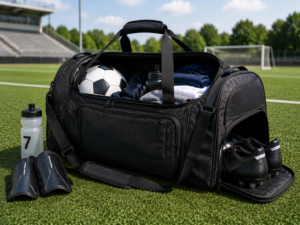
A soccer duffel bag is a high-capacity sports bag designed for players who need more room than a typical backpack can provide. Its horizontal shape and wide zippered opening make it easier to pack and access bulky equipment, while carry handles and an adjustable shoulder strap provide flexible transportation options.
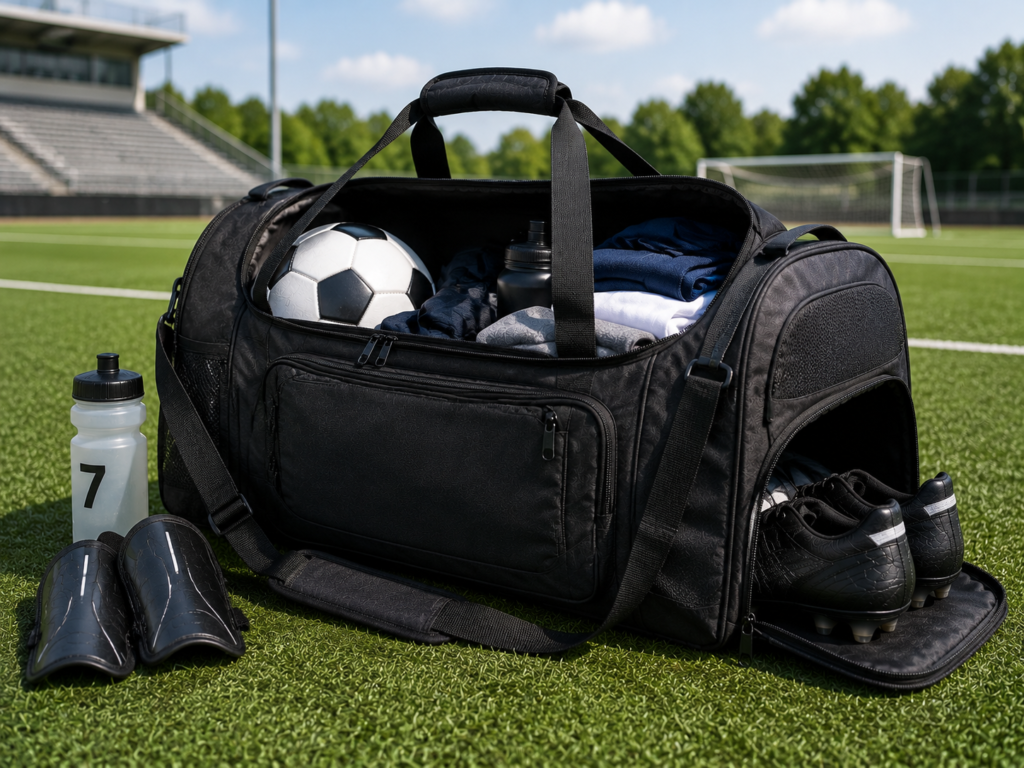
Unlike a soccer backpack, which usually divides gear across several smaller compartments, a duffel typically centers around a spacious main compartment. This makes it particularly useful for tournament players, goalkeepers, coaches, and anyone carrying extra apparel or equipment.
Depending on the intended use, a well-designed soccer duffel may feature:
- A spacious main compartment for uniforms, jackets, towels, and training apparel
- A separate cleat or shoe compartment to keep footwear away from clean gear
- Dedicated wet/dry storage for used clothing and damp towels
- Exterior side pockets for frequently accessed equipment
- Interior mesh or zippered pockets for smaller accessories
- An adjustable and padded shoulder strap for more comfortable carrying
- Reinforced carry handles for heavier equipment loads
- A durable bottom panel for improved abrasion and moisture resistance
- Customizable areas for team logos, player names, numbers, or sponsor branding
- Additional capacity for goalkeeper gloves, spare uniforms, recovery equipment, or team supplies
The biggest advantage of a soccer duffel is flexible storage capacity. Its wider opening makes packing larger items easier, while the open interior can accommodate equipment that may be difficult to fit into a structured backpack. This is especially useful during tournaments and multi-game days when players may need spare uniforms, warm-up clothing, additional footwear, towels, snacks, and recovery items.
The trade-off is portability. Once fully loaded, a large duffel can place more weight on one shoulder or require hand carrying. Without effective internal organization, smaller items can also become difficult to locate inside a large main compartment. For this reason, features such as internal dividers, accessory pockets, shoe compartments, and wet/dry separation can significantly improve the usability of a soccer duffel.
Backpack or Duffel? Comparing the Features That Matter Most
The difference between a soccer backpack and a soccer duffel bag goes well beyond their shape. Each format changes how equipment is packed, carried, separated, and accessed throughout training sessions, match days, and tournaments.
| Comparison Point | Soccer Backpack | Soccer Duffel Bag |
|---|---|---|
| Carrying Method | Two adjustable shoulder straps for hands-free carrying | Carry handles and/or an adjustable shoulder strap |
| Typical User | Youth players, students, and everyday training players | Competitive players, goalkeepers, coaches, and tournament players |
| Storage Capacity | Small to medium | Medium to large |
| Gear Organization | Multiple dedicated pockets help organize smaller personal items | Larger open compartments accommodate bulky or irregular equipment |
| Carrying Comfort | Generally more comfortable for walking longer distances | Comfortable for shorter trips but can become heavier on one side when fully loaded |
| Soccer Ball Storage | Often includes an external mesh holder or dedicated ball compartment | Ball is commonly stored inside the main compartment or a dedicated end section |
| Cleat Compartment | Often positioned at the front or bottom of the bag | Commonly integrated into a side or end compartment |
| Locker Compatibility | Compact profile generally fits lockers more easily | Larger models may require additional storage space |
| Tournament Performance | Suitable when carrying a relatively light tournament setup | Better suited to spare uniforms, towels, footwear, and multi-game equipment |
| Team & Coach Use | Primarily designed for an individual player’s equipment | Larger capacity can accommodate coaching or shared team equipment |
| Youth Player Suitability | Compact dimensions and two-strap carrying make it easier to manage | May become oversized or too heavy if unnecessarily loaded |
| Goalkeeper Equipment | Capacity may be limited for padded apparel and multiple gloves | Larger main compartment is better suited to goalkeeper equipment |
Ultimately, a soccer backpack prioritizes mobility and organized everyday storage, while a soccer duffel prioritizes capacity and packing flexibility. Players who regularly walk between fields or carry a relatively small amount of personal equipment may prefer a backpack. Those who need room for additional uniforms, goalkeeper gear, tournament supplies, or bulky clothing are more likely to benefit from a duffel.
The better option is therefore not necessarily the larger bag—it is the design that provides the right balance of capacity, organization, carrying comfort, and equipment access for the player’s actual routine.
Why Backpacks Make Sense for Youth Soccer
For most youth soccer players, a backpack offers the best combination of comfort, organization, and manageable capacity. Younger players typically carry a relatively simple equipment setup—cleats, shin guards, socks, a water bottle, a uniform, and perhaps a small snack—so there is rarely a need for an oversized bag.
A two-strap backpack distributes the load across both shoulders and keeps the player’s hands free, making it easier to walk from the parking area to the field or move between training locations. Its compact structure also encourages players to carry only what they actually need.
Organization is another important advantage. Dedicated compartments help younger players develop a consistent packing routine: cleats stay in the shoe section, hydration goes in the bottle pocket, and smaller accessories remain easy to locate. Separate storage for used socks or damp clothing can also help keep clean gear organized after practice.
For youth clubs and academies, practical features such as a ventilated cleat compartment, durable bottle pocket, easy-to-use zippers, padded shoulder straps, and a player name or number panel can add more everyday value than simply increasing bag capacity.
Teen and Adult Players: Match the Bag to the Routine
For teenage and adult players, the choice becomes more dependent on training schedule, equipment volume, and travel habits. Both backpacks and duffels can work well, but they solve different carrying needs.
A soccer backpack remains a strong option for players who travel light, walk significant distances, commute from school or work, or want their equipment divided into dedicated compartments. Its compact profile also makes it easier to store in lockers, vehicles, and crowded changing areas.
A duffel becomes more practical as the equipment load increases. Players who bring spare clothing, multiple footwear options, towels, recovery accessories, warm-up gear, or tournament supplies can benefit from the larger opening and more flexible interior space.
A simple way to decide is to consider three factors: how much equipment you carry, how far you carry it, and how much compartmental organization you need. Choose a backpack when portability is the priority; choose a duffel when additional capacity and packing flexibility matter more.
Goalkeeper Gear Requires More Space and Separation
Goalkeepers have different storage requirements from field players, which often makes a soccer duffel bag the more practical choice. Gloves, padded apparel, towels, additional clothing, and recovery items can quickly consume the available space in a standard player backpack.
Storage separation is particularly important. Goalkeeper gloves should be protected from dirty cleats and other abrasive equipment, while damp gloves and clothing are better kept away from clean apparel and personal items. A larger, well-organized duffel provides enough space to create these separate storage zones without compressing sensitive equipment.
Useful goalkeeper bag features include:
- A spacious main compartment for apparel and protective gear
- A dedicated or protected glove compartment
- Separate wet/dry storage for damp equipment
- A ventilated cleat compartment
- Space for towels and spare clothing
- Accessible hydration storage
- Heavy-duty zippers and reinforced stress points
- A durable, abrasion-resistant bottom panel
A backpack may still be sufficient for younger goalkeepers carrying a lighter setup. As players progress and their equipment requirements increase, however, the additional capacity and compartment flexibility of a duffel generally become more valuable.
Coaches and Clubs Need a Different Storage Strategy
Coaches and team staff carry equipment for an entirely different purpose. Instead of transporting only personal playing gear, they may need to organize training accessories, administrative materials, medical supplies, and shared team equipment throughout a session or tournament.
A coach’s bag may need space for cones, training bibs, whistles, tactical boards, player documents, pumps, tape, first-aid supplies, spare accessories, chargers, and other frequently used items. Larger team bags may also need to accommodate soccer balls, hydration supplies, medical equipment, wet-gear bags, or additional team apparel.
For this reason, duffel bags and dedicated team equipment bags are generally more suitable than standard player backpacks. Wide openings make it easier to load bulky items, while multiple internal and external compartments can help coaches separate equipment by purpose and access frequently used items quickly.
The distinction is straightforward: backpacks are typically optimized around an individual player’s mobility, while duffels and equipment bags are better suited to higher-capacity or shared storage. For clubs, academies, and soccer brands developing a complete bag range, offering different formats for players, goalkeepers, coaches, and team equipment can provide a more practical solution than trying to make one bag serve every user.
Key Soccer Bag Features That Impact Everyday Performance
Choosing between a soccer backpack and a soccer duffel bag is important, but the bag format itself is only one part of the decision. A well-designed backpack can outperform a poorly organized duffel, while a large duffel without practical compartments may create more frustration than convenience.
The most important factor is how well the bag supports a player’s daily routine. Features such as equipment separation, ventilation, accessibility, durability, and carrying comfort often have a greater impact on the overall user experience than the bag shape alone.
When evaluating a soccer bag, consider these essential design features:
Dedicated Shoe Compartment
Soccer cleats are often exposed to grass, mud, turf materials, moisture, and odor. A separate shoe compartment helps keep footwear away from clean uniforms, towels, personal items, and snacks. For players who train frequently, this simple feature can make a major difference in keeping equipment organized.
Ventilated Cleat Storage
A shoe compartment becomes even more effective when combined with ventilation. Airflow helps reduce trapped moisture and unpleasant odors after intense training sessions or wet match conditions. Mesh panels, ventilation openings, and breathable materials can improve overall hygiene and convenience.
Accessible Water Bottle Storage
Hydration is essential during training and matches, especially for younger players. A dedicated side bottle pocket allows players to quickly access water without opening the main compartment or searching through other equipment.
Wet/Dry Gear Separation
After a match, players often carry damp jerseys, sweaty socks, towels, or muddy accessories. A separate wet compartment or removable laundry pouch helps protect clean equipment and makes post-game organization much easier.
Soccer Ball Storage Options
Some soccer backpacks feature external mesh ball holders, while most duffel bags store the ball inside the main compartment or a dedicated section. Neither option is universally better—the right design depends on the player’s routine, available space, and how frequently a ball needs to be carried separately.
Quick-Access Accessory Pockets
Small essentials such as athletic tape, shin guard straps, sunscreen, snacks, keys, and personal electronics should be easy to reach. Well-positioned front or side pockets reduce the need to unpack the entire bag during training or match preparation.
Reinforced Bottom Construction
Soccer bags are frequently placed on grass, artificial turf, benches, locker room floors, dirt, and wet surfaces. A reinforced bottom panel with durable, abrasion-resistant materials can improve the bag’s lifespan and protect equipment from moisture and wear.
Comfortable Carrying System
Comfort depends on the carrying style. Backpacks should include padded, adjustable shoulder straps and breathable back support to improve weight distribution. Duffel bags should feature strong carry handles and a comfortable shoulder strap that can support heavier equipment loads.
Custom Branding and Identification Areas
For youth clubs, academies, and sports organizations, customization features add practical and branding value. Name panels, player number areas, team logo locations, and embroidery zones help prevent mix-ups while creating a more professional team appearance.
For manufacturers, retailers, and soccer brands, these functional details are often what separate an average soccer bag from a high-performing product. The best designs are not simply larger or smaller—they are created around the real needs of players, coaches, and teams.
Final Thoughts: Choosing the Right Soccer Bag for Every Player
There is no universal winner between a soccer backpack and a soccer duffel bag—the best choice depends on the player’s equipment needs, playing habits, and daily routine. Backpacks offer excellent mobility, compact organization, and hands-free comfort for youth players, school training, and everyday practice. Duffel bags provide the additional capacity and flexible storage required for goalkeepers, tournament players, coaches, and team equipment.
For soccer brands, retailers, clubs, and distributors, understanding these differences is essential when developing a successful bag collection. Different players require different solutions, from lightweight training backpacks and cleat bags to high-capacity duffels and customized team equipment bags.
As a professional soccer bag manufacturer, we specialize in OEM and ODM solutions for global sports brands and organizations. From material selection and compartment design to logo customization, color development, functional upgrades, and production support, we help create soccer bags that match specific market requirements and player expectations.
Whether you are launching a new soccer accessories line, expanding your existing product range, or looking for a reliable manufacturing partner, we can help transform your ideas into durable, practical, and market-ready soccer bag solutions.