A racket bag may appear water-resistant online, but not every bag can truly protect your gear during rain, tournament travel, or outdoor training. Poor-quality fabrics, weak stitching, and low-grade zippers can allow moisture to enter the bag and damage expensive rackets, strings, shoes, and accessories.
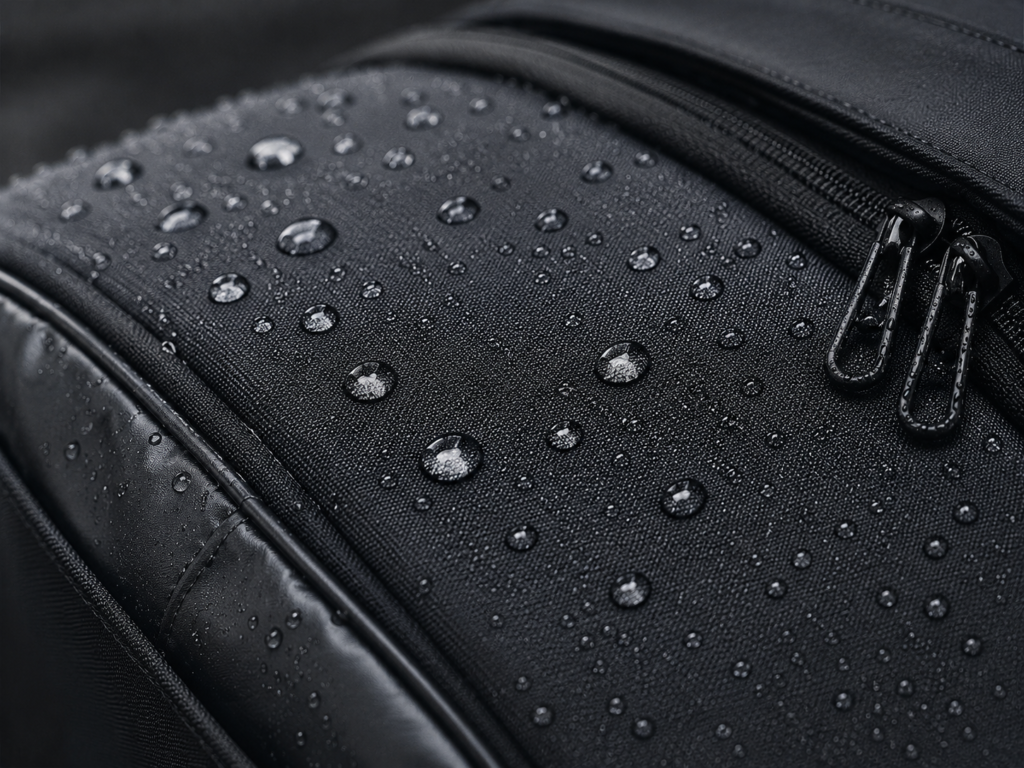
To identify whether a racket bag is truly waterproof, you need to examine the materials, fabric coatings, zipper design, seam construction, and overall manufacturing quality. Professional waterproof racket bags are typically made with high-density polyester, TPU-coated fabrics, reinforced stitching, and water-resistant compartments designed for long-term sports use.
For buyers sourcing tennis racket bags, badminton racket bags, pickleball paddle bags, or custom sports bags, understanding waterproof construction is important when selecting reliable products for professional players, sports brands, clubs, and retail markets. backpacks, understanding waterproof construction is important before starting OEM or ODM production.
Why Does Waterproof Performance Matter for Racket Bags?
Many players carry expensive rackets, shoes, electronics, towels, and clothing inside their racket bags. If the bag leaks during rain or travel, moisture can damage the equipment very quickly.
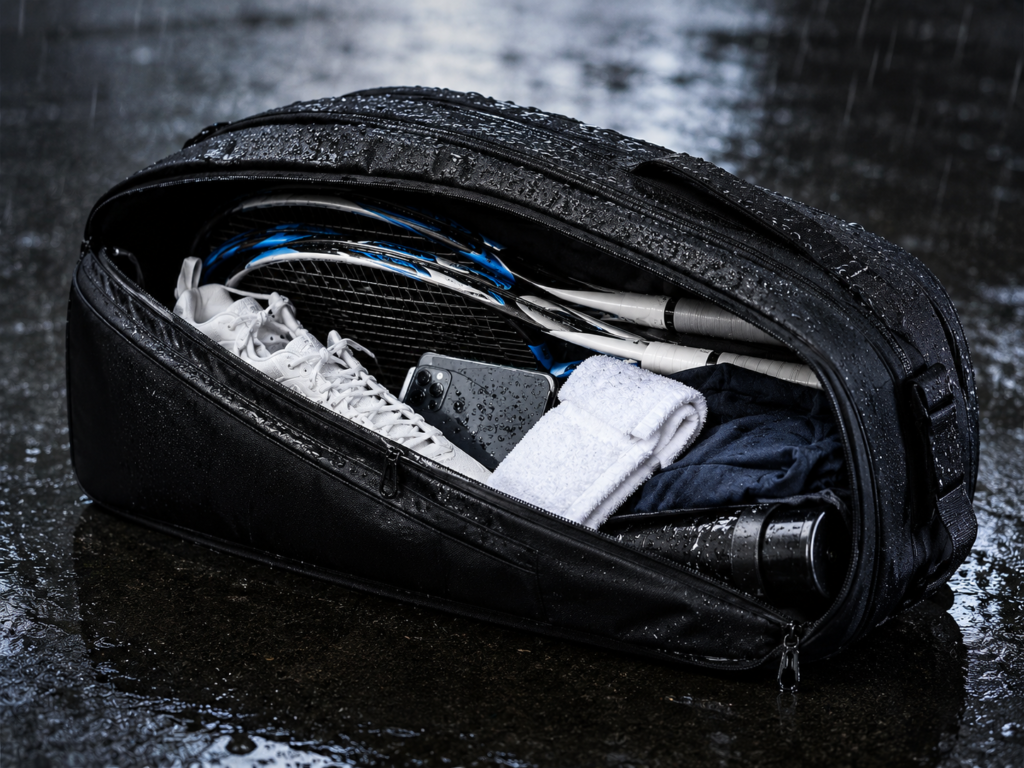
Waterproof racket bags help protect sports gear from rain, moisture, dirt, and outdoor conditions while improving product durability and user experience.
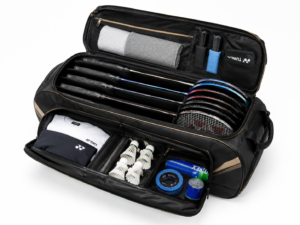
Modern racket bags are no longer simple storage products. Many sports brands now want racket bags with multiple compartments, shoe pockets, laptop sections, thermal insulation, and waterproof construction.
For outdoor sports users, waterproof performance becomes even more important during:
- Outdoor training
- Daily commuting
- Air travel
- Cycling to courts
- Wet weather tournaments
From a custom bag manufacturer perspective, waterproof quality also affects brand reputation. If a racket bag starts leaking after a short period of use, customers often blame the brand instead of the factory.
This is why professional OEM bag manufacturers focus on waterproof material selection, reinforced stitching, seam sealing, and zipper quality during production.
Different sports markets require different waterproof levels.
For example:
| Product Type | Waterproof Requirement |
|---|---|
| Entry-level racket bag | Light water resistance |
| Professional tennis bag | Medium waterproof protection |
| Outdoor sports backpack | High waterproof performance |
| Waterproof dry bag | Full waterproof structure |
Factories producing custom racket bags usually recommend different waterproof solutions based on the customer’s market positioning and budget.
What Fabrics Are Commonly Used for Waterproof Racket Bags?
Some suppliers advertise waterproof racket bags but only apply low-cost coating on ordinary fabric. Over time, these coatings may peel or crack.
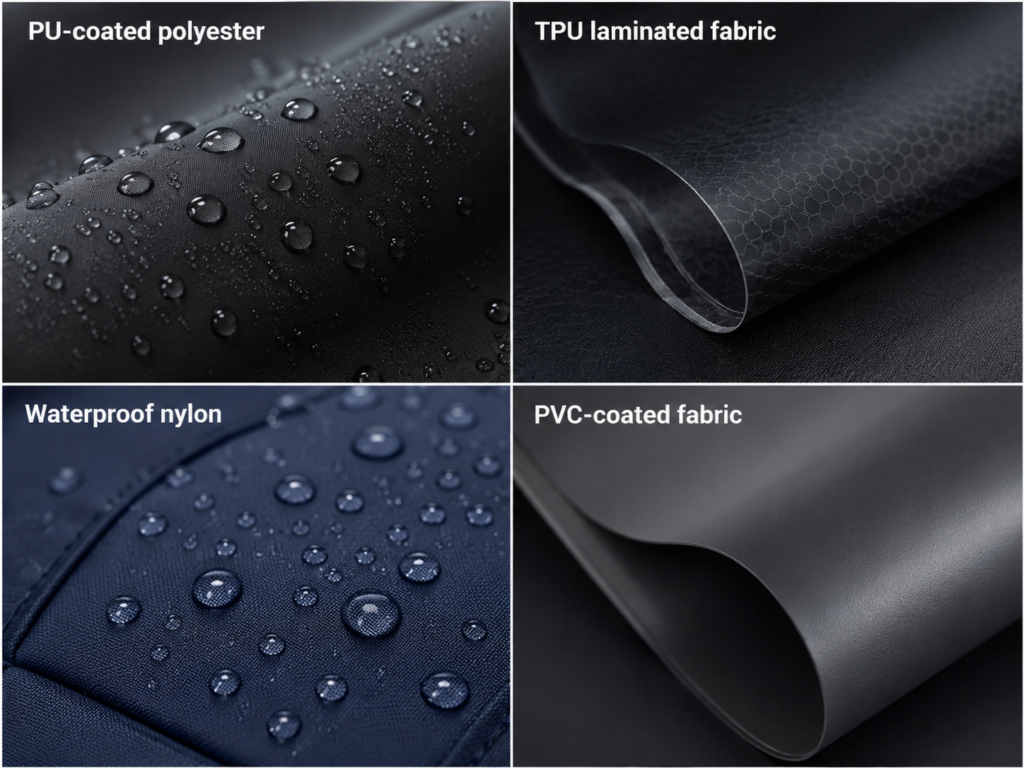
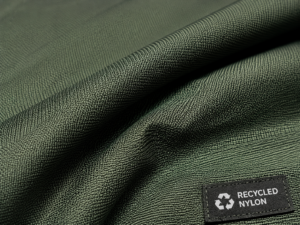
Most waterproof racket bags use PU-coated polyester, TPU laminated fabric, coated nylon, or waterproof Oxford fabric for water protection and durability.
PU-coated polyester is one of the most common materials in tennis racket bag manufacturing because it is lightweight, cost-effective, and suitable for custom logo printing.
TPU laminated fabric is considered more premium. It provides stronger waterproof performance, better flexibility, and improved cold resistance. Many high-end pickleball paddle bags and sports backpacks now use TPU materials.
PVC-coated fabric is durable and abrasion-resistant but heavier than TPU.
Here is a simple comparison:
| Material | Advantages | Common Use |
|---|---|---|
| PU-coated polyester | Affordable and lightweight | Tennis racket bags |
| TPU laminated fabric | Premium waterproof performance | Outdoor sports bags |
| Waterproof nylon | Flexible and durable | Badminton bags |
| PVC-coated fabric | Heavy-duty protection | Travel sports bags |
Fabric density also matters. Common specifications include 420D, 600D, and 1680D fabric.
Higher denier fabrics generally provide:
- Better abrasion resistance
- Improved shape retention
- Longer lifespan
- Higher load capacity
Professional fabric bag factories usually test:
- Coating adhesion
- Water resistance
- Abrasion performance
- Color fastness
- Temperature resistance
Buyers should also ask whether the fabric is coated or laminated because laminated materials usually provide more stable waterproof performance.
Experienced OEM bag manufacturers normally recommend materials according to actual product usage instead of simply selecting the cheapest fabric.
How Can You Check the Zippers on a Waterproof Racket Bag?
Even if the fabric is waterproof, water can still enter through weak zipper areas.
Waterproof racket bags usually use coated zippers, reverse zippers, or rain flap protection to reduce water penetration.
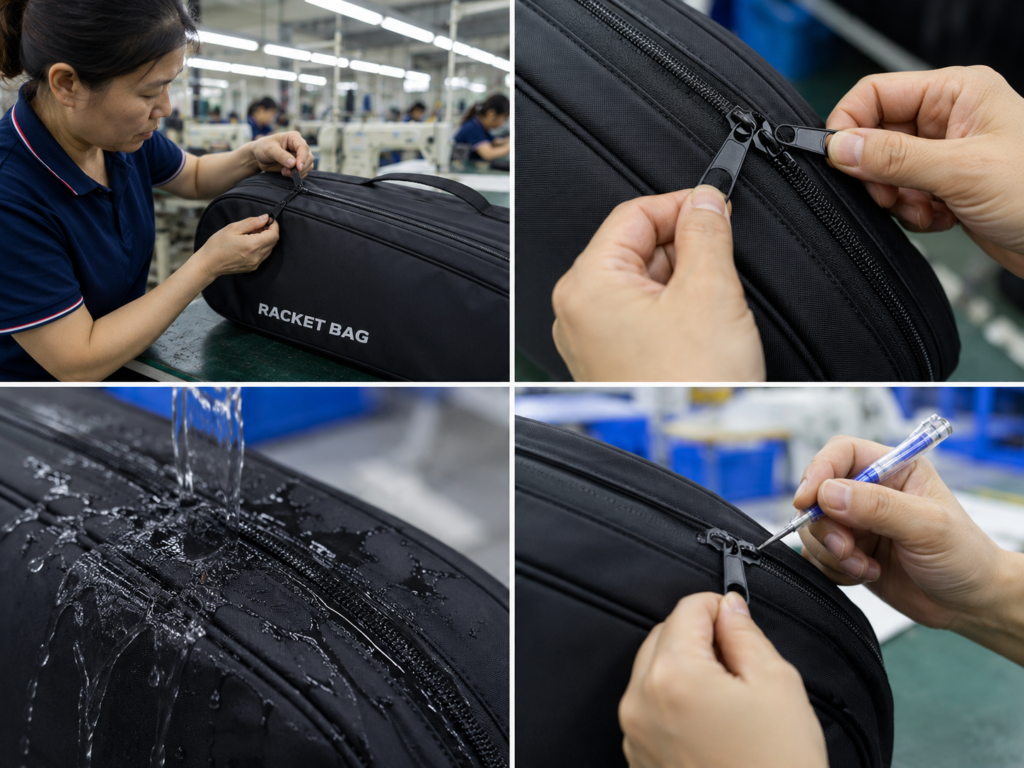
Standard zippers contain small gaps between zipper teeth. During heavy rain, water can enter through these openings.
Professional racket bag manufacturers often use:
- Reverse coil zippers
- TPU-coated waterproof zippers
- Rubber-sealed zippers
- Hidden zipper structures
For most tennis racket bags and badminton racket bags, fully airtight zippers are unnecessary because they increase stiffness and production cost.
Instead, many OEM bag manufacturers combine water-resistant zippers with fabric rain flaps to balance:
- Waterproof performance
- Smooth operation
- Product appearance
- Cost efficiency
Buyers should also inspect whether zipper stitching is reinforced because weak zipper areas are often the first points of failure.
Reliable zipper suppliers are very important in sports bag manufacturing because poor-quality zippers may crack, leak, or become difficult to open after repeated use.
Why Are Seams Important in Waterproof Racket Bags?
Many low-quality racket bags leak because water enters through stitching holes rather than the fabric itself.
Seams are one of the most important waterproof areas in a racket bag. Waterproof bags often use seam sealing tape or reinforced stitching to reduce leakage.
Traditional sewing creates tiny needle holes. During rain exposure, water can slowly penetrate through these openings.
Professional sports bag factories improve waterproof performance using:
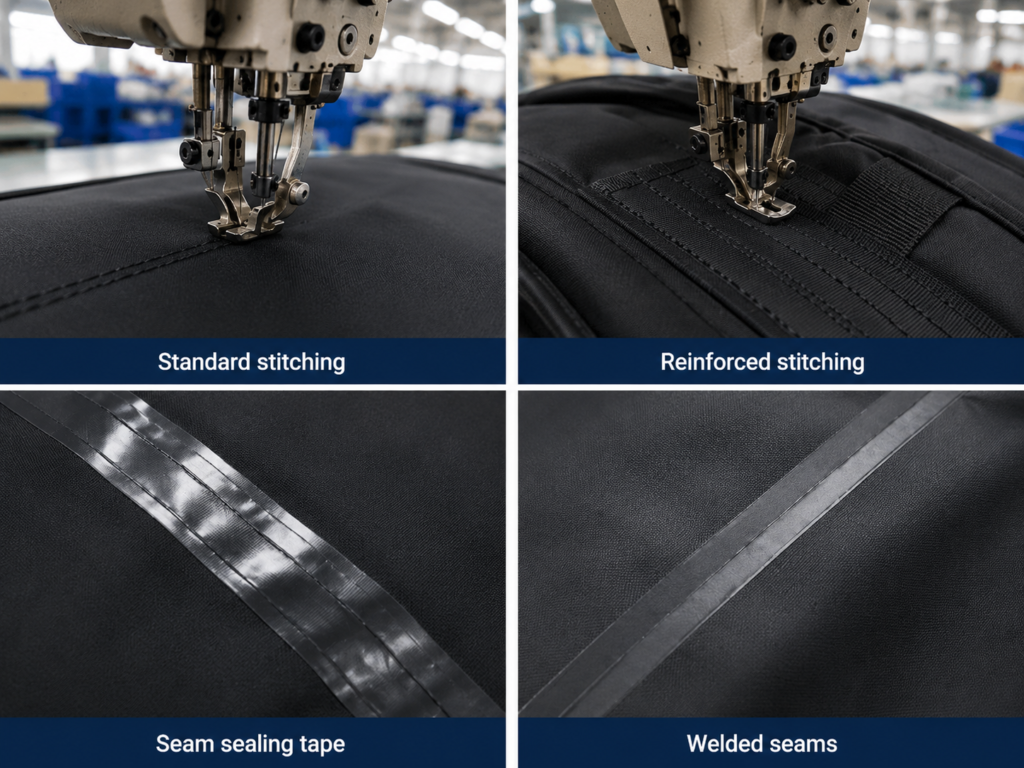
| Seam Technology | Waterproof Level |
|---|---|
| Standard stitching | Low |
| Reinforced stitching | Medium |
| Seam sealing tape | High |
| Welded seams | Very High |
Seam sealing tape is commonly used in premium sports bags and racket backpacks.
After stitching, waterproof tape is heat-applied over the seam line to block water penetration.
Some outdoor waterproof bags use welded construction instead of sewing to eliminate needle holes completely.
However, many racket bags still require traditional stitching because sports players also care about carrying comfort, structure, and appearance.
Professional OEM bag manufacturers normally inspect:
- Stitch density
- Seam alignment
- Edge reinforcement
- Tape adhesion
- Leakage points
For B2B buyers, understanding seam construction before mass production can help reduce quality complaints and improve customer satisfaction.
How Can You Test Whether a Racket Bag Is Waterproof?
Many buyers trust marketing descriptions without testing actual waterproof performance.
You can test a racket bag’s waterproof performance through spray testing, zipper inspection, seam checking, and water exposure testing.
One simple home method is the paper towel test.
Steps:
- Place dry paper towels inside the racket bag.
- Close all zippers completely.
- Spray water on the surface.
- Wait several minutes.
- Open the bag and inspect the towels.
If the paper remains dry, the bag provides at least basic waterproof protection.
Professional custom bag factories may also perform:
- Spray tests
- Hydrostatic pressure tests
- UV aging tests
- Zipper durability tests
- Repeated opening and closing tests
Testing is especially important for tennis racket bags and pickleball paddle bags because players often carry:
- Carbon fiber rackets
- Mobile phones
- Sports clothing
- Shoes
- Towels
- Accessories
For export projects, buyers sometimes request third-party waterproof testing before bulk production.
Any waterproof ratings or IPX claims should be verified before publishing.
What Should Buyers Ask Before Ordering Waterproof Racket Bags?
Many importers focus mainly on price and overlook waterproof construction details.
Before ordering waterproof racket bags, buyers should confirm fabric specifications, zipper quality, seam technology, testing methods, and quality control procedures with the manufacturer.
Professional OEM bag manufacturers usually discuss the product application first before recommending suitable materials and construction methods.
For example:
- Indoor badminton bags may only require water-resistant coating.
- Outdoor tennis backpacks may require seam sealing and waterproof zippers.
- Travel sports bags may need reinforced waterproof bottom panels.
Important sourcing questions include:
| Buyer Question | Why It Matters |
|---|---|
| Which waterproof fabric is used? | Affects durability |
| Are waterproof zippers included? | Reduces leakage risk |
| Is seam sealing available? | Improves waterproof level |
| Can samples be tested? | Prevents production issues |
| What QC inspections are performed? | Improves consistency |
Professional fabric bag factories can usually support:
- Material selection
- OEM logo printing
- Sample development
- Structure optimization
- Private label packaging
- Bulk production
- Quality inspections
Strong communication during development helps avoid misunderstandings and improves final product quality.
Conclusion
A waterproof racket bag depends on more than waterproof fabric alone. Materials, zippers, seams, construction methods, and factory quality control all affect final waterproof performance.
Looking for a reliable custom bag manufacturer for racket bags, sports bags, backpacks, or other fabric bags? Contact us to discuss your OEM/ODM bag project.