OEM and ODM sports bag manufacturers help global brands create customized products with professional design support, reliable production quality, and flexible development solutions. The right factory should provide complete services from concept design and material selection to sample development, mass production, and export delivery.
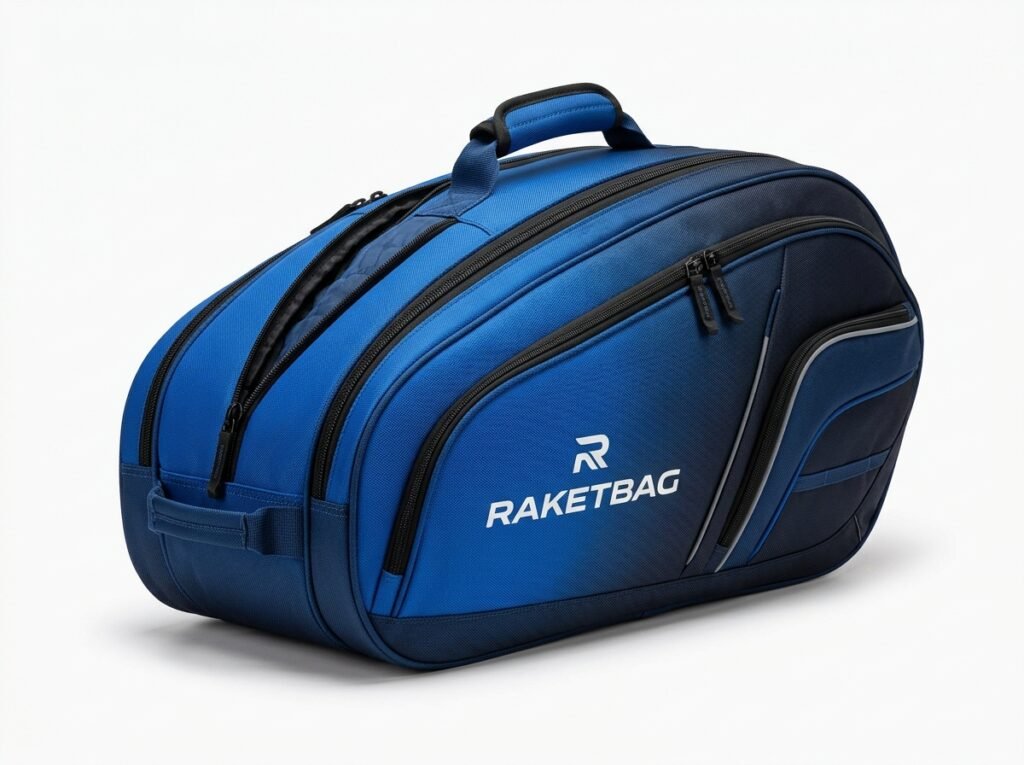
Sports bags are no longer simple storage products. For global brands, they represent lifestyle, performance, and customer experience. Whether the product is a racket bag, training bag, gym bag, backpack, or team sports bag, every detail affects how customers view the brand.
Finding the right OEM and ODM sports bag partner is an important decision. A professional manufacturer should understand sports usage, market trends, product structure, and the production challenges behind customized designs. Beyond manufacturing capability, brands need a supplier that can help transform ideas into competitive products.
Why Do Global Brands Choose OEM & ODM Sports Bag Manufacturers?
Global brands choose OEM and ODM sports bag manufacturers because customized production allows them to create unique products while improving supply chain efficiency. A professional factory provides manufacturing expertise, product development support, and consistent quality for different market requirements.
custom sports bag factory providing OEM and ODM solutions
Custom Production Creates Stronger Brand Differentiation
The sports bag market is highly competitive. Many products may look similar, but successful brands create differences through design, function, materials, and user experience.
OEM production allows brands to develop products based on their own requirements. The manufacturer produces according to the brand’s specifications, including:
- Product shape and structure
- Material selection
- Color combinations
- Logo placement
- Packaging requirements
- Functional features
ODM production provides additional value because manufacturers can contribute product ideas and design solutions. This is especially useful for brands that want faster product development or need professional suggestions based on manufacturing experience.
For example, a fitness brand may need a premium training bag for urban customers. Instead of starting from zero, an experienced ODM partner can recommend suitable fabrics, pocket layouts, carrying systems, and production methods based on market expectations.
A professional sports bag manufacturer understands that every market has different needs. A European outdoor customer may focus on durability and weather resistance, while a North American fitness brand may prioritize style, convenience, and storage functions.
The ability to combine manufacturing knowledge with market understanding creates stronger products.
What Types of Sports Bags Can OEM & ODM Factories Develop?
A professional sports bag manufacturer should have experience developing multiple product categories to support different brand strategies. This allows brands to build complete product collections instead of relying on a single item.
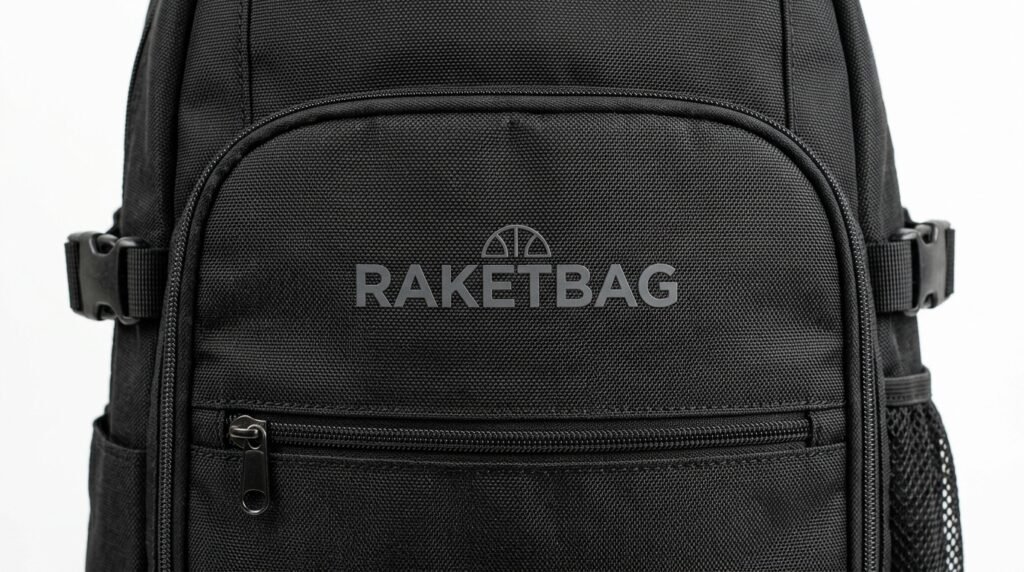
Different Sports Applications Require Different Designs
Sports bags are designed around specific user needs. A professional factory should understand these differences.
| Sports Bag Type | Main Features |
|---|---|
| Racket bags | Racket protection, padded compartments, accessory storage |
| Gym bags | Large capacity, easy access, durable materials |
| Training bags | Functional organization and daily usability |
| Sports backpacks | Comfort, lightweight structure, multi-purpose use |
| Duffel bags | Travel capacity and strong carrying ability |
| Team bags | Custom branding and group requirements |
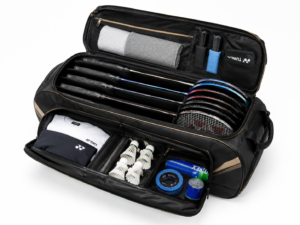
For example, a racket bag requires special protection because rackets are sensitive equipment. The structure may include EVA foam padding, reinforced compartments, and strong handles.
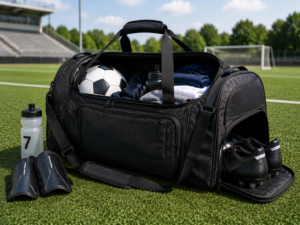
A gym bag focuses more on convenience. It may require shoe compartments, ventilation sections, and quick-access pockets.
A professional OEM and ODM factory should understand these differences instead of treating every sports bag as the same product.
This experience allows manufacturers to provide better recommendations during product development and avoid design problems before production begins.
How Does the OEM & ODM Development Process Work?
The OEM and ODM development process includes multiple stages, from initial concepts to final production. A professional manufacturer should have a clear workflow to ensure product quality and development efficiency.
Professional Development Requires Technical Experience
A typical custom sports bag development process includes:
| Development Stage | Key Activities |
|---|---|
| Product concept | Understand brand goals and market positioning |
| Design review | Analyze structure, function, and production feasibility |
| Material selection | Choose suitable fabrics, accessories, and components |
| Sample development | Create prototypes for testing and approval |
| Modification stage | Improve details based on feedback |
| Bulk production | Manufacture products according to approved standards |
| Quality inspection | Ensure consistent final products |
A strong manufacturer does not simply follow drawings. Professional factories provide suggestions based on production experience.
For example, a brand may request a lightweight sports bag with premium appearance. The manufacturer needs to balance fabric thickness, reinforcement methods, weight control, and production cost.
Small design changes can create major differences in product performance. Adjusting stitching methods can improve durability. Changing padding materials can improve protection while reducing weight.
This technical support is one of the biggest advantages of working with an experienced OEM and ODM partner.
Why Is Material Selection Important for Custom Sports Bags?
Material selection directly affects sports bag durability, appearance, comfort, and market positioning. Professional manufacturers help brands choose materials that match product goals and customer expectations.
Different Materials Create Different Product Experiences
Common sports bag materials include:
| Material | Advantages |
|---|---|
| Polyester | Durable, affordable, widely used |
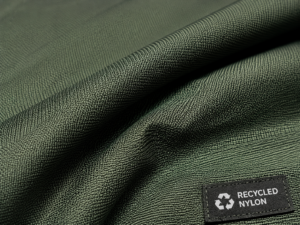
| Nylon | Strong abrasion resistance and lightweight performance |
| PU coating | Better water resistance |
| EVA foam | Shock protection and structure support |
| Mesh fabric | Breathability and ventilation |
| Premium lining | Improved customer experience |
A premium sports bag requires more than attractive fabric. The complete material combination matters.
For example, a racket bag may need:
- Strong outer fabric to resist wear
- Protective foam to prevent equipment damage
- Smooth lining for better handling
- Durable zippers for frequent use
- Reinforced stitching for heavy loads
Experienced manufacturers understand how different materials perform during production and daily use.
This knowledge helps brands avoid common problems such as fabric deformation, weak seams, uncomfortable straps, or poor product appearance after repeated use.
How Do Quality Control Systems Protect Sports Bag Brands?
Quality control is one of the most important parts of OEM and ODM sports bag production. Consistent quality helps brands reduce customer complaints and maintain market reputation.
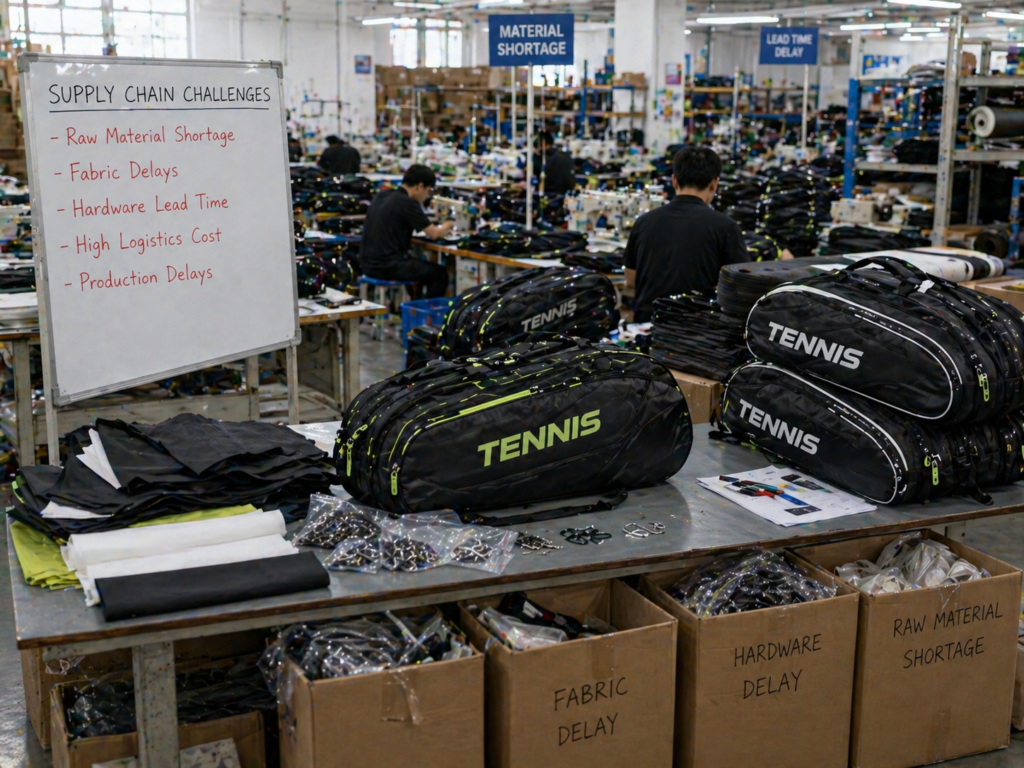
Stable Production Creates Reliable Products
A professional sports bag factory should control quality throughout the entire manufacturing process.
| Quality Control Stage | Inspection Focus |
|---|---|
| Material inspection | Check fabric, color, and accessories |
| Cutting process | Confirm size accuracy |
| Sewing process | Check stitching strength |
| Assembly process | Confirm structure and functions |
| Final inspection | Review appearance and performance |
Sports bags often experience heavy use. Problems such as broken zippers, loose stitching, damaged handles, or weak shoulder straps can quickly affect customer satisfaction.
Professional factories understand that quality control starts before production. Preventing problems during manufacturing is more effective than solving issues after shipment.
Many global brands prefer manufacturers that can provide stable production rather than only low prices. A reliable quality system creates better long-term value.
What Should Global Brands Look for in an OEM & ODM Sports Bag Partner?
Choosing the right manufacturing partner requires evaluating factory capability, communication, development experience, and production reliability.
Key Evaluation Factors Before Cooperation
| Evaluation Area | Important Considerations |
|---|---|
| Factory experience | Knowledge of sports bag production |
| Development ability | Support for new product ideas |
| Customization options | Materials, colors, structures, branding |
| Quality management | Stable production standards |
| Delivery capability | Reliable production schedules |
| Export experience | Familiarity with international requirements |
A strong partner should support brands beyond basic manufacturing. The best suppliers understand that successful products require cooperation between design, engineering, production, and quality teams.
For global brands, long-term success depends on having a manufacturing partner that can respond quickly, solve problems professionally, and maintain consistent product standards.
A factory with OEM and ODM experience becomes a valuable part of the product development process, helping brands launch better sports bags and respond to changing market demands.
Conclusion
OEM and ODM sports bag manufacturers provide global brands with customized solutions, professional development support, and reliable production capability. Choosing an experienced factory helps create high-quality sports bags that strengthen brand value and support long-term market growth.