The OEM racket bag manufacturing process starts long before production begins. It moves through design review, material selection, prototype development, testing, cost control, bulk planning, and final inspection. A reliable factory does not simply make samples. It builds a repeatable system that turns product ideas into stable bulk orders with fewer risks, better consistency, and stronger market results.
For importers, brand owners, and sourcing teams, understanding this process matters because delays and quality problems usually begin in the early stages. If the design brief is unclear, the sample may miss key details. If the prototype is approved without checking structure and materials carefully, bulk production may create complaints later. That is why strong OEM development is not only about sewing and assembly. It is about translating a product concept into a commercial product that works in real sports use.
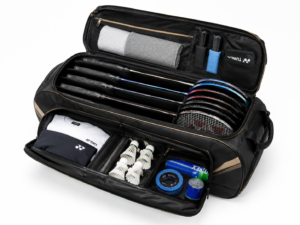
Racket bags are functional products. They must fit rackets correctly, support daily carrying, protect contents, hold shape, and reflect brand positioning. That is why many buyers prefer to work with a specialized racket bag manufacturer instead of a factory that treats all bags the same. Category experience often leads to better structure decisions, faster development, and fewer mistakes during production.
What Happens First in the OEM Racket Bag Development Process?
The first stage is turning the buyer’s idea into a clear development brief. This step defines the structure, target market, materials, functions, branding, and price level before sampling begins.
The development process begins with information. A strong factory needs more than a rough sketch or one reference photo. It needs a practical brief that covers the bag type, target user, size expectations, racket capacity, storage layout, logo method, color direction, packaging, and expected retail level. When this stage is done well, later steps become faster and more accurate.
In many sports bag projects, the factory also reviews whether the requested design makes sense in real use. Some layouts look attractive in pictures but create weak balance, awkward opening angles, or wasted space inside the bag. That is why early technical review is important. A capable supplier can point out where padding should be added, where the zipper path should change, or where the strap position should be adjusted.
Key points in the design brief stage
| Item | Why It Matters | Typical Focus |
|---|---|---|
| Product type | Defines the development path | Tennis, badminton, pickleball, training bag |
| Capacity | Affects structure and dimensions | 2-racket, 3-racket, 6-racket, multi-compartment |
| Material direction | Impacts cost and quality | Polyester, PU, coated fabrics, lining, foam |
| Feature set | Shapes the pattern design | Shoe compartment, insulated section, wet pocket |
| Branding method | Affects appearance and process | Print, embroidery, rubber patch, heat transfer |
| Target price | Guides material and accessory choices | Premium, mid-range, value retail |
A clear starting brief also helps reduce the back-and-forth that slows down development. It lets the factory quote more accurately and recommend better options earlier.
From Design Brief to Prototype in OEM Helmet Development
The same structured thinking used in OEM helmet development also applies to racket bag sampling. The process moves from concept review to technical breakdown, material matching, pattern development, and first prototype creation.
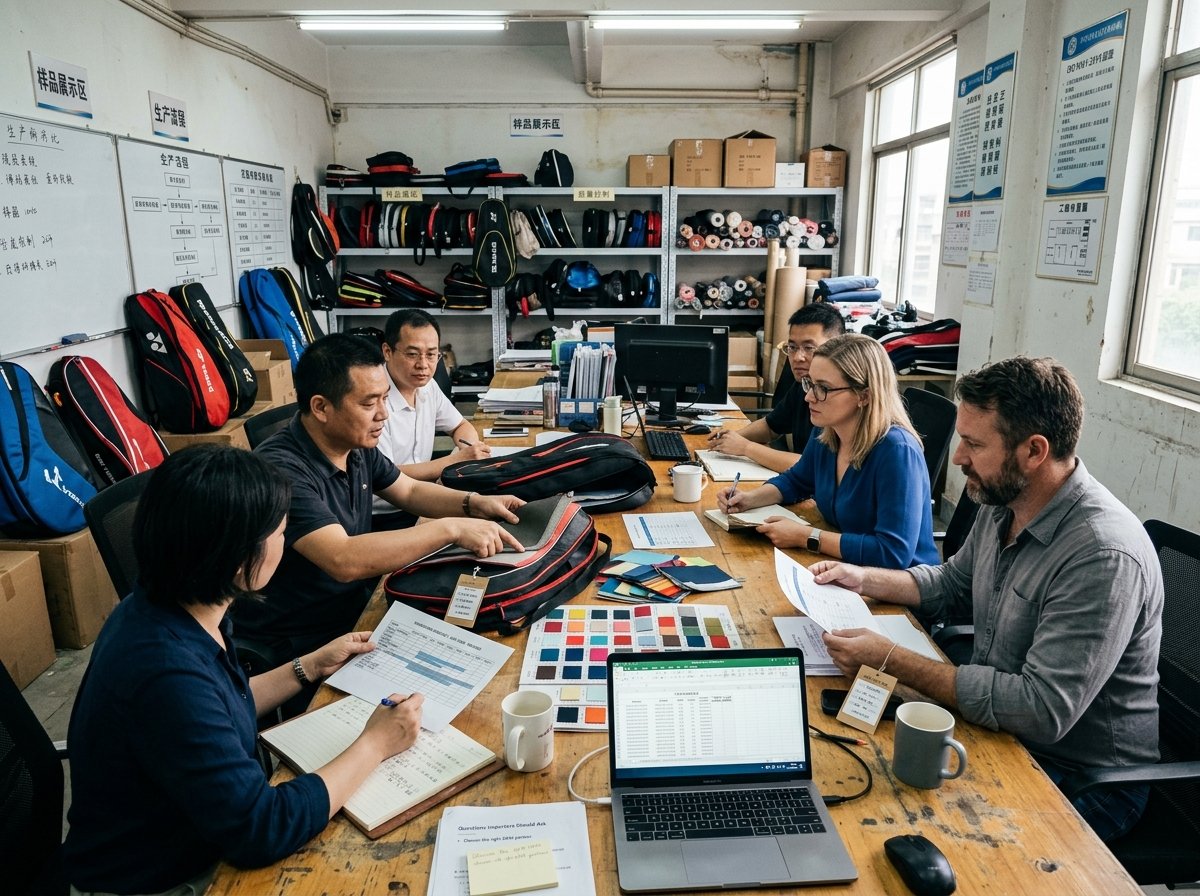
Although helmets and racket bags are different products, the OEM logic is similar. Both need a clear development flow instead of guesswork. In helmet development, the design brief is translated into safety-focused engineering and a testable prototype. In racket bag manufacturing, the brief is translated into patterns, panel dimensions, internal structure, trim details, and carry-system design.
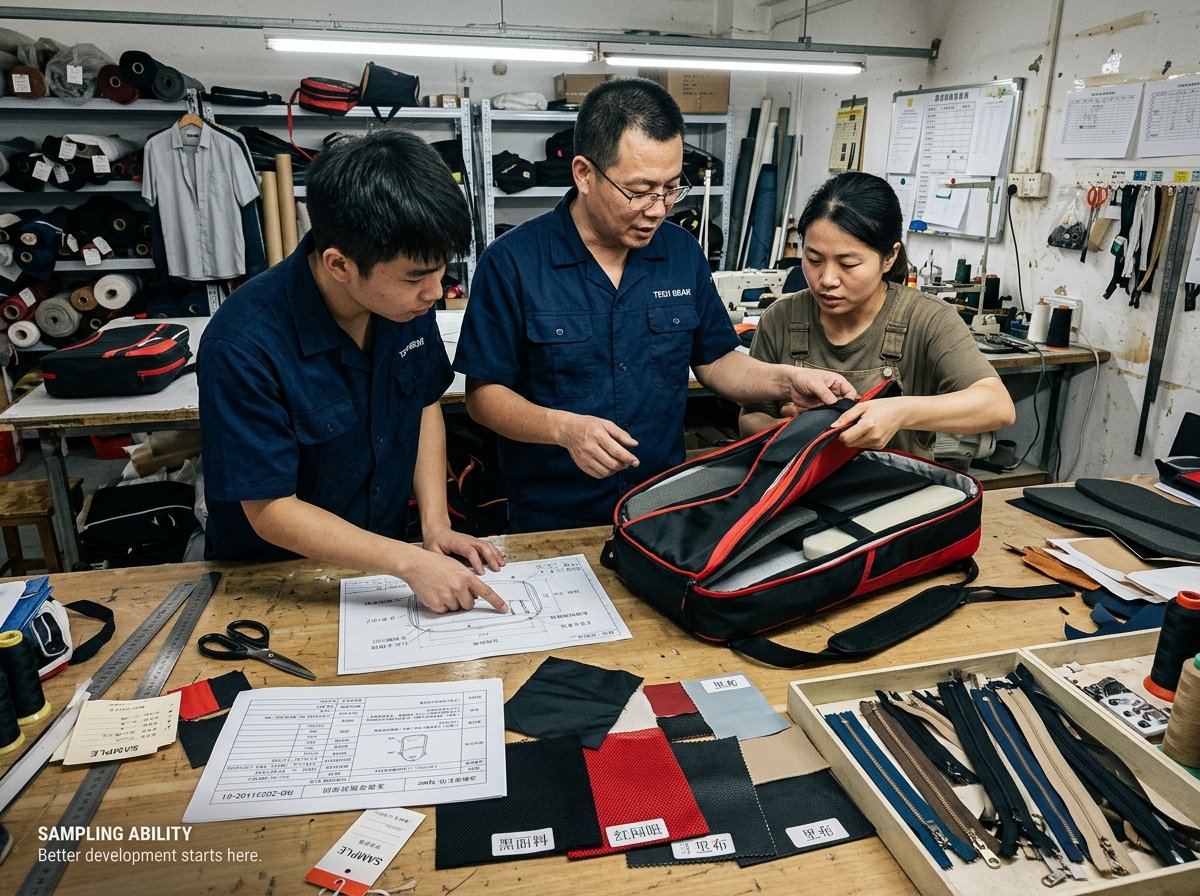
The prototype stage is where the factory’s real ability becomes visible. A strong sample should not only look similar to the concept. It should function correctly. The racket compartment should fit the intended frame size. The carrying balance should feel natural. The side pockets should be easy to reach. The bag should keep its shape with the selected foam and fabric combination.
What happens during prototype development
| Development Step | Purpose | Result |
|---|---|---|
| Technical review | Breaks down the design into workable parts | Structure plan |
| Pattern making | Creates the dimensions and panels | Production-ready pattern |
| Material matching | Selects suitable fabric and trims | Balanced cost and function |
| First sample sewing | Builds the initial prototype | Physical review model |
| Internal revision | Corrects fit and detail issues | Improved second-round sample |
This stage often reveals whether the supplier is only following instructions or actually helping improve the product. Factories with real OEM and ODM experience can often suggest stronger panel support, better zipper placement, or more useful storage design without changing the brand’s direction. That kind of support is one reason many buyers explore product development through a specialized partner introduced on the official factory website when evaluating long-term sourcing options.
How Are Materials and Components Selected for OEM Racket Bags?
Material selection is one of the most important steps in the OEM process because it affects durability, appearance, user comfort, cost, and consistency in bulk production.
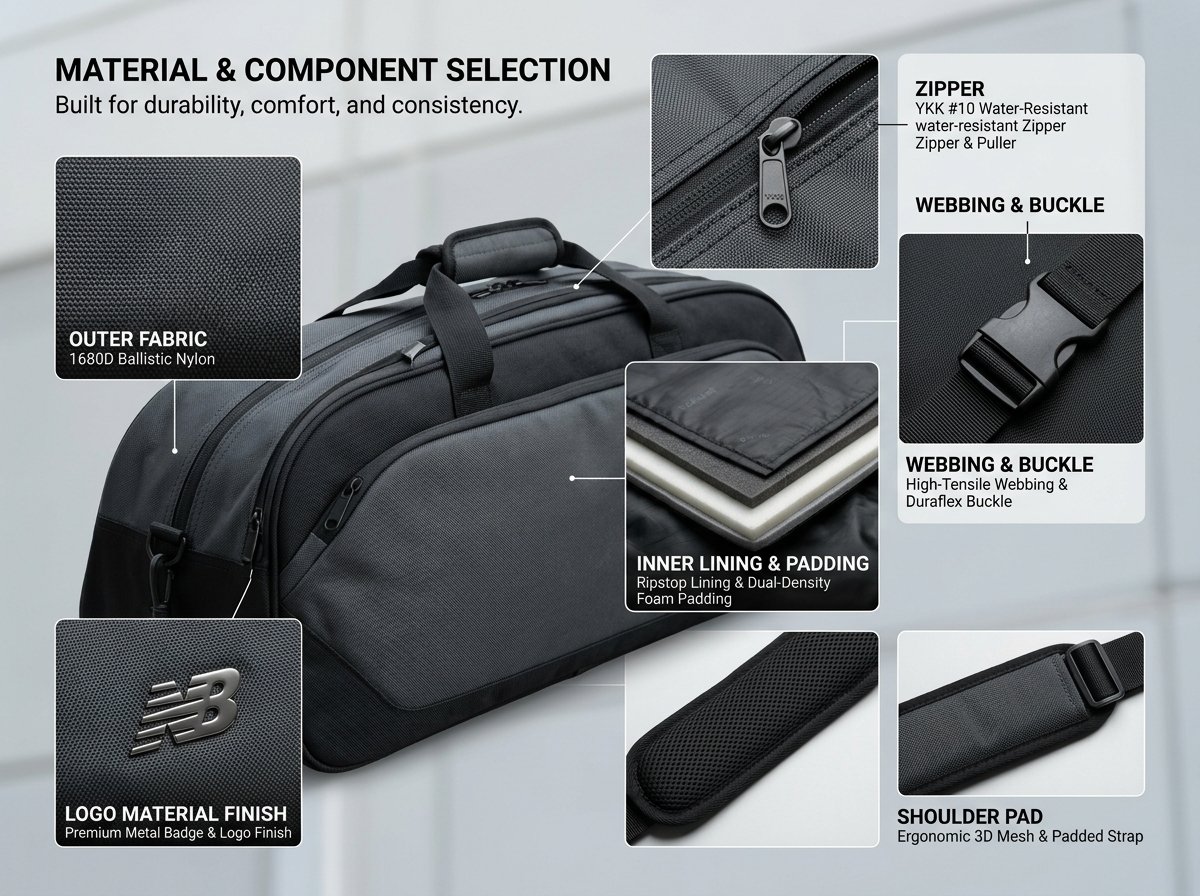
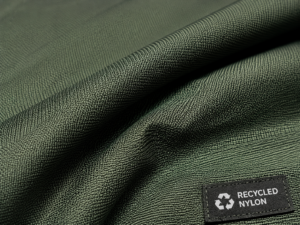
A racket bag may look simple on the outside, but material choice shapes nearly every part of the final product. The outer fabric controls surface feel, abrasion resistance, and visual value. The lining affects internal cleanliness and durability. Foam thickness affects shape retention. Zippers, webbing, buckles, and shoulder pads influence long-term use and carrying comfort.
Strong factories do not select materials only by price. They also match materials to market position and use conditions. A premium tennis bag may require firmer structure, smoother zippers, cleaner branding details, and stronger shape retention. A more price-sensitive retail project may need a simpler construction with cost kept under control while still protecting the key performance areas.
Main material categories in racket bag manufacturing
| Material Area | Function | Common Buyer Concern |
|---|---|---|
| Outer fabric | Main body appearance and durability | Wear resistance, water repellency, hand feel |
| Lining | Protects the inside and supports cleanliness | Thickness, color stability, odor |
| Foam and padding | Gives shape and protection | Support level, collapse risk |
| Zippers and pullers | Daily opening and closing performance | Smoothness, breakage risk |
| Webbing and straps | Carrying strength and comfort | Reinforcement, load performance |
| Logo materials | Brand presentation | Finish quality, consistency |
Material confirmation should happen before sample approval moves too far ahead. If materials remain open too long, prototype feedback becomes less useful and bulk risk increases.
How Is Testing, Certification, and Validation Managed in the OEM Flow?
Testing, certification, and validation should be treated as part of the development process, not as a final paperwork step. Even though helmets require stricter formal certification, the same discipline is useful in racket bag manufacturing.
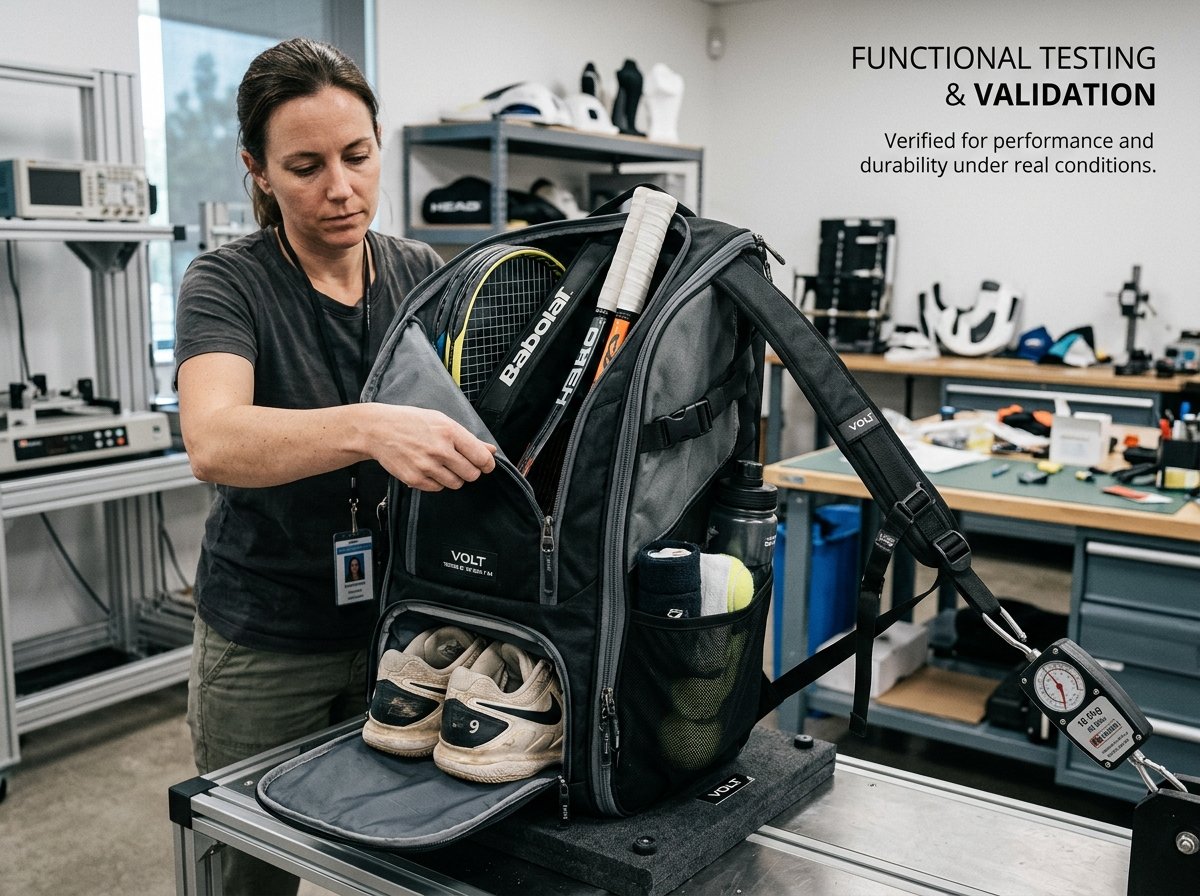
In helmet manufacturing, testing and certification are central because the product must meet safety requirements. For racket bags, the compliance path is different, but validation still matters. Buyers often need confidence that the materials, construction, and accessories will perform as expected in the market. This may include checking restricted substances, color fastness, zipper durability, seam strength, coating performance, and general material consistency.
Validation also happens through practical review. Does the bag hold the intended number of rackets? Does the shoe compartment actually fit standard court shoes? Does the shoulder system remain comfortable when the bag is full? Does the zipper run smoothly around corners? These questions matter because poor real-world performance quickly leads to returns and complaints.
Common validation points for racket bag projects
| Validation Area | What Is Checked | Why It Matters |
|---|---|---|
| Material consistency | Matches approved sample | Prevents bulk variation |
| Functional fit | Rackets and accessories fit correctly | Protects user experience |
| Load performance | Handles and straps hold weight | Reduces failure risk |
| Zipper performance | Smooth opening and closing | One of the main quality concerns |
| Appearance review | Logo, color, and shape meet expectations | Supports brand image |
Factories that handle validation well usually give more reliable bulk performance. They build control earlier instead of depending only on final inspection.
How Is Bulk Production Prepared After Sample Approval?
Once the sample is approved, the project moves into production planning. This stage prepares patterns, sourcing, scheduling, process instructions, and quality checkpoints before sewing begins at scale.
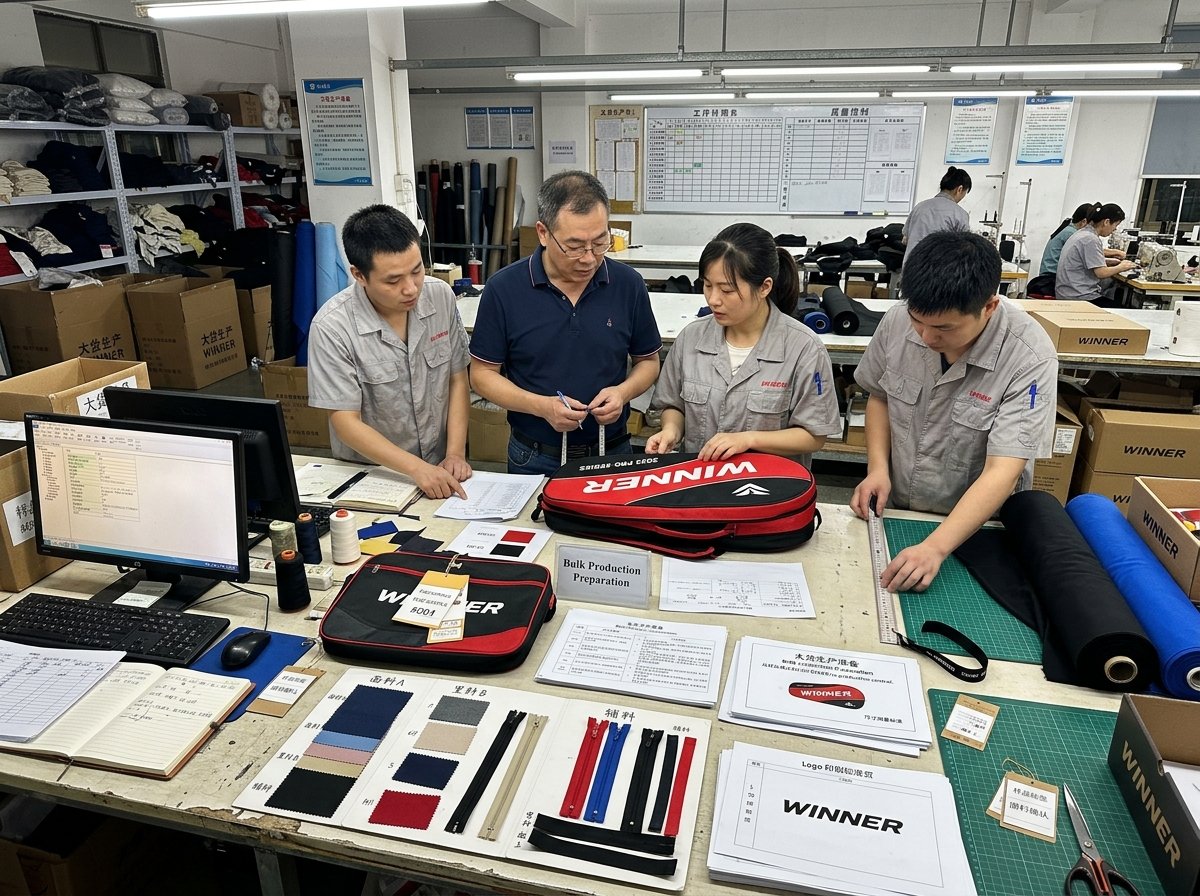
Bulk production does not begin with the first sewing line. It begins with preparation. The approved sample must be translated into clear production standards so that every department follows the same version. This includes confirming materials, logo size and position, packaging details, measurement tolerances, reinforcement points, and inspection rules.
A strong factory usually creates a production file that links the approved sample to the actual factory flow. Material purchasing is based on confirmed specifications. Patterns are locked. Key risk points are identified. If the product includes several SKUs or colorways, the planning process becomes even more important because small errors multiply quickly across the order.
Main steps before mass production starts
| Step | Purpose | Benefit |
|---|---|---|
| Material booking | Secures approved fabrics and trims | Reduces substitution risk |
| Pattern finalization | Locks dimensions and panel shapes | Protects consistency |
| Production scheduling | Aligns factory capacity and delivery date | Improves timing control |
| Pre-production review | Confirms key details with the team | Prevents misunderstanding |
| QC checkpoint setup | Defines inspections during production | Catches issues early |
This stage is where disciplined manufacturers separate themselves from loosely managed suppliers. Good preparation usually leads to fewer delays and fewer costly corrections later.
Mass Production and Final Inspection Steps in Helmet Manufacturing
The logic behind mass production and final inspection in helmet manufacturing is based on process control, and that same principle is essential in racket bag production. Quality should be checked throughout the flow, not only at the end.
In helmet production, final inspection alone is never enough because safety performance must be controlled at every stage. Racket bags also benefit from this process mindset. Bulk quality depends on fabric matching, cutting accuracy, sewing consistency, reinforcement quality, zipper installation, logo placement, and packing discipline.
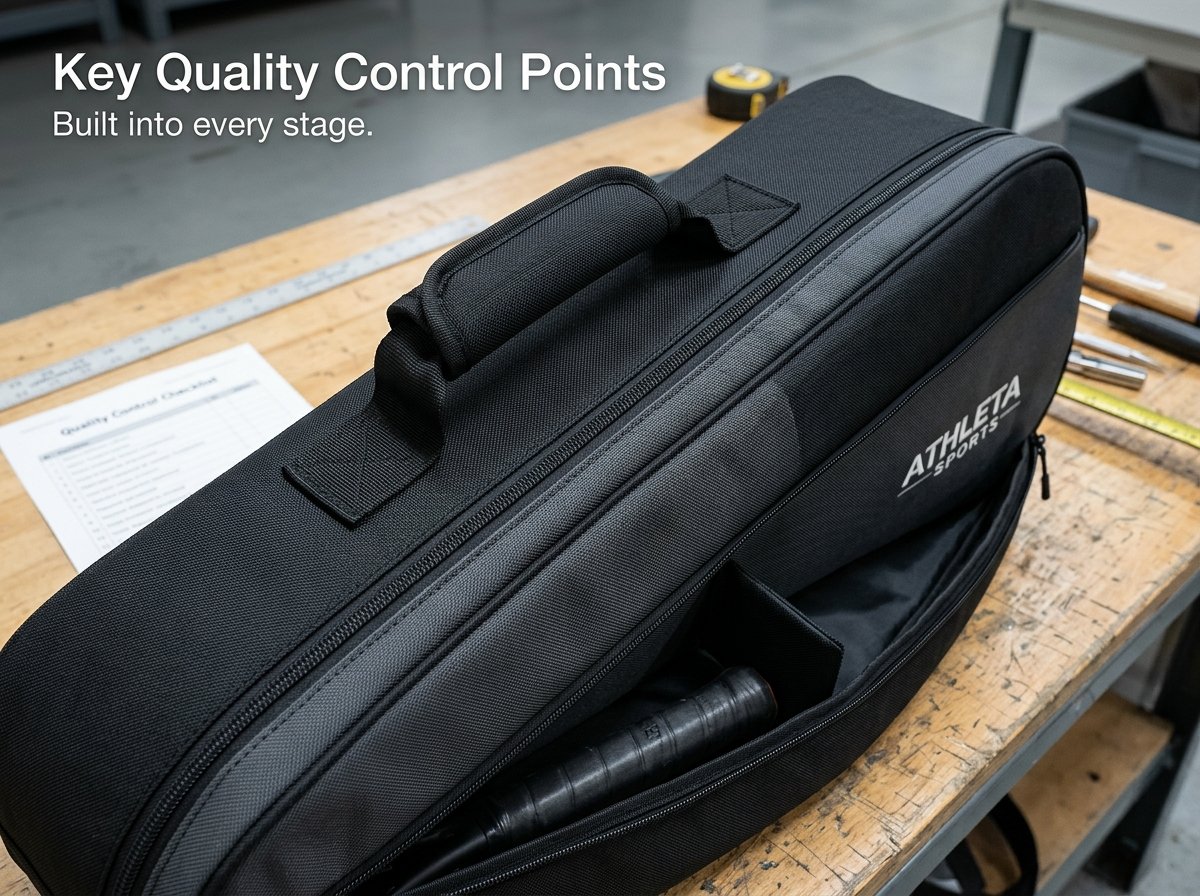
The most reliable factories usually work with multiple inspection stages. Incoming materials are checked first. In-line inspection monitors sewing and assembly. Semi-finished goods are reviewed before moving to the next step. Final inspection checks appearance, measurements, function, and packaging against the approved standard.
Key control points during mass production
| Production Stage | Main Check | Risk if Ignored |
|---|---|---|
| Incoming material check | Fabric color, hand feel, trims | Bulk mismatch |
| Cutting stage | Panel accuracy and quantity | Shape and size problems |
| Sewing stage | Stitching, reinforcement, alignment | Weak structure |
| Assembly stage | Zippers, straps, pockets, logos | Functional defects |
| Final inspection | Appearance, dimensions, packing | Shipment complaints |
Final inspection should include both visual and practical review. The bag should be checked for clean stitching, stable shape, smooth zipper movement, correct compartment function, and correct branding position. Packaging should also match the buyer’s retail or shipping requirements.
Why Does the Full OEM Process Matter for Long-Term Supplier Selection?
The full OEM process matters because a factory that controls each step well is more likely to deliver stable quality, faster development, and fewer supply chain problems over time.
Many sourcing decisions focus too much on the quotation stage. In practice, the long-term result depends more on development ability, process control, and production discipline. A supplier that handles design review carefully, builds accurate prototypes, validates materials properly, and manages bulk production with clear inspection steps usually offers more value than a factory chosen only for a lower price.
This is especially important for brands planning multiple launches. A dependable process makes it easier to expand from one racket bag into a wider product range, including backpacks, duffel bags, shoe bags, and coordinated accessories. Strong OEM support also helps reduce delays, lower complaint rates, and keep product presentation more consistent across seasons.
Conclusion
OEM racket bag manufacturing is a structured process that moves from concept to controlled production through clear stages. Design review, prototype development, material confirmation, validation, bulk planning, and final inspection all shape the final result. When each step is managed carefully, the outcome is not only a better bag. It is also a safer sourcing process, more stable quality, and a stronger foundation for long-term product growth. For importers and brands looking for dependable execution, the best results usually come from working with a factory that understands both sports bag function and the discipline required to turn approved samples into repeatable bulk success.