Tactical bags and outdoor bags serve different users and market needs. Tactical bags focus on durability, organization, and professional functions, while outdoor bags focus on comfort, lightweight design, and adventure use. The best choice depends on the user’s activity, environment, and carrying requirements.
The growing demand for functional bags has created more opportunities for brands developing outdoor and performance products. Customers today want bags that are not only practical but also durable, comfortable, and visually attractive. Understanding the differences between tactical bags and outdoor bags helps product developers create better solutions for different markets.
What Is the Difference Between Tactical Bags and Outdoor Bags?
Tactical bags are designed for high-performance environments where durability, storage organization, and fast access are important. Outdoor bags are designed mainly for activities such as hiking, camping, travel, and daily outdoor use, where comfort and weight control are major concerns.
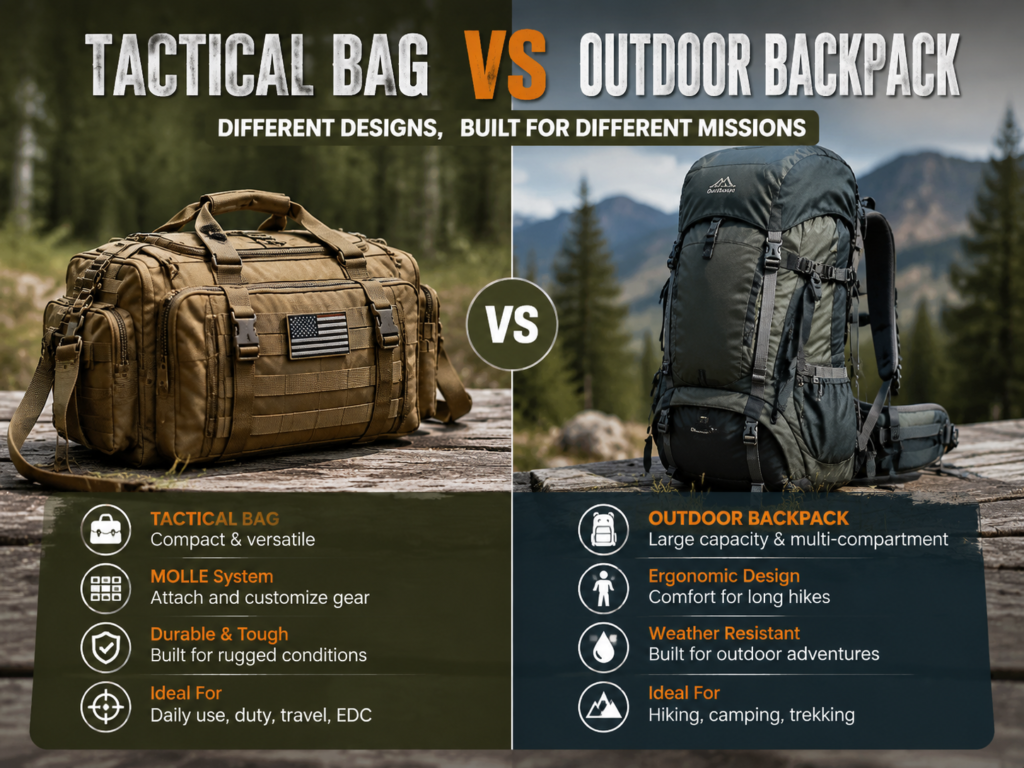
Tactical backpack and outdoor hiking backpack styles
Main Differences Between Tactical and Outdoor Bags
| Feature | Tactical Bags | Outdoor Bags |
|---|---|---|
| Main purpose | Professional and demanding use | Hiking, travel, and outdoor activities |
| Design focus | Durability and organization | Comfort and mobility |
| Materials | Heavy-duty fabrics | Lightweight performance fabrics |
| Structure | Multiple compartments and modular systems | Ergonomic carrying systems |
| Appearance | Military-inspired style | Sport and adventure style |
The difference between these two categories is not only about appearance. A tactical bag is usually built around function-first thinking. It may include MOLLE webbing, reinforced areas, quick-access pockets, and stronger load-bearing structures.
Outdoor bags usually focus more on long-distance comfort. Features such as breathable back panels, lightweight frames, adjustable straps, and ergonomic designs help users carry equipment for longer periods.
For brands developing new bag collections, understanding these differences is important. A product that works well for professional users may not meet the needs of casual outdoor consumers. Market positioning, materials, and design details should match the target customer.
Why Are Tactical Bags Growing in Market Demand?
The tactical bag market continues to attract attention because more consumers are interested in durable, functional, and versatile products. Tactical designs are no longer limited to professional users. They are now popular among outdoor enthusiasts, travelers, photographers, fitness users, and everyday commuters.
Tactical backpack market trend with modern urban usage
Key Reasons Behind Tactical Bag Demand
| Market Driver | Customer Need |
|---|---|
| Durability | Products that last longer |
| Functionality | Better organization and storage |
| Style | Strong outdoor and urban appearance |
| Versatility | One bag for multiple activities |
Many customers choose tactical bags because they provide a feeling of reliability. Strong fabrics, reinforced stitching, and practical storage layouts create a product image that feels professional and trustworthy.
For brands, tactical bags also provide opportunities for product expansion. A single design concept can be developed into different sizes, colors, and functions. For example, a tactical backpack series can include small daily carry bags, medium travel bags, and larger outdoor packs.
Manufacturers with design and development experience can help brands improve these products. Product success depends not only on appearance but also on details such as fabric selection, zipper quality, stitching methods, and comfort testing.
What Features Make Tactical Bags Different From Outdoor Bags?
The biggest difference between tactical bags and outdoor bags is the way they solve carrying problems. Tactical bags are designed for organized access and equipment management, while outdoor bags are designed for comfort during movement.
Tactical bag features including MOLLE system and storage compartments
Common Tactical Bag Features
- MOLLE attachment system
- Multiple storage compartments
- Reinforced stress points
- Heavy-duty fabric
- Strong handles and shoulder straps
- Quick-access pockets
Common Outdoor Bag Features
- Lightweight construction
- Breathable back support
- Ergonomic shoulder straps
- Weather-resistant materials
- Flexible storage design
A tactical bag often has a stronger structure because users may carry tools, equipment, or heavier items. An outdoor bag often reduces weight because users may carry it for many hours during hiking or travel.
For professional bag development, finding the right balance is important. Too much reinforcement can increase weight, while reducing materials too much can affect durability. Experienced factories use material testing and structural improvements to create products that meet both performance and market expectations.
Which Applications Are Better for Tactical Bags?
Tactical bags are suitable for users who need organized storage, strong protection, and reliable performance in challenging environments. They are widely used in professional fields and also in consumer markets.
Tactical bag applications for outdoor and professional users
Common Tactical Bag Applications
| Application | Why Tactical Bags Fit |
|---|---|
| Security and professional use | Strong structure and organization |
| Outdoor training | Durable materials |
| Travel | Flexible storage options |
| Photography equipment | Protective compartments |
| Daily urban carry | Functional design |
The modern tactical bag market has expanded beyond traditional users. Many customers now choose tactical-style products because they want a stronger and more functional backpack for everyday life.
For brands, this creates opportunities to develop products with broader appeal. A tactical backpack does not need to look like professional equipment only. Modern designs can combine tactical functions with lifestyle colors, cleaner shapes, and comfortable features.
Factories with OEM and ODM experience can support this process by helping brands adjust designs for different markets. From sample development to production management, professional support helps create products that match customer expectations.
Which Applications Are Better for Outdoor Bags?
Outdoor bags are designed for users who value comfort, mobility, and lightweight performance. They are commonly used for hiking, camping, travel, cycling, and outdoor exploration.
Outdoor backpack for hiking and adventure activities
Common Outdoor Bag Applications
| Application | Main Requirement |
|---|---|
| Hiking | Comfort and weight control |
| Camping | Storage capacity |
| Travel | Organization and flexibility |
| Cycling | Lightweight structure |
| Adventure activities | Weather resistance |
Outdoor consumers usually spend long hours carrying their bags, so comfort becomes a key buying factor. Features such as padded shoulder straps, airflow systems, and balanced weight distribution directly affect user experience.
For brands entering the outdoor market, product design should focus on real usage situations. Customers want bags that are durable but not heavy, functional but not complicated.
A professional manufacturing partner can help improve product performance through design optimization. By selecting suitable materials, adjusting structures, and testing samples carefully, manufacturers can help brands create outdoor bags that perform well in competitive markets.
How Can Brands Choose Between Tactical Bags and Outdoor Bags?
Choosing between tactical bags and outdoor bags depends on target customers, product positioning, and expected market performance. Both categories have strong demand, but they attract different buyers.
Custom tactical and outdoor bag development process
Important Product Planning Factors
| Factor | Consideration |
|---|---|
| Target customer | Professional users or outdoor consumers |
| Product price | Material and feature level |
| Brand image | Tactical style or adventure style |
| Usage scenario | Work, travel, sports, or exploration |
Successful brands usually begin with a clear understanding of customer needs. A tactical product should highlight strength, organization, and reliability. An outdoor product should highlight comfort, flexibility, and mobility.
For companies developing customized bags, working with an experienced manufacturer creates more advantages. A capable factory can support material selection, structure improvement, prototype development, and large-scale production. This reduces development risks and improves product consistency.
How Does Manufacturing Experience Improve Tactical and Outdoor Bags?
Producing high-quality tactical and outdoor bags requires knowledge of materials, construction methods, and customer usage habits. A strong manufacturing process helps transform product ideas into reliable market products.
Professional tactical and outdoor bag factory production
Key Manufacturing Capabilities
| Capability | Value |
|---|---|
| Design support | Improves product structure |
| Material knowledge | Creates better performance |
| Sample development | Reduces mistakes before production |
| Quality control | Ensures consistent products |
A professional bag factory does more than produce finished products. It helps solve design challenges before they become production problems. For example, choosing the wrong fabric may increase weight, while poor reinforcement may reduce product lifespan.
Experienced manufacturers understand how different markets evaluate products. A tactical customer may focus on durability and storage systems. An outdoor customer may focus on comfort and lightweight performance.
With strong OEM and ODM capabilities, factories can help brands create customized collections instead of standard products. This includes different sizes, colors, materials, logo methods, packaging solutions, and functional upgrades.
Conclusion
Tactical bags and outdoor bags both have strong market potential, but they serve different customer needs. Tactical bags attract users who value durability, organization, and professional functions. Outdoor bags attract users who need comfort, lightweight performance, and flexibility during travel and adventure activities.
For brands, choosing the right product direction depends on understanding the target market and customer expectations. A successful bag is not only about appearance. It needs the right materials, practical structure, reliable quality, and consistent production.
As demand for functional bags continues to grow, product differentiation becomes more important. Brands need products that stand out while solving real customer problems. Working with an experienced manufacturer can help transform ideas into market-ready solutions through professional design support, flexible customization, and stable production.
Whether developing tactical backpacks, outdoor hiking bags, fitness bags, or multi-purpose sports products, the right manufacturing partner can help create products that deliver long-term value and build stronger customer trust.