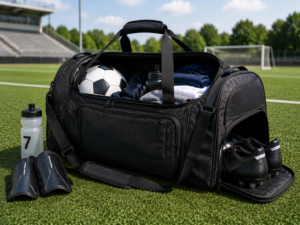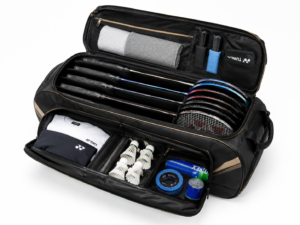
When you look at a high-quality tennis racket bag, you may only see the finished product. However, behind every professional tennis bag is a detailed manufacturing process that combines durable materials, reinforced construction, and functional sports bag design.
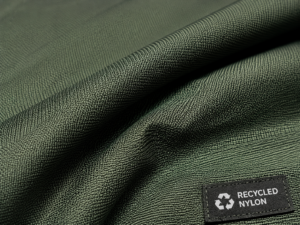
Modern tennis racket bags are typically made using high-density polyester, ballistic nylon, waterproof fabrics, and padded protective materials to improve durability, weather resistance, and long-term performance. During production, manufacturers carefully inspect materials, cut fabric panels, reinforce stress points, install thermal lining, and assemble multiple storage compartments for rackets, shoes, and accessories.
Professional tennis bag manufacturers also focus on waterproof protection, ergonomic carrying systems, reinforced stitching, and quality control testing to ensure the final product performs well during tournaments, travel, and daily training.
Understanding how a tennis racket bag is made helps explain why material selection, production technology, and structural design are so important for performance, durability, and overall user experience.
Key Takeaways
- Modern tennis racket bags are made with durable materials such as high-density polyester, ballistic nylon, TPU-coated fabric, and waterproof nylon to improve durability and weather resistance.
- Waterproof coatings like PU and TPU help protect rackets, clothing, shoes, and accessories from rain, moisture, and outdoor conditions.
- Reinforced stitching and sealed seams help reduce water penetration and improve the overall structural strength of the tennis bag.
- Thermal insulation lining is commonly added to premium tennis bags to help protect racket strings from extreme heat and temperature changes.
- Features such as waterproof zippers, ventilated shoe compartments, padded racket sections, and ergonomic shoulder straps improve functionality, comfort, and storage organization.
- Professional tennis bag manufacturers use quality control inspections throughout the production process to ensure durability, symmetry, stitching accuracy, and long-term performance.
- High-quality tennis racket bags combine strong materials, advanced manufacturing techniques, and functional compartment design to support tournament travel, outdoor training, and daily sports use.
Tennis Racket Bag Materials
A high-quality tennis racket bag is more than just a storage bag. The materials used during manufacturing play an important role in durability, waterproof performance, and equipment protection. Professional tennis bag manufacturers carefully select fabrics and coatings to improve weather resistance and long-term use.
Tip: Choosing the right tennis bag material helps improve waterproof protection, durability, and long-term performance during travel and outdoor training.
Tennis Racket Bag Materials
A tennis racket bag is made using durable sports bag materials designed to protect rackets, accessories, and personal gear during training, travel, and tournament use. The materials used during manufacturing directly affect the bag’s durability, waterproof performance, weight, and overall user experience.
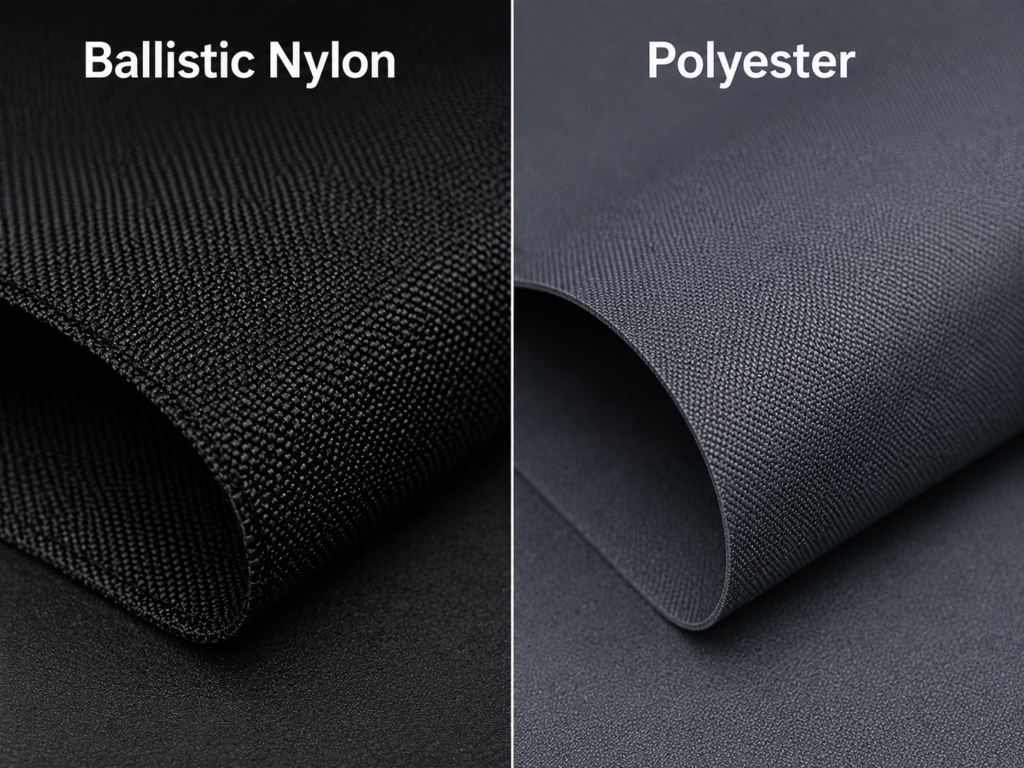
Professional tennis bag manufacturers commonly use high-density polyester, ballistic nylon, TPU-coated fabrics, and reinforced lining materials to improve abrasion resistance and long-term durability.
| Material | Main Features | Common Use in Tennis Bags |
|---|---|---|
| Ballistic Nylon | Extremely durable and abrasion-resistant | Premium racket bags and tournament bags |
| Polyester | Lightweight and cost-effective | Daily sports bags and tennis backpacks |
| TPU-Coated Fabric | Waterproof and flexible | Waterproof tennis bags and outdoor sports bags |
| Thermal Insulation Lining | Temperature protection | Racket protection compartments |
| PE Reinforcement Panels | Structural support | Bottom panels and side support sections |
Ballistic nylon is widely used in premium tennis racket bags because it offers excellent tear resistance and long-term durability during heavy use and transportation.
Polyester is popular for lightweight tennis bags and tennis backpacks because it provides good flexibility, easy maintenance, and affordable production costs.
TPU-coated fabrics are commonly added to improve waterproof protection and weather resistance, helping keep rackets, clothing, and accessories dry during outdoor training and travel.
Many professional tennis bags also include thermal insulation lining to help protect racket strings from extreme temperatures and maintain racket performance.
Note: High-quality tennis racket bags often combine multiple materials such as ballistic nylon, waterproof polyester, TPU-coated fabric, and thermal insulation lining to improve durability, weather resistance, and racket protection.
Polyester and Nylon Materials
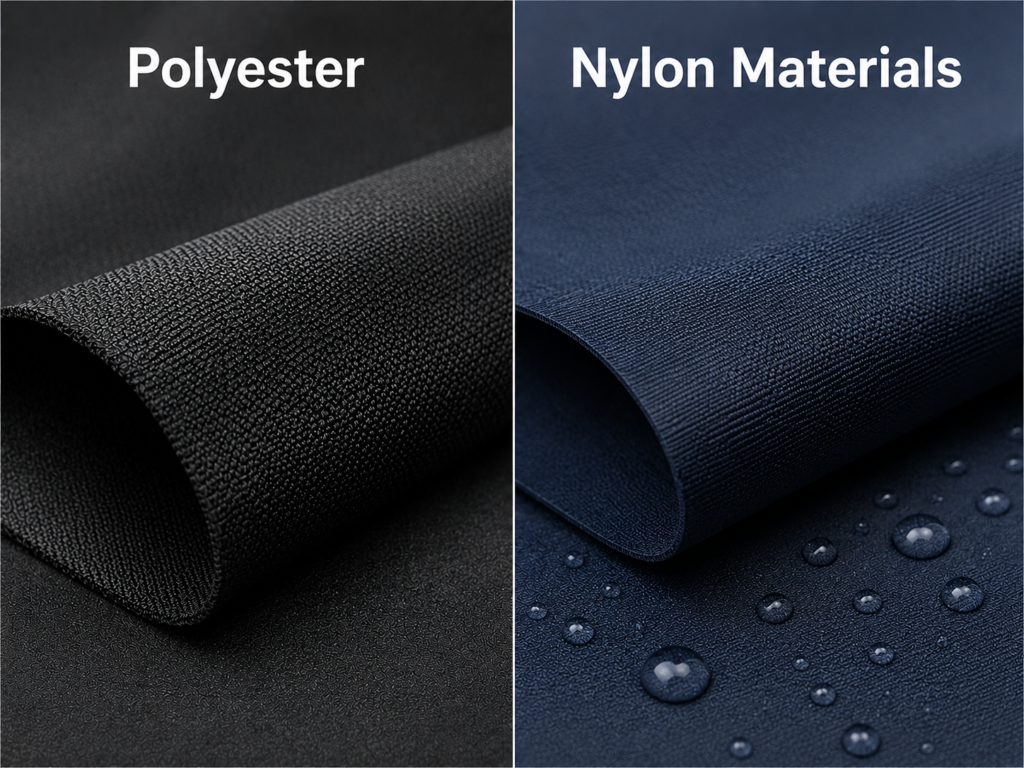
Polyester and nylon are two of the most commonly used materials in tennis racket bag manufacturing. Both materials provide excellent durability and flexibility, making them ideal for tennis backpacks, racket bags, and tournament bags.
| Material | Durability | Abrasion Resistance | Weight | Water Resistance | Best Use |
|---|---|---|---|---|---|
| Nylon | Very High | Excellent | Lightweight | Requires coating | Premium tennis bags |
| Polyester | High | Good | Lightweight | Naturally better | Daily tennis bags and sports backpacks |
Nylon is widely used in premium tennis racket bags because it offers excellent tear resistance and flexibility. High-density nylon and ballistic nylon fabrics can handle heavy daily use, tournament travel, and outdoor conditions. Many manufacturers apply TPU or PU coatings to nylon fabrics to improve waterproof performance and weather resistance.
Polyester is also popular in tennis bag production because it is lightweight, durable, and more resistant to moisture absorption. It performs well for daily sports bags, tennis backpacks, and casual racket bags. Polyester fabrics also maintain color better during long-term outdoor use.
Many professional tennis bag manufacturers use tightly woven polyester and nylon fabrics to improve durability and help reduce moisture penetration during training and travel.
Tip: High-density nylon and polyester fabrics are commonly used in professional tennis racket bags because they provide excellent durability, lightweight performance, and long-term protection for sports equipment.
Coatings and Protective Treatments
During the tennis racket bag manufacturing process, coatings and fabric treatments play an important role in improving waterproof performance, durability, and long-term protection. Professional tennis bag manufacturers use different coating technologies to help protect rackets, shoes, clothing, and accessories from rain, moisture, and outdoor conditions.
PU and TPU Coatings
Many tennis racket bags use PU (polyurethane) or TPU coatings to improve water resistance and surface durability. These coatings are applied to nylon or polyester fabrics during production to create a protective barrier against moisture and daily wear.
| Coating Type | Main Features | Common Use in Tennis Bags |
|---|---|---|
| PU Coating | Flexible, lightweight, cost-effective | Daily tennis bags and sports backpacks |
| TPU Coating | Stronger durability, better waterproof performance | Premium tennis racket bags |
PU-coated fabrics are commonly used in lightweight tennis bags because they provide good water resistance while maintaining flexibility and comfort during carrying.
TPU-coated fabrics are more commonly found in premium tennis racket bags and tournament bags because they offer:
- Better abrasion resistance
- Improved flexibility
- Stronger waterproof performance
- Longer product lifespan
Many high-end tennis bag manufacturers prefer TPU-coated nylon and polyester fabrics because they create lightweight waterproof tennis bags with a more premium appearance and improved durability.
Water-Repellent Treatments
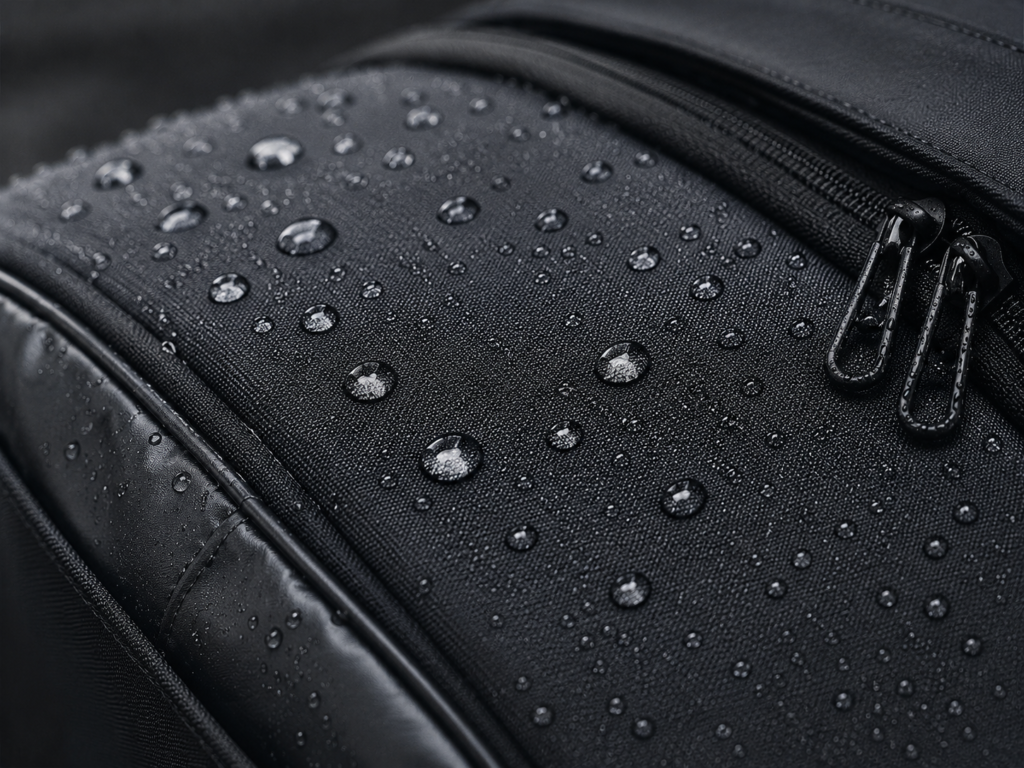
In addition to fabric coatings, many tennis bags also use water-repellent surface treatments to help prevent moisture absorption during outdoor use.
These treatments help:
- Water roll off the fabric surface
- Reduce moisture penetration
- Improve weather resistance
- Keep the bag cleaner during travel and training
Over time, water-repellent treatments may gradually weaken because of friction, heavy use, sunlight exposure, and repeated cleaning.
Note: Professional tennis racket bags often combine waterproof coatings, reinforced stitching, and water-repellent treatments to improve durability and protect sports equipment during tournaments and outdoor travel.
Tennis Racket Bag Construction
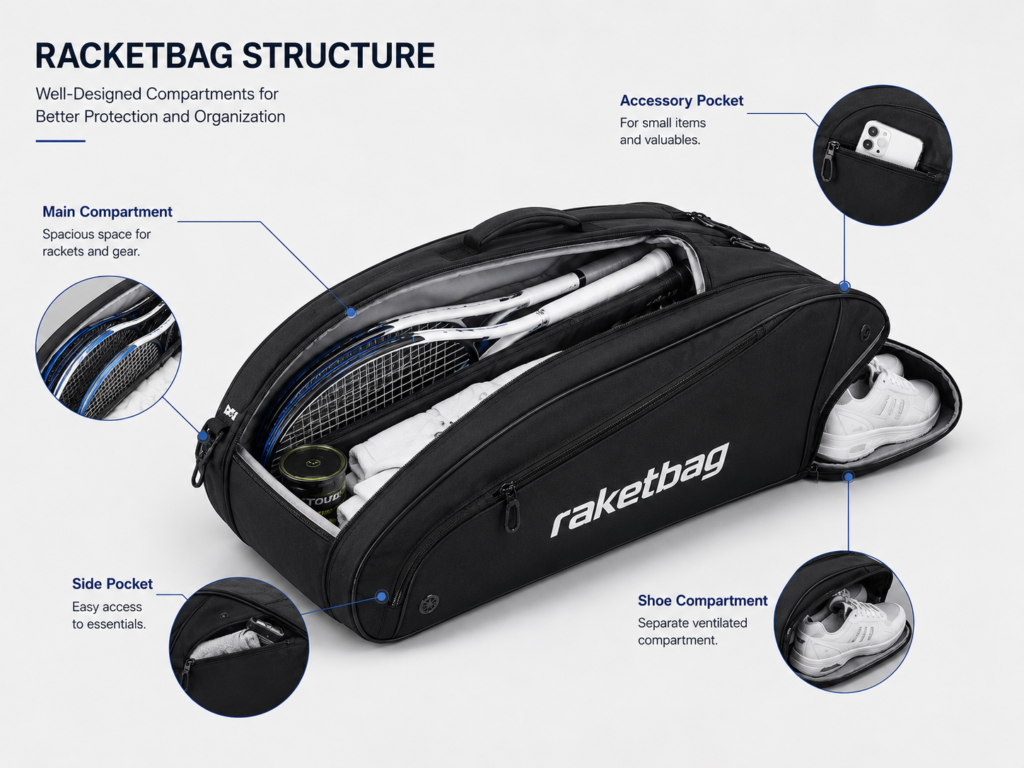
The construction process is one of the most important parts of tennis racket bag manufacturing. In addition to fabric materials and waterproof coatings, the overall bag structure directly affects durability, storage performance, and long-term product quality.
Professional tennis bag manufacturers focus on fabric construction, reinforcement methods, stitching technology, and structural support to create durable and functional racket bags for training, travel, and tournament use.
Fabric Weaving and Structure
The fabric weaving process helps determine the strength, durability, and abrasion resistance of a tennis racket bag. High-density woven fabrics are commonly used because they provide better structural stability and improved resistance to daily wear.
| Construction Method | Main Features | Advantages |
|---|---|---|
| High-Density Woven Fabric | Tight fabric structure | Improved durability and abrasion resistance |
| Reinforced Layer Construction | Additional support layers | Better shape retention and protection |
| Multi-Layer Fabric Panels | Combined fabric structure | Increased strength and long-term performance |
High-density woven nylon and polyester fabrics help reduce surface wear and improve the overall lifespan of tennis racket bags, especially during heavy transportation and outdoor use.
Tip: High-density woven fabrics are commonly used in premium tennis racket bags because they improve durability, shape retention, and resistance to abrasion during long-term use.
Reinforced Stitching and Structural Assembly
During tennis bag production, manufacturers use reinforced stitching techniques to improve load-bearing strength and prevent damage in high-stress areas such as shoulder straps, handles, zipper sections, and racket compartments.
Common reinforcement methods include:
- Double stitching
- Cross reinforcement stitching
- Edge binding reinforcement
- PE support panel integration
- Foam padding reinforcement
Compared with basic stitching methods, reinforced construction provides better durability and helps the tennis racket bag maintain its structure during travel and daily use.
Many premium tennis bags also include padded racket compartments, thermal insulation lining, reinforced bottom panels, and ergonomic carrying systems to improve protection and user comfort.
Quality Control
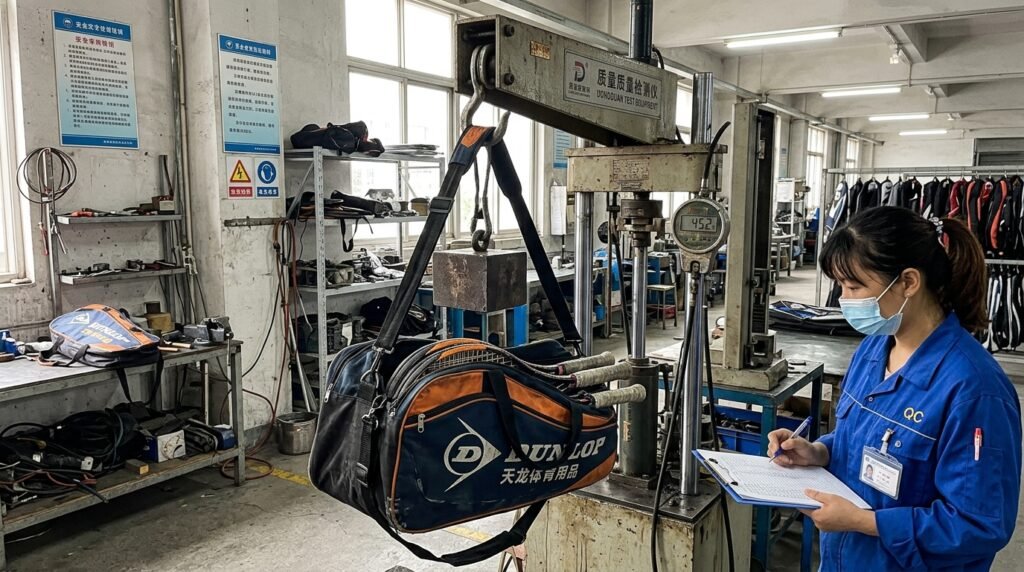
Before a tennis racket bag is shipped to customers, it goes through multiple quality control inspections to ensure durability, structural stability, and overall product consistency. Professional tennis bag manufacturers carefully test materials, stitching, zippers, and compartment construction during the production process.
| Quality Control Test | Purpose |
|---|---|
| Stitching Inspection | Checks seam strength and alignment |
| Zipper Testing | Ensures smooth opening and long-term durability |
| Load-Bearing Test | Evaluates shoulder straps and handle strength |
| Shape & Symmetry Check | Maintains professional bag structure |
| Material Inspection | Verifies fabric quality and surface consistency |
Manufacturers also inspect reinforced areas such as racket compartments, bottom panels, shoulder straps, and thermal lining sections to ensure the tennis racket bag performs well during travel, tournaments, and daily sports use.
Only tennis bags that pass final quality inspections move to packaging and shipment.
Design Features
Modern tennis racket bags include multiple functional design features to improve organization, protection, carrying comfort, and storage efficiency.
Thermal Insulation Compartments
Many premium tennis racket bags include thermal insulation lining to help protect racket strings from extreme temperatures during outdoor play and travel.
Thermal-lined compartments help:
- Maintain racket performance
- Reduce heat exposure
- Protect string tension
- Improve equipment protection during transportation
Professional tournament tennis bags often include one or more insulated racket compartments for added protection.
Waterproof Zippers
High-quality tennis bags often use waterproof or reinforced zippers to improve durability and moisture protection.
These zippers help protect:
- Rackets
- Clothing
- Shoes
- Electronics
- Personal accessories
Premium zipper systems are designed for frequent opening and closing during training and tournament use.
Reinforced Structural Features
Manufacturers add reinforced support features to improve overall durability and carrying performance.
Common structural features include:
- Reinforced shoulder straps
- Padded backpack systems
- PE support panels
- Foam-protected racket compartments
- Ventilated shoe pockets
- Multi-layer storage compartments
These design features help improve organization, comfort, and long-term durability during daily use and travel.
| Tennis Bag Feature | Main Function |
|---|---|
| Thermal Lining | Protects racket strings from heat |
| Waterproof Zippers | Improves moisture protection |
| Ventilated Shoe Pocket | Separates shoes from clean gear |
| Reinforced Bottom Panel | Improves structural durability |
| Ergonomic Shoulder Straps | Enhances carrying comfort |
Tip: Professional tennis racket bags combine reinforced construction, thermal protection, waterproof materials, and organized storage compartments to improve both performance and long-term durability.
When all of these manufacturing features work together, a tennis racket bag becomes more durable, functional, and reliable for daily sports use. Reinforced fabrics, waterproof coatings, thermal insulation compartments, heavy-duty zippers, and structured storage systems all help protect rackets and equipment during training, tournaments, and travel.
A professionally made tennis racket bag is not only designed for storage, but also for long-term performance, comfort, and equipment protection. High-quality materials, reinforced construction techniques, and organized compartment layouts help improve durability while keeping gear secure and easy to access.
When choosing a tennis racket bag, it is important to consider material quality, waterproof performance, structural reinforcement, storage capacity, and carrying comfort. Features such as padded racket compartments, ventilated shoe pockets, ergonomic shoulder straps, and thermal lining can significantly improve the overall user experience.
Modern tennis bag manufacturers continue to develop more durable, lightweight, and functional designs to meet the needs of professional players, sports brands, tennis clubs, and global wholesale buyers.