Trekking and mountaineering backpacks may look similar, but they serve different carrying and movement requirements. Understanding these priorities helps you choose a pack suited to the route, equipment, and terrain.
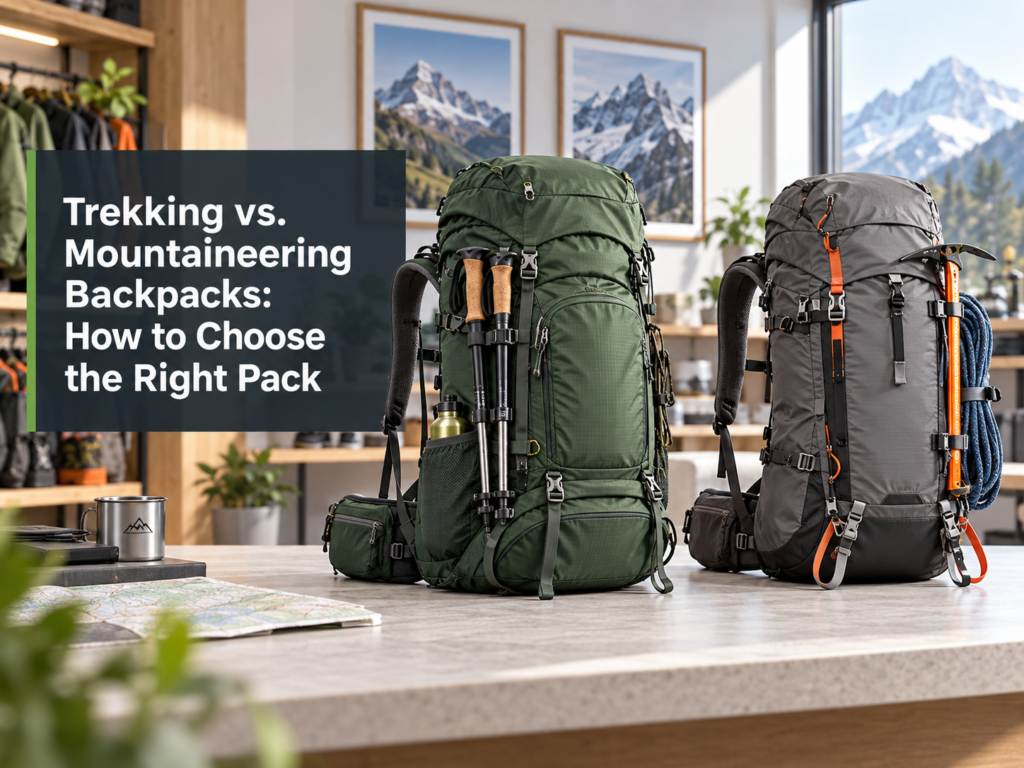
Trekking backpacks generally emphasize sustained carrying comfort and convenient organization, while mountaineering packs prioritize stability and freedom of movement on steep or technical ground. Trekking designs often feature adjustable suspension, ventilation, and accessible pockets. Mountaineering designs typically use a streamlined profile, with attention to helmet clearance, climbing-harness access, and secure equipment attachment.
Capacity and frame material alone do not distinguish the two. Both categories include different support systems, from flexible framesheets to removable metal stays. This guide compares their construction, fit, storage, and equipment-carry features to help you assess the complete design rather than the category label.
Trekking vs. Mountaineering Backpacks: A Practical Comparison

The main distinction is design priority. Trekking packs emphasize sustained carrying comfort and convenient access, while mountaineering packs balance load support with stability, equipment compatibility, and movement on technical terrain.
| Feature | Trekking Backpack | Mountaineering Backpack |
|---|---|---|
| Primary purpose | Carry supplies comfortably during extended walking | Carry equipment securely while scrambling or climbing |
| Typical use | Trails, hut-to-hut routes, and self-supported trekking | Alpine routes involving rock, snow, ice, or glaciers |
| Back system | Emphasis on fit, load transfer, and ventilation | Emphasis on close-fitting stability and movement |
| Profile | Often accommodates accessible pockets and multiple compartments | Generally streamlined to limit interference and snagging |
| Organization | Convenient storage for frequently used items | More selective storage with equipment-specific attachments |
| Equipment carry | Trekking poles, shelter, sleeping equipment, and clothing | Ice tools, rope, helmet, crampons, or skis, depending on the model |
| Hip belt | Often padded to support prolonged load carrying | May be shaped, stowable, or removable for harness compatibility |
| Frame | Varies from flexible support to substantial internal frames | May use framesheets, removable stays, or more supportive expedition structures |
| Capacity selection | Based on trip duration, resupply, and camping requirements | Based on technical equipment, approach loads, and expedition needs |
These are common design tendencies, not fixed category rules. Expedition mountaineering packs may have substantial frames and padded hip belts, while lightweight trekking packs may use minimal suspension. Capacity alone does not establish suitability.
What Is a Trekking Backpack?
A trekking backpack is designed for extended walking while carrying the supplies needed between accommodation or resupply points. Depending on the trip, these may include clothing, food, water, shelter, and sleeping equipment.
Its suspension system should support the intended load while maintaining a comfortable fit. Useful features may include:
- Torso sizing or adjustment suited to the wearer
- Shoulder straps and a hip belt that distribute pressure comfortably
- A back panel that balances support and ventilation
- Accessible storage for water, snacks, navigation, and additional layers
- Compression straps that stabilize partially filled loads
- Compartments or attachment points suited to the actual equipment carried
Not every trekking pack includes all these features. A simpler layout may reduce weight, while additional openings and pockets can improve organization.
How Much Capacity Do You Need?
Choose capacity from the equipment list rather than trip length alone. A supported hut-to-hut trek may require substantially less space than a self-supported trip of the same duration. Cold-weather clothing, bulky sleeping equipment, and long intervals between resupply can increase volume requirements.
Check both usable space and carrying performance. A bag may hold the equipment but still be uncomfortable at the resulting weight. Assess fit and stability with a representative load before choosing the final size.
What Is a Mountaineering Backpack?
A mountaineering backpack, often called an alpine pack, is designed to carry equipment on routes involving climbing, snow, ice, or other technical terrain. Its construction should support secure carrying without obstructing the wearer’s movements or access to climbing equipment.
Stability and equipment compatibility are central priorities. Depending on the intended activity, useful features include:
- A streamlined profile that keeps the load close to the body
- Secure attachments for ice axes or ice tools
- Suitable storage or attachment options for crampons, rope, and a helmet
- Compression and strap management to reduce movement and snagging
- Clearance for looking upward while wearing a helmet
- A hip belt and lower pack profile compatible with a climbing harness
- Reinforcement in areas exposed to abrasion or sharp equipment
These features vary by model. A compact pack for a short alpine route may use minimal suspension, while an expedition pack may need substantial load support. Neither capacity nor frame material alone defines a mountaineering backpack.
How Do Trekking and Mountaineering Suspension Systems Differ?
A backpack’s suspension system includes more than the visible back panel. Shoulder straps, the hip belt, frame or framesheet, load lifters, and torso sizing work together to support and stabilize the load.
Trekking: Sustained Support and Fit
Trekking systems generally emphasize comfort over extended walking. Depending on the design, they may offer adjustable torso length, substantial hip-belt support, and ventilation channels or suspended mesh.
The objective is to distribute the intended load comfortably while keeping it stable as the wearer walks.
Mountaineering: Stability and Freedom of Movement
Mountaineering systems place greater emphasis on keeping the pack controlled during climbing and changes in body position. Close-fitting back panels and restrained profiles can help limit interference with movement.
Hip belts may be shaped, stowable, or removable to accommodate a harness. However, removing supportive components can change carrying comfort and load capability.
Assess the complete system under realistic conditions. Check torso fit, load stability, helmet clearance, and harness access with representative equipment rather than judging a pack by padding thickness or ventilation alone.
Do Mountaineering Backpacks Require a Metal Frame?
No. Mountaineering suitability depends on load support, stability, movement, and equipment compatibility—not the presence of a metal frame.
Aluminum stays can help transfer weight to the hips in both trekking and mountaineering packs. Some technical designs use removable stays to adapt the pack for different loads, while compact summit packs may rely on a flexible framesheet, foam padding, or minimal structural support.
Understanding Backpack Support Structures
| Structure | Main Function | What to Consider |
|---|---|---|
| Internal stays or frame | Supports the pack and helps distribute load | Shape, rigidity, fit, and connection to the hip belt |
| Framesheet | Adds structure and separates the back from packed contents | Flexibility, reinforcement, and intended carrying load |
| External frame | Supports the pack or attached cargo outside the bag body | Overall profile, load requirements, and movement clearance |
| Suspended-mesh back system | Creates an air gap using a tensioned panel and supporting frame | Ventilation, load position, and stability |
| Minimal or frameless construction | Reduces structural weight and allows flexibility | Packing technique, comfort, and practical load limits |
These features are not mutually exclusive. A pack may combine a framesheet with metal stays, for example. Evaluate how the complete system carries the intended equipment rather than treating any frame type as a category identifier.
How External Equipment Carry Differs
Trekking packs generally emphasize convenient storage for walking and camp equipment. Side pockets, front pockets, trekking-pole attachments, and sleeping-mat straps can help organize items used throughout the day.
Mountaineering packs tend to prioritize attachments for specific technical equipment. Depending on the model, these may include ice-tool holders, rope straps, helmet carriers, protected crampon storage, or ski-carry systems.
More attachment points do not necessarily mean a bulkier exterior. Technical packs often integrate these features into a restrained profile, with compression and strap management to limit movement and snagging.
Check compatibility with the actual equipment. Ice tools vary in shape, crampons require protection from sharp points, and externally carried items should not obstruct movement or access to essential gear. Accessory loops should not be assumed suitable for life-safety loads.
Access and Organization: Convenience vs. Simplicity
Trekking packs often provide several access routes, such as a top opening, front panel, side zipper, or separate lower compartment. These can make frequently used clothing, food, and camp equipment easier to retrieve.
Mountaineering packs commonly favor simpler layouts, although some also offer side or back-panel access. Fewer openings can reduce construction complexity, but glove-friendly operation depends on closure design, pull size, and buckle placement—not the number of zippers alone.
A simple pack requires deliberate organization. Keep route essentials accessible, separate sharp equipment from vulnerable contents, and test access while wearing the clothing and equipment expected on the trip.
Which Backpack Should You Choose?
Choose according to the route, equipment, and expected load—not the category name alone.
A trekking backpack is generally the better starting point when extended walking and carrying supplies are the main demands. Assess torso fit, hip-belt support, ventilation, and access with a representative load.
A mountaineering backpack is worth considering when climbing equipment and technical movement become central to the trip. Check load stability, equipment retention, helmet clearance, and access to the climbing harness.
The key distinction is carrying comfort over distance versus equipment compatibility during technical movement. Both categories still need an appropriate fit and sufficient support.
Can One Backpack Serve Both Activities?
One pack can cover overlapping activities, provided its construction meets the requirements of each trip. A supportive alpine pack may work well for trekking, while some trekking packs can accommodate scrambling or nontechnical mountain travel.
However, crossover suitability should be assessed rather than assumed. A bulky pocket layout may interfere with climbing, while a minimal summit pack may provide insufficient support for a heavily loaded approach.
For mixed use, evaluate:
- Stable suspension suited to the intended load
- Hip-belt support without excessive interference
- Secure attachments for the equipment actually carried
- Compression that controls partially filled loads
- Accessible closures with the expected clothing and gloves
- Capacity based on a complete equipment list
Do not assume general-purpose straps can safely replace equipment-specific attachment systems.
What Should Brands Specify Before Development?
For brands and importers, “trekking” and “mountaineering” are starting descriptions rather than complete product specifications.
| Development Area | Requirements to Define |
|---|---|
| Intended use | Terrain, season, trip duration, and technical activities |
| Capacity and load | Usable storage volume and intended carrying load |
| Fit | Torso range, adjustment method, and hip-belt sizing |
| Suspension | Frame structure, padding, ventilation, and removable components |
| Equipment carry | Attachment compatibility, retention, and reinforcement |
| Access | Opening style, compartment layout, and glove operation |
| Materials | Fabric construction, abrasion reinforcement, and weather protection |
| Validation | Carrying trials, attachment checks, and agreed durability tests |
These requirements guide pattern development, reinforcement placement, and sample evaluation. Test prototypes with representative loads and equipment, then document the approved construction before production.
For a custom backpack project, contact raketbag to discuss the intended application, specifications, branding, and order requirements. Confirm available development options and sampling arrangements for the proposed design.
Conclusion
Trekking and mountaineering backpacks differ primarily in design priorities, not simply size or frame material. Trekking designs emphasize sustained carrying comfort, while mountaineering designs place greater emphasis on stable movement and technical equipment compatibility.
Choose—or develop—the pack around the actual route, load, and user requirements. A well-matched design should carry the necessary equipment securely without compromising comfort or movement.