Military backpacks are often considered heavy, but the actual answer depends on what type of weight you are referring to. Are you looking at the empty weight of the backpack itself, the weight of a fully loaded training pack, or the total equipment carried during field operations? Each situation represents a very different load requirement.
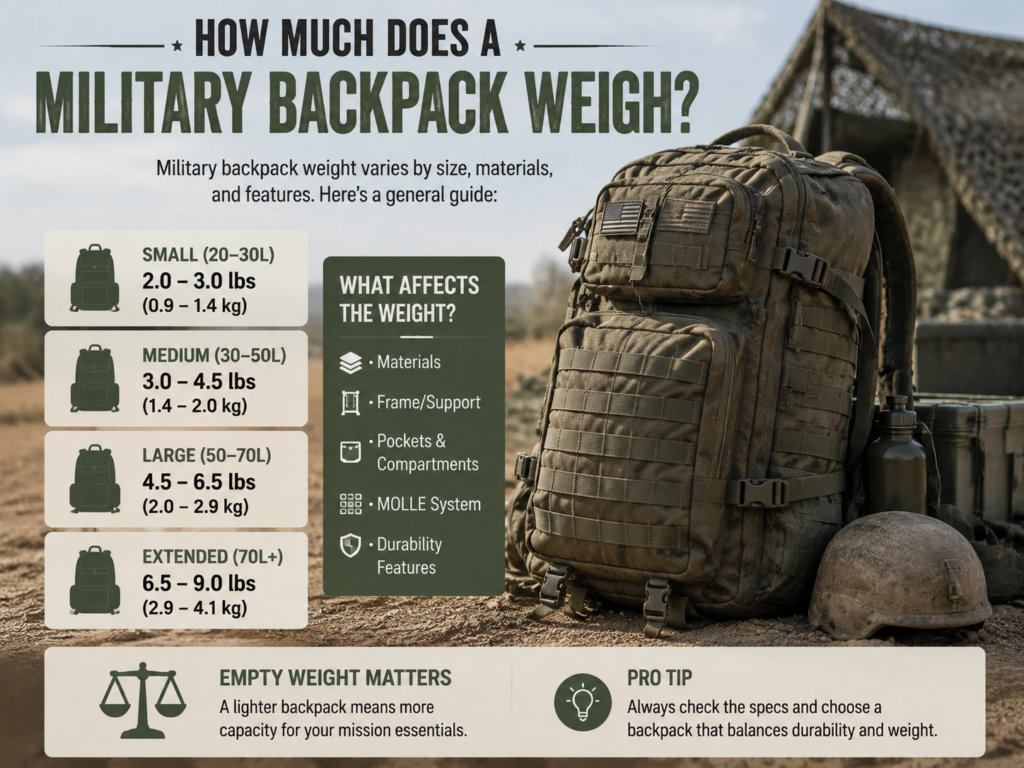
An empty military or tactical backpack may weigh only a few pounds, depending on its size, materials, frame structure, and added features. Once loaded with clothing, hydration, food, tools, electronics, and mission equipment, the total pack weight can increase significantly. In military environments, the complete carried load may also include protective equipment, ammunition, communication devices, and other essential gear beyond the backpack itself.
Understanding backpack weight is important for both users and manufacturers. A well-designed military backpack is not simply about carrying more weight—it is about balancing capacity, durability, comfort, and load distribution. In this guide, we’ll explore typical military backpack weights, load capacity, and the design factors that determine how effectively a pack performs in demanding environments.
Military Backpack Weight: A Practical Breakdown
The weight of a military backpack can vary significantly depending on its size, construction, intended purpose, and the amount of equipment it is designed to carry. A lightweight patrol pack and a large field rucksack may both be considered military-style backpacks, but they serve very different operational needs.
The table below provides a general overview of common military backpack weight ranges and what each category typically represents:
| Load Category | Typical Weight Range | What It Usually Includes |
|---|---|---|
| Empty Military Backpack | Approximately 2–10+ lb | The backpack itself, including fabric, frame system, padding, zippers, buckles, and other hardware |
| Loaded Assault Pack / Day Pack | Approximately 20–40 lb | Daily mission essentials such as hydration, food, first-aid supplies, rain gear, electronics, and personal equipment |
| Training Ruck Load | Approximately 35–45 lb | A commonly referenced training weight that may include essential gear, water, and additional required items |
| Large Field Rucksack | Approximately 45–85 lb | Extended-use equipment such as clothing layers, shelter systems, sleeping gear, food, water, and mission supplies |
| Complete Soldier Load | Approximately 80–140+ lb | Total carried equipment, including backpack, armor, helmet, weapon, ammunition, communication equipment, batteries, and mission-specific gear |
These figures are general reference ranges rather than fixed standards. Actual military loads can differ depending on the country, military branch, mission type, environment, terrain, climate conditions, and operational requirements.
For example, military training programs may use specific ruck march requirements with defined equipment weights, while real-world deployments often require additional mission-specific gear. This means backpack weight should always be evaluated within the larger context of the complete load system.
Military Backpack Weight vs. Total Soldier Load
A common misunderstanding is assuming that the weight of a soldier’s equipment is the same as the weight inside the backpack. In reality, a military backpack is only one component of a complete load-carrying system.
A soldier’s total carried equipment may include:
- Rucksack or assault pack
- Body armor and protective plates
- Helmet
- Primary weapon and ammunition
- Hydration system and water supply
- Radio and communication equipment
- Batteries and electronic devices
- Medical supplies
- Food and emergency rations
- Clothing layers and weather protection
- Shelter or sleeping equipment
- Tools and mission-specific accessories
This distinction is important because a backpack’s job is not simply to hold maximum weight—it must help distribute that weight efficiently while maintaining mobility, durability, and user comfort.
When discussions mention soldiers carrying loads of 80, 100, or even 140 pounds, those figures generally refer to the total equipment carried across the body, not the backpack alone. The actual backpack weight depends on the pack size, materials, internal frame structure, storage requirements, and mission purpose.
For military backpack manufacturers and tactical gear brands, this difference highlights the importance of designing products with the right balance of load capacity, ergonomic support, material strength, and long-term durability rather than focusing only on maximum carrying volume.
Empty Military Backpack Weight: What Determines the Actual Weight?
The weight of an empty military backpack can vary significantly depending on its size, construction, materials, and intended application. A lightweight tactical daypack may weigh only a few pounds, while a full-size military rucksack with an internal or external support system can exceed 10 pounds before any equipment is added.
Several design factors influence the empty weight of a military pack, including fabric strength, frame structure, padding thickness, modular attachment systems, zipper hardware, reinforcement points, and load-support components. In general, the more a backpack is designed for heavy-duty field use, the more structural features it requires—and those features add weight.
Lightweight Tactical Packs: Approximately 2–4 lb
Small tactical backpacks are designed for mobility, everyday carry, short outdoor activities, range use, and light training scenarios. These packs typically focus on organization and quick access rather than carrying extremely heavy loads over long distances.
Common features may include:
- MOLLE webbing for modular attachments
- Multiple storage compartments
- Hydration bladder compatibility
- Reinforced fabric panels
- Lightweight shoulder straps
- Compact organization systems
Because they are designed around speed and convenience, these packs usually avoid heavy frame systems. They are ideal for users who need reliable storage and flexibility without the added weight of a full load-bearing structure.
Assault Packs: Approximately 3–5 lb
Assault packs sit between compact tactical backpacks and large field rucksacks. They are commonly designed for patrol operations, short missions, training exercises, and situations where users need additional storage without carrying a full sustainment load.
A typical assault pack may provide enough capacity for:
- Water and hydration equipment
- Food and emergency supplies
- First-aid materials
- Electronics and communication devices
- Extra clothing layers
- Mission-specific tools
Many military-style assault packs fall into the medium-capacity range and often incorporate MOLLE-compatible panels, reinforced stitching, and durable materials while maintaining relatively low empty weight.
Medium and Large Military Rucksacks: Approximately 5–10+ lb
Large military rucksacks are built for extended missions and heavier equipment requirements. Compared with smaller tactical packs, they typically include stronger suspension systems, reinforced frames, padded hip belts, compression systems, and additional structural support.
These features increase empty weight but provide important benefits when carrying heavier loads over longer distances.
A large field rucksack may include:
- External or internal frame support
- Heavy-duty military-grade fabrics
- Reinforced stress points
- Adjustable suspension systems
- Large-capacity compartments
- Compression straps for load control
In heavy-load situations, the additional structure helps improve stability and distribute weight more efficiently across the shoulders, back, and hips.
Loaded Military Rucksack Weight: From Training Loads to Field Missions
An empty backpack weight only tells part of the story. The actual weight carried during training or field operations depends on the mission requirements, environment, duration, and equipment needed.
A training ruck may commonly fall within the 35–45 lb range, although exact requirements vary by military organization, training program, and event rules. Once additional equipment such as water, food, cold-weather clothing, batteries, protective equipment, and mission supplies are added, the total carried load can increase substantially.
Typical load examples may include:
| Scenario | Possible Weight Range |
|---|---|
| Short training ruck | 25–35 lb |
| Standard training load | 35–45 lb |
| Multi-day field pack | 40–65 lb |
| Extended sustainment load | 60–85 lb |
| Full operational load | 80–140+ lb total carried weight |
It is important to understand that the highest numbers usually represent the complete soldier load, not just the backpack. A rucksack may carry only part of the equipment, while other items are distributed across body armor, belts, weapon systems, and external carrying equipment.
Understanding Fighting Load vs. Sustainment Load
Military load discussions often separate equipment into different categories based on operational purpose.
A fighting load refers to the essential equipment carried during active movement or combat situations. This may include:
- Body armor and protective equipment
- Helmet
- Weapon and ammunition
- Water
- Communication devices
- Medical supplies
- Essential survival gear
A sustainment or approach load includes additional equipment required for longer operations, such as:
- Rucksack contents
- Food supplies
- Extra clothing
- Shelter systems
- Sleeping equipment
- Additional batteries
- Extended mission gear
For example, a soldier may carry a lighter fighting load during direct movement but require a much larger overall equipment load when preparing for extended field operations.
The key takeaway is that military backpack weight should always be evaluated as part of a complete load system. A high-quality military backpack is not designed simply to minimize empty weight—it is engineered to balance durability, carrying comfort, organization, and load distribution under demanding conditions.
What Makes Military Backpacks Heavier Than Standard Packs?
A military backpack is designed for a completely different purpose than a school backpack, commuter bag, or lightweight travel pack. Instead of prioritizing minimum weight, military-style packs are built around durability, load support, modularity, and performance in demanding environments.
The additional weight comes from design choices that improve reliability and carrying capability under heavy-use conditions.
Heavy-Duty Materials for Extreme Durability
Military and tactical backpacks commonly use stronger, abrasion-resistant fabrics compared with everyday backpacks. Materials such as reinforced nylon or other high-strength textiles are selected to withstand rough surfaces, outdoor exposure, repeated loading, and long-term use.
The trade-off is simple: stronger materials provide better durability but generally increase the empty weight of the backpack.
Reinforced Construction for Heavy Loads
A military pack must handle repeated stress from heavy equipment. Areas such as shoulder strap connections, carry handles, compression points, MOLLE attachment zones, and bottom panels often require additional reinforcement.
Manufacturers may add:
- Extra stitching layers
- Bar-tack reinforcement
- Binding tape
- Double-layer fabric panels
- Strengthened seams
These construction methods improve reliability but also contribute to overall weight.
Load-Support Systems and Ergonomic Structure
Unlike simple daypacks, military backpacks are often engineered to carry substantial loads over extended periods. To achieve this, they may include structural components such as:
- Internal or external frames
- Stiffened back panels
- Padded shoulder straps
- Adjustable load lifters
- Hip belts
- Compression systems
Although these features add weight, they help transfer the load more effectively from the shoulders to the hips and improve stability during movement.
Modular Systems and External Attachment Options
One of the defining features of military backpacks is customization. MOLLE webbing, accessory panels, side compression straps, external pockets, and attachment points allow users to configure the pack according to mission requirements.
This modular capability increases versatility, but every additional panel, strap, buckle, and attachment system adds material and weight.
Durable Hardware and Functional Components
Military-style packs typically use stronger hardware than casual backpacks. Heavy-duty zippers, reinforced buckles, sternum straps, waist belts, adjustment systems, D-rings, and compression hardware all improve functionality and reliability.
These components are valuable in demanding applications, but they also contribute to the overall pack weight.
Specialized Storage and Mission Organization
Military backpacks are often designed around specific equipment requirements rather than general storage. Depending on the application, they may include:
- Hydration bladder compartments
- Radio or communication equipment pockets
- Medical supply organization
- Administrative compartments
- Helmet storage
- Tool attachment points
- Expandable storage sections
Each additional feature improves usability for a specific purpose while adding complexity to the design.
Military Backpack Weight by Application
Not all military-style backpacks are designed for the same mission. Weight, capacity, and structure vary depending on whether the pack is intended for short operations, extended field use, specialized equipment, or support roles.
| Backpack Type | Typical Weight Characteristics | Common Applications |
|---|---|---|
| Assault Pack | Lightweight to medium | Short missions, patrol use, training, daily tactical applications |
| 3-Day Pack | Medium | Short field operations requiring clothing, food, water, and essential equipment |
| Large Rucksack | Heavy-duty | Extended missions with shelter systems, sleeping gear, clothing, and sustainment supplies |
| Medical Pack | Medium to heavy | Carrying organized medical equipment, trauma supplies, and modular pouches |
| Radio Pack | Medium to heavy | Communication equipment, batteries, and support electronics |
| Cold-Weather Pack | Heavy when fully loaded | Insulated clothing, shelter equipment, food, heating supplies, and additional gear |
This is why there is no single answer to “how heavy is a military backpack?” A compact assault pack and a large field rucksack may both be military-style products, but they are designed for completely different load requirements.
Choosing the Right Tactical Backpack Weight for Civilian Use
Civilian users usually do not need to replicate military load configurations. Military equipment weights are determined by mission requirements, operational needs, and specialized environments—not everyday comfort.
For hiking, hunting, range activities, travel, outdoor work, or rucking workouts, the more practical question is:
How much weight can you comfortably carry for your intended activity and distance?
Typical civilian load ranges may look like this:
| Use Case | Common Loaded Weight Range |
|---|---|
| Everyday Tactical Backpack | 10–20 lb |
| Day Hiking / Outdoor Use | 15–30 lb |
| Range or Training Pack | 20–40 lb |
| Rucking Workout Pack | 20–45 lb depending on fitness level |
| Multi-Day Outdoor Pack | 35–60 lb depending on equipment and experience |
The comfort of a loaded backpack depends on much more than the number on the scale. Proper fit, suspension design, hip belt support, shoulder strap ergonomics, back ventilation, compression adjustment, and balanced packing all influence how the weight feels.
A poorly designed 30-pound backpack may feel more uncomfortable than a properly fitted 45-pound pack with effective load distribution. For tactical backpack manufacturers, this highlights why successful designs must balance strength, weight control, ergonomics, and real-world usability rather than focusing on capacity alone.
Final Thoughts: Weight Is About Purpose, Not Just Numbers
The weight of a military backpack cannot be judged by a single number. A lightweight tactical pack, an assault backpack, and a large field rucksack are designed for completely different applications, with different requirements for capacity, durability, organization, and load support. A heavier backpack is not necessarily a disadvantage—often, the additional weight comes from stronger materials, reinforced construction, ergonomic support systems, and features designed for demanding environments.
For brands, distributors, and tactical equipment companies, understanding these design differences is essential when developing reliable military and tactical backpacks. The right product balance depends on the target market, whether the focus is outdoor activities, law enforcement, military applications, hunting, training, or everyday tactical use.
As a professional military backpack manufacturer, we provide OEM and ODM solutions for global customers, including custom materials, capacity options, MOLLE systems, compartment layouts, frame structures, logo branding, and functional upgrades. From lightweight tactical daypacks to heavy-duty field rucksacks, we help develop products that meet specific performance and market requirements.
Whether you are creating a new tactical gear collection or sourcing a reliable manufacturing partner, we can help transform your backpack concepts into durable, functional, and market-ready solutions.