Building a private label tennis bag brand is no longer limited to large companies. With the rise of flexible manufacturing and OEM/ODM capabilities, small and mid-sized brands can now enter the market with competitive products. However, success depends on more than just sourcing a product—it requires a clear strategy across development, positioning, and branding.
A successful private label tennis bag brand requires a structured approach to product development, sourcing, and branding. Clear positioning and reliable manufacturing are essential to stand out in a competitive market.
Understanding each stage of the process helps reduce risk and improve long-term brand performance.
What Are the Key Steps to Build a Private Label Tennis Bag Brand?
Launching a private label brand involves more than selecting a product and adding a logo.
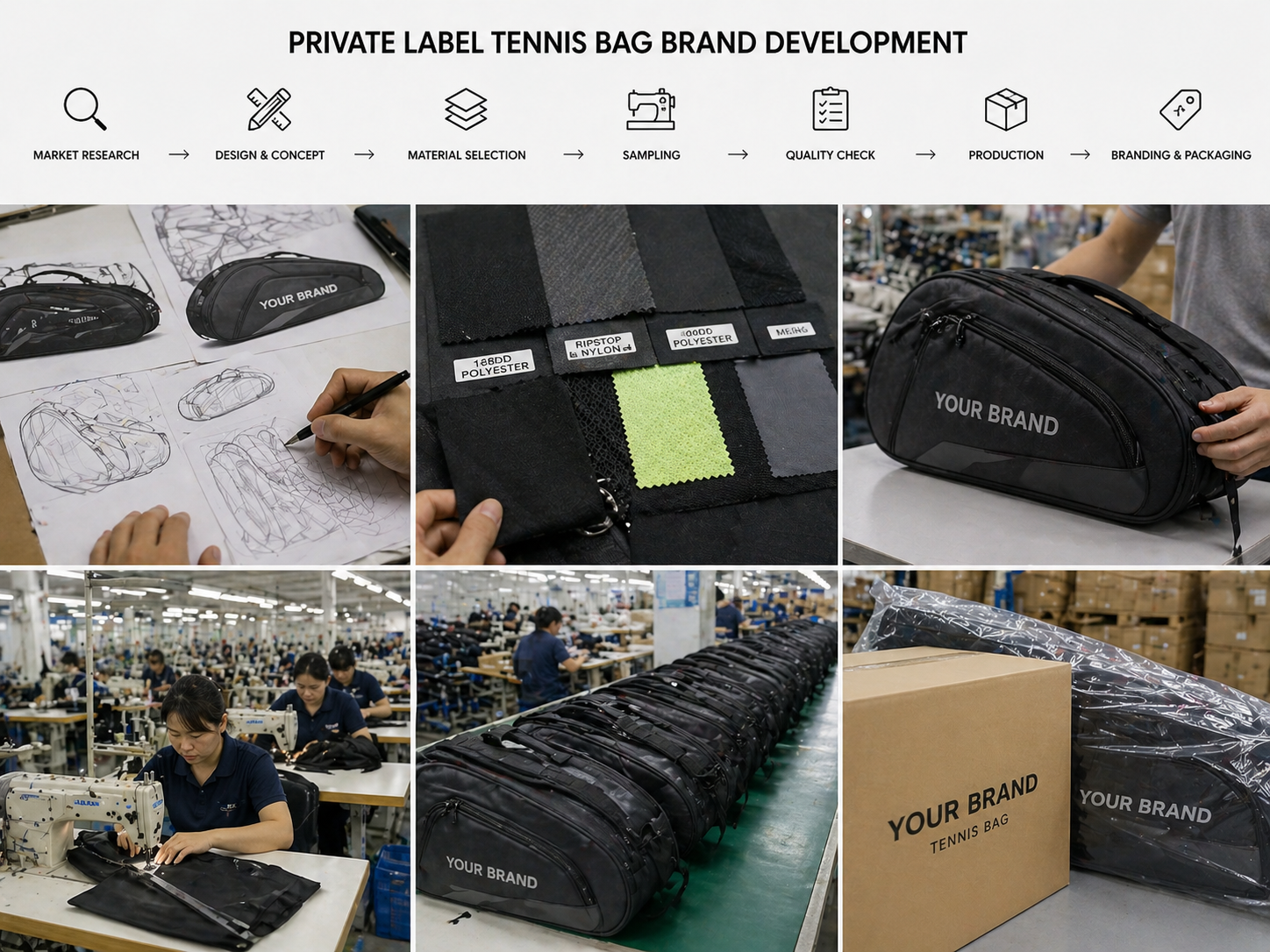
The process includes market research, product definition, supplier selection, sampling, and controlled production rollout. Each step directly affects product success and brand perception.
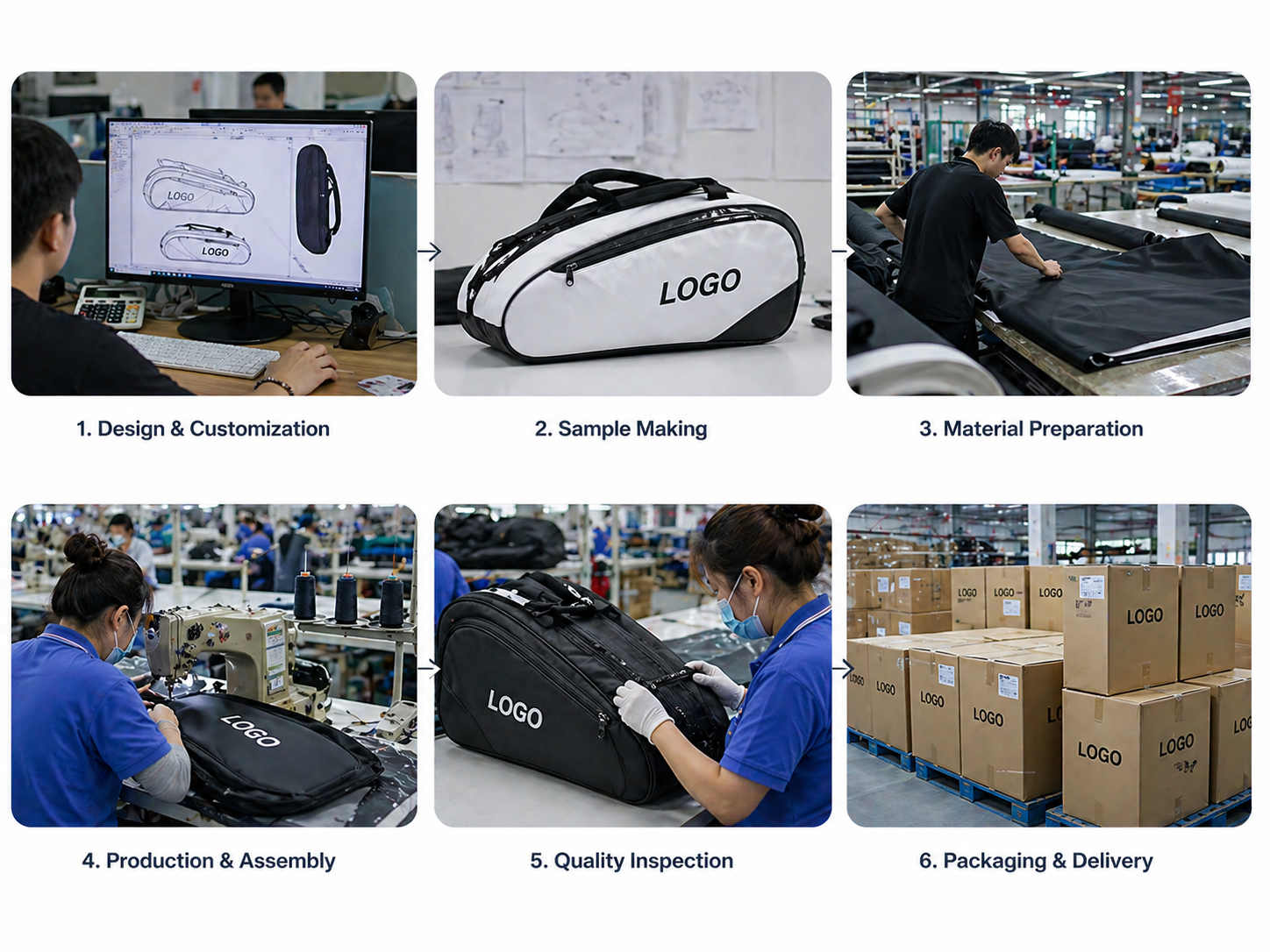
The first step is defining the target market. This determines product type, price range, and feature requirements. For example, a brand targeting casual players will prioritize portability and affordability, while a performance-focused brand will emphasize durability and capacity.
Next comes product definition. This includes deciding on structure, materials, and functional features. At this stage, common market issues—such as poor compartment design or weak durability—should be addressed to avoid negative feedback later.
Supplier selection is critical. A capable racket bag manufacturer can support both development and production, ensuring consistency between samples and bulk orders.
Sampling and testing follow. This stage allows refinement of details such as compartment layout, material feel, and overall usability. Only after validation should production begin.
A simplified process overview:
| Step | Focus |
|---|---|
| Market research | Target user and positioning |
| Product definition | Features and structure |
| Supplier selection | Capability and reliability |
| Sampling | Testing and refinement |
| Production | Quality and consistency |
Each stage builds on the previous one, making early decisions especially important.
How Should Product Development Be Structured for New Brands?
Product development determines whether a brand can compete effectively.
New brands should focus on solving real user problems through optimized design, rather than copying existing products without improvement.
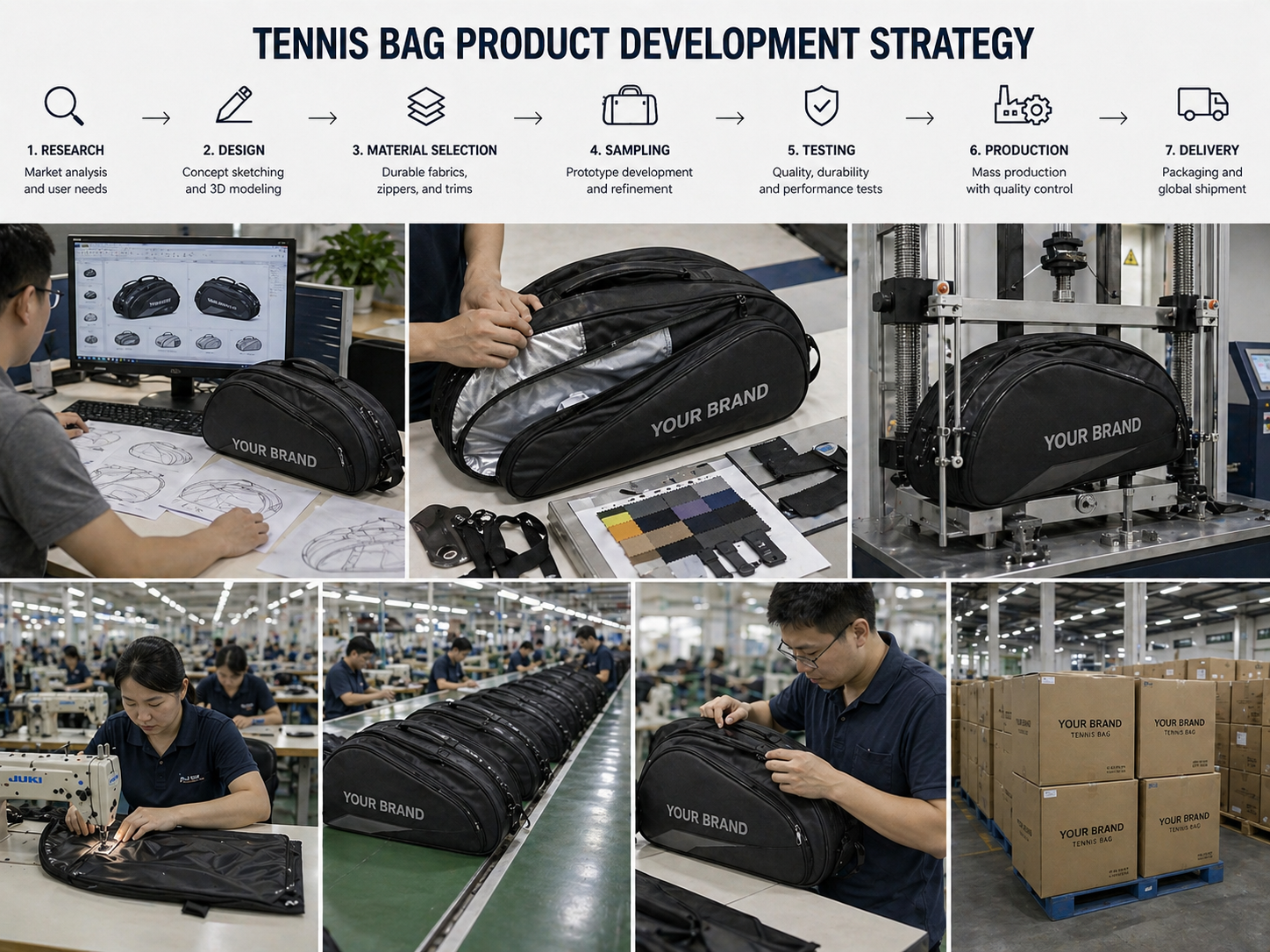
Many new brands enter the market with generic designs, which leads to direct competition and limited differentiation. A more effective approach is to identify common user pain points and integrate solutions into the product.
Typical issues in the market include:
- Zipper failure due to low-quality components
- Inefficient compartment layout
- Lack of structural support
- Poor durability over time
Addressing these issues during development creates immediate value. For example, improving compartment zoning can enhance usability, while upgrading materials increases durability.
Development should also consider scalability. Designing a product that can evolve into multiple variations—such as different sizes or feature sets—allows brands to expand their product line more efficiently.
How to Build an Effective Sourcing Strategy for Tennis Bags?
Sourcing strategy directly affects cost, quality, and reliability.
An effective sourcing strategy balances price, quality, and flexibility, while ensuring long-term cooperation with a reliable supplier.
Choosing between OEM and ODM is an important decision. OEM allows full customization but requires more development effort. ODM offers faster market entry but limits differentiation. Many brands start with ODM and gradually move toward OEM as they grow.
Supplier evaluation should focus on several factors:
- Production capability and experience
- Quality control systems
- Communication efficiency
- Ability to support customization
A professional tennis bag supplier can provide guidance on material selection, structural design, and cost optimization, helping brands avoid common sourcing risks.
Long-term partnerships are more valuable than short-term cost savings. Consistent quality and reliable delivery are essential for building a stable brand.
How Does Branding Influence Private Label Success?
Branding transforms a product into a recognizable identity.
Strong branding creates differentiation through visual consistency, product identity, and clear market positioning.
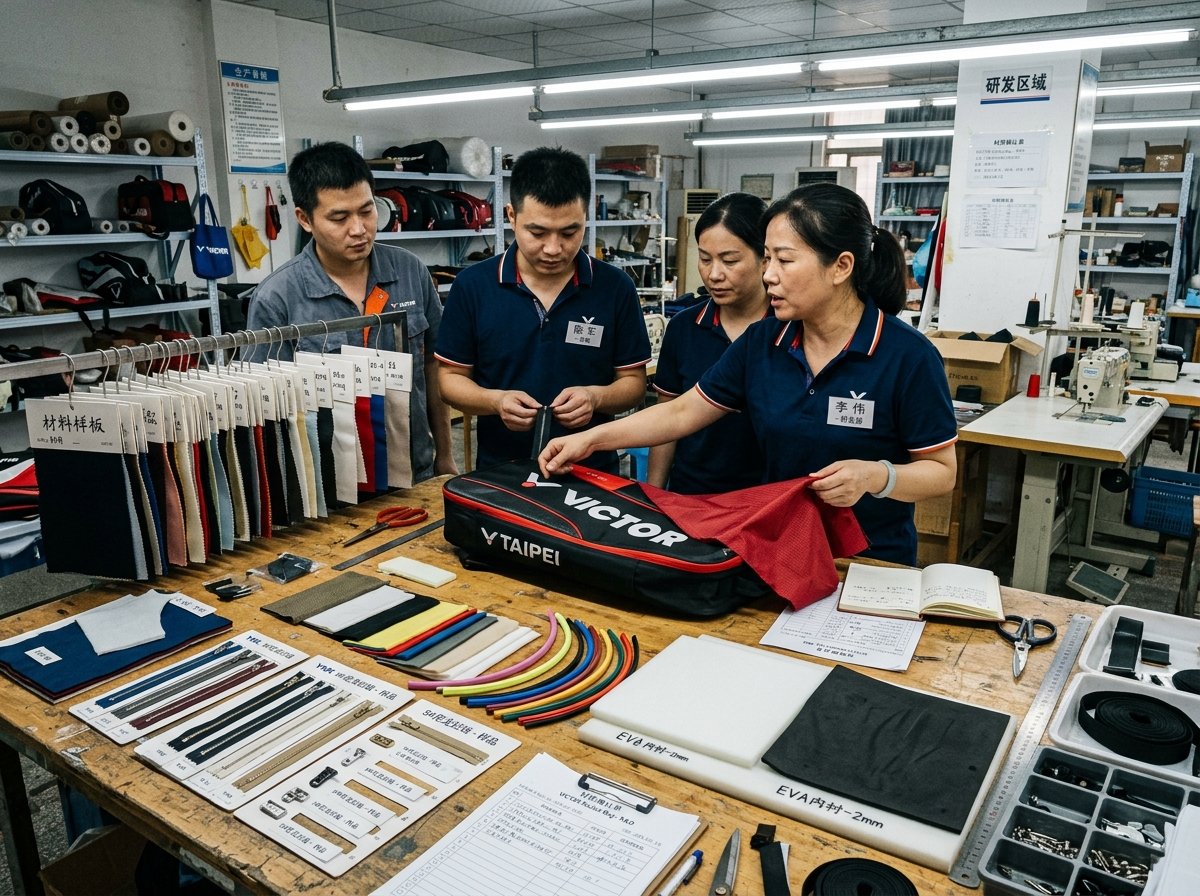
In a competitive market, visual identity plays a critical role. This includes logo placement, color systems, and overall design language. Consistency across products strengthens brand recognition and builds trust with customers.
Branding should align with target users. A premium brand may focus on minimal design and high-end materials, while a youth-oriented brand may use bold colors and dynamic styling.
However, branding should not be limited to appearance. It must also reflect product performance. If visual expectations are not matched by actual quality, negative feedback will follow.
How Important Is Packaging in Tennis Bag Private Label Products?
Packaging is often underestimated but plays a key role in product perception.
Effective packaging enhances brand value, protects the product, and improves the overall customer experience.
Packaging serves multiple purposes. It protects the product during transportation, ensures proper presentation in retail environments, and reinforces brand identity.
For private label brands, packaging is an opportunity to differentiate. Custom tags, printed bags, and branded boxes create a more professional appearance. This is especially important for e-commerce, where packaging is part of the unboxing experience.
At the same time, packaging must be practical. It should balance cost, protection, and environmental considerations. Overly complex packaging increases cost without adding proportional value.
How Can New Brands Avoid Common Product Failures?
Avoiding common issues is essential for building credibility.
New brands should focus on quality consistency, functional design, and realistic product claims to reduce negative feedback and returns.
Many product failures in the market are predictable. Common problems include weak zippers, poor stitching, and misleading capacity claims. These issues often result from cost-driven decisions during development.
Preventing these problems requires attention to detail. Material selection, structural reinforcement, and testing must be prioritized. For example, ensuring that zippers can handle repeated use or that compartments function as intended can significantly improve user satisfaction.
Clear communication between brand and supplier is also critical. Misunderstandings during development can lead to inconsistencies between samples and final products.
How to Scale a Private Label Tennis Bag Brand Successfully?
Scaling requires a balance between growth and control.
Successful scaling involves expanding product lines, maintaining quality, and strengthening brand identity while optimizing supply chain efficiency.
As a brand grows, product diversification becomes important. Introducing new models, sizes, or feature variations helps capture different market segments. However, expansion must be controlled to maintain consistency.
Quality management becomes more critical at scale. Ensuring that all products meet the same standards protects brand reputation. This requires strong coordination with suppliers and clear production guidelines.
At the same time, brand identity should remain consistent. Even as the product range expands, visual and functional coherence must be maintained.
Conclusion
Building a private label tennis bag brand requires a structured approach to development, sourcing, and branding. Brands that focus on product quality, clear positioning, and reliable partnerships can achieve sustainable growth in a competitive market.