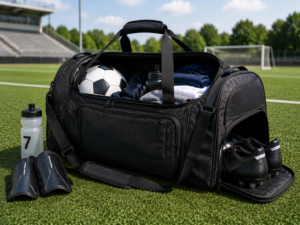
Selecting soccer bags for an individual player is usually straightforward, but choosing the right bags for an entire youth team or football club requires more planning.
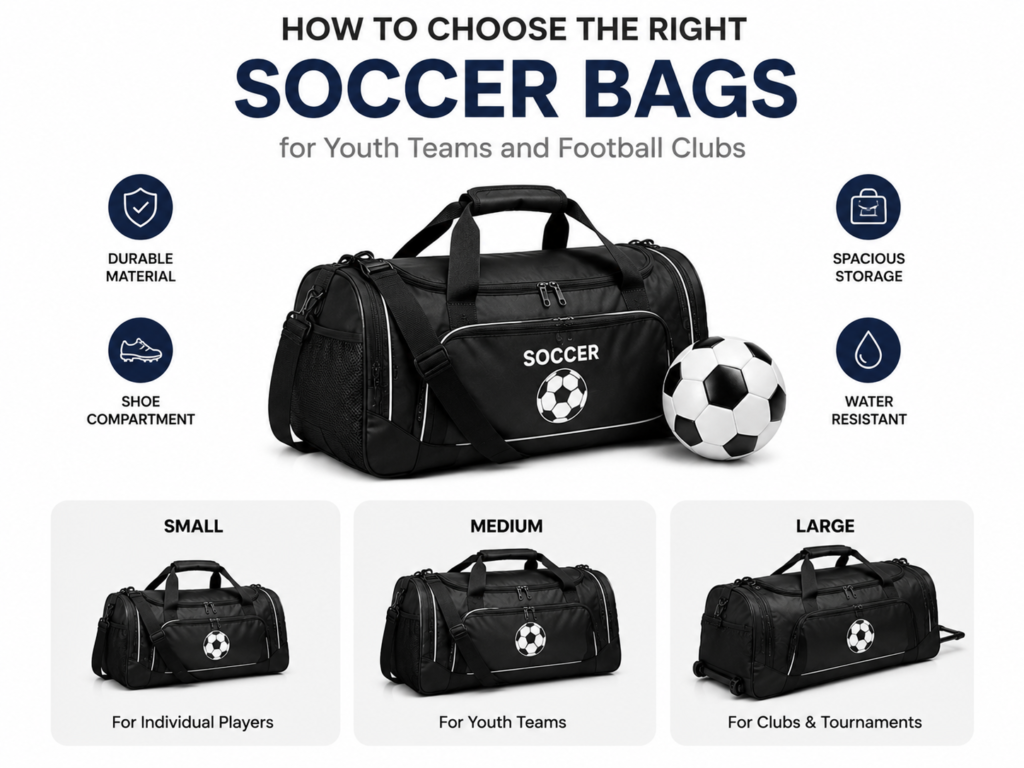
For a single player, the main concerns are storage capacity and carrying comfort. However, clubs and team managers need to consider many additional factors, including player age groups, team branding, logo customization, durability, order quantity, budget control, and whether the bags can meet the needs of different teams throughout the season.
A quality soccer bag should do more than simply carry equipment. It needs to handle daily training sessions, rainy match days, tournament travel, changing rooms, and frequent use throughout the year. For youth teams and football clubs, the ideal solution is usually a complete bag collection that matches different users — backpacks for younger players and daily training, larger backpacks or duffel bags for advanced players, goalkeeper bags for specialized equipment, and team bags for coaches and shared gear.
Quick Guide: What Soccer Bags Should Youth Teams Choose?
Youth teams usually need more than a single type of soccer bag. Different players and staff members have different equipment needs, so a well-planned team bag system is often the most practical solution.
| User / Requirement | Recommended Bag Type | Main Benefits |
|---|---|---|
| Young players | Small soccer backpack | Lightweight, comfortable, and easy to carry |
| U9–U12 players | Soccer backpack with ball holder | Stores daily training gear with better organization |
| Older youth players | Large backpack or soccer duffel | Provides extra space for clothing and tournament items |
| Goalkeepers | Soccer duffel bag | Holds gloves, padded equipment, towels, and extra gear |
| Coaches | Coach bag or equipment bag | Stores training tools, documents, and team supplies |
| Team managers | Large team equipment bag | Carries shared equipment such as balls, cones, and accessories |
| Clubs and retailers | Complete soccer bag collection | Covers different player groups and market needs |
For most football clubs, the best approach is not choosing one universal bag for everyone. A complete soccer bag solution should match different ages, playing roles, and usage scenarios. Younger players usually benefit from backpacks, while older players, goalkeepers, and staff often require larger-capacity bags.
Choose the Right Soccer Bag Based on Player Age
Age is one of the most important factors when selecting team soccer bags. A bag designed for a teenager may be too large for a young child, while a small youth backpack may not provide enough storage for competitive players.
U6–U8: Lightweight Bags for Basic Gear
At the beginner stage, players only need enough space for essential items. A smaller and lighter bag helps children carry their own equipment comfortably.
A suitable bag should fit:
- Soccer cleats
- Shin guards
- Socks
- Small water bottle
- Light snacks
- Small towel
- Optional ball storage
For this age group, a compact soccer backpack or lightweight sports bag is usually the best choice. The focus should be on comfort, simple organization, and easy handling rather than maximum storage capacity.
U9–U12: Backpacks With Better Organization
Players in this age range usually begin carrying more personal equipment, including uniforms, training clothes, cleats, water bottles, and match-day accessories.
A soccer backpack with dedicated storage features becomes a practical option.
Important features include:
- Separate shoe compartment
- Water bottle pocket
- Front accessory pocket
- Comfortable shoulder straps
- Player name label area
- Space for uniforms and towels
- Reinforced bottom panel
At this stage, a well-designed backpack also helps young athletes develop better equipment management habits.
U13–U16: More Space for Training and Competition
As players become older and more competitive, their equipment needs increase. They may carry additional clothing, warm-up gear, recovery products, towels, and tournament supplies.
Popular choices include:
- Larger soccer backpacks
- Medium-size duffel bags
- Backpack-duffel hybrid designs
- Bags with separate shoe storage
For players who travel frequently, a duffel bag may provide better capacity. For players who walk between school, training, and matches, a backpack may remain the more comfortable option.
Competitive Players and Advanced Youth Teams
Academy players, high school teams, and competitive football clubs usually require more professional-level storage solutions.
Their bags may need to carry:
- Extra training kits
- Travel clothing
- Recovery equipment
- Personal care items
- Multiple pairs of socks
- Slides or sandals
- Wet gear
- Larger water bottles
- Team documents
For these users, larger duffel bags or structured team sports bags are often the preferred choice. The design should combine durability, functionality, and club branding to create a professional team image.
Quick Guide: What Soccer Bags Should Youth Teams Choose?
Youth teams usually need more than a single type of soccer bag. Different players and staff members have different equipment needs, so a well-planned team bag system is often the most practical solution.
| User / Requirement | Recommended Bag Type | Main Benefits |
|---|---|---|
| Young players | Small soccer backpack | Lightweight, comfortable, and easy to carry |
| U9–U12 players | Soccer backpack with ball holder | Stores daily training gear with better organization |
| Older youth players | Large backpack or soccer duffel | Provides extra space for clothing and tournament items |
| Goalkeepers | Soccer duffel bag | Holds gloves, padded equipment, towels, and extra gear |
| Coaches | Coach bag or equipment bag | Stores training tools, documents, and team supplies |
| Team managers | Large team equipment bag | Carries shared equipment such as balls, cones, and accessories |
| Clubs and retailers | Complete soccer bag collection | Covers different player groups and market needs |
For most football clubs, the best approach is not choosing one universal bag for everyone. A complete soccer bag solution should match different ages, playing roles, and usage scenarios. Younger players usually benefit from backpacks, while older players, goalkeepers, and staff often require larger-capacity bags.
Choose the Right Soccer Bag Based on Player Age
Age is one of the most important factors when selecting team soccer bags. A bag designed for a teenager may be too large for a young child, while a small youth backpack may not provide enough storage for competitive players.
U6–U8: Lightweight Bags for Basic Gear
At the beginner stage, players only need enough space for essential items. A smaller and lighter bag helps children carry their own equipment comfortably.
A suitable bag should fit:
- Soccer cleats
- Shin guards
- Socks
- Small water bottle
- Light snacks
- Small towel
- Optional ball storage
For this age group, a compact soccer backpack or lightweight sports bag is usually the best choice. The focus should be on comfort, simple organization, and easy handling rather than maximum storage capacity.
U9–U12: Backpacks With Better Organization
Players in this age range usually begin carrying more personal equipment, including uniforms, training clothes, cleats, water bottles, and match-day accessories.
A soccer backpack with dedicated storage features becomes a practical option.
Important features include:
- Separate shoe compartment
- Water bottle pocket
- Front accessory pocket
- Comfortable shoulder straps
- Player name label area
- Space for uniforms and towels
- Reinforced bottom panel
At this stage, a well-designed backpack also helps young athletes develop better equipment management habits.
U13–U16: More Space for Training and Competition
As players become older and more competitive, their equipment needs increase. They may carry additional clothing, warm-up gear, recovery products, towels, and tournament supplies.
Popular choices include:
- Larger soccer backpacks
- Medium-size duffel bags
- Backpack-duffel hybrid designs
- Bags with separate shoe storage
For players who travel frequently, a duffel bag may provide better capacity. For players who walk between school, training, and matches, a backpack may remain the more comfortable option.
Competitive Players and Advanced Youth Teams
Academy players, high school teams, and competitive football clubs usually require more professional-level storage solutions.
Their bags may need to carry:
- Extra training kits
- Travel clothing
- Recovery equipment
- Personal care items
- Multiple pairs of socks
- Slides or sandals
- Wet gear
- Larger water bottles
- Team documents
For these users, larger duffel bags or structured team sports bags are often the preferred choice. The design should combine durability, functionality, and club branding to create a professional team image.
Choose the Right Soccer Bag Based on User Role
One of the most common mistakes clubs make is providing the same bag for every person on the team. Players, goalkeepers, coaches, and team managers all have different equipment requirements, so their bags should be designed for different purposes.
| User Role | Recommended Bag Type | Main Storage Needs |
|---|---|---|
| Field player | Soccer backpack or duffel bag | Cleats, uniform, socks, shin guards, water bottle |
| Goalkeeper | Large soccer duffel bag | Gloves, backup gloves, padded gear, towels, extra clothing |
| Coach | Coach bag or sports duffel | Clipboard, cones, training bibs, whistle, documents, accessories |
| Team manager | Team equipment bag | Balls, pumps, first aid supplies, extra socks, team items |
| Parent volunteer | Sideline bag or tote bag | Snacks, drinks, weather gear, emergency supplies |
A single bag style rarely works perfectly for everyone. A backpack that is comfortable for a young player may not have enough space for a goalkeeper’s equipment. A large duffel bag may be useful for coaches but too bulky for daily youth training.
A better approach is to create a complete soccer bag system where each user receives a storage solution that matches their role and equipment needs.
Soccer Backpack, Duffel Bag, or Team Equipment Bag?
Different soccer bags are designed for different situations. Choosing the right type depends on who uses the bag and what equipment needs to be carried.
Soccer Backpack
A soccer backpack is usually the most practical option for younger players and regular training sessions. The two-strap design keeps hands free and makes it easier for players to carry their own equipment between school, home, and the field.
Best suited for:
- Youth soccer players
- School teams
- Daily practices
- Players walking between fields
- Light to medium equipment loads
A good soccer backpack should focus on simple organization. Clear storage areas for cleats, uniforms, water bottles, and personal items are often more useful than excessive compartments that make packing confusing.
Soccer Duffel Bag
A soccer duffel bag provides more open storage space and is better suited for players who carry larger amounts of equipment. It is commonly used by older players, goalkeepers, tournament teams, and athletes who need extra clothing or accessories.
Best suited for:
- Older youth players
- Goalkeepers
- Tournament travel
- Multi-game weekends
- Players carrying additional gear
A well-designed duffel bag should combine large capacity with practical organization. Features such as separate shoe compartments, wet and dry storage, and internal pockets help keep equipment clean and easy to access.
Team Equipment Bag
A team equipment bag serves a different purpose from a player bag. It is designed for coaches, clubs, and organizations that need to transport shared team supplies.
Best suited for:
- Coaches
- Football clubs
- Schools
- Team managers
- Tournament organizers
A team equipment bag may be used to carry:
- Soccer balls
- Training cones
- Bibs or pinnies
- Ball pumps
- First aid supplies
- Extra socks
- Wet gear storage
- Team documents
- Training accessories
Because these bags are used frequently and often carry heavy loads, they should be built with durable materials, strong handles, reinforced bottoms, and quick-access storage.
Key Factors to Consider Before Ordering Custom Soccer Bags
For football clubs, schools, retailers, and sports brands, choosing custom soccer bags requires more than selecting a design. The right bag solution should match player groups, team identity, equipment needs, budget, and future replacement requirements.
Before starting production, consider the following factors.
Select the Right Bag Type
The first decision is whether you need a single bag style or a complete soccer bag collection.
Common options include:
- Youth soccer backpacks
- Player backpacks with ball compartments
- Soccer duffel bags
- Goalkeeper bags
- Coach bags
- Team equipment bags
- Soccer shoe bags
Not every organization needs every style. The best choice depends on who will use the bags and what equipment they need to carry.
Choose the Proper Size and Capacity
Bag size should be based on actual usage rather than appearance.
A youth player needs a lightweight bag that is easy to carry. A goalkeeper requires more space for gloves, protective equipment, and extra clothing. Coaches and team managers need larger storage areas for training supplies and documents.
The right capacity ensures players can carry everything they need without creating unnecessary weight or wasted space.
Select the Best Logo Customization Method
Branding plays an important role in team identity. Different logo methods provide different looks, durability, and cost levels.
Popular customization options include:
- Embroidery
- Screen printing
- Heat transfer
- Woven labels
- Rubber patches
- Velcro logo patches
The best choice depends on the bag material, logo design, order quantity, budget, and desired appearance.
Consider Team Color and Material Options
Team colors are an important part of custom soccer bags, but practical factors should also be considered.
Before production, confirm:
- Main fabric color
- Webbing color
- Zipper color
- Puller color
- Inner lining color
- Logo color
Some colors may show dirt more easily, while certain fabrics or special colors may require higher minimum order quantities or longer production times.
Decide on Player Names and Personalization
Personalized soccer bags can improve team identity and create a stronger connection for players. However, customization also affects production time and future replacement orders.
Clubs should consider:
- Whether each bag needs a player name
- Whether numbers should be printed or embroidered
- How replacement bags will be handled
- Whether personalization can be updated for new seasons
For larger clubs, flexible solutions such as name labels or removable patches may provide easier long-term management.
Plan MOQ and Future Reorders
A successful soccer bag program should not only focus on the first order. Long-term availability is equally important.
Before placing an order, confirm whether future batches can use the same:
- Fabric materials
- Colors
- Zippers
- Buckles
- Logo methods
- Overall design
A repeatable design helps clubs maintain consistent branding across multiple seasons.
Approve Samples Before Bulk Production
Sample testing is an essential step before mass production.
A real sample should be tested with actual soccer equipment:
- Place cleats inside the shoe compartment
- Check water bottle storage
- Test carrying comfort
- Confirm logo visibility when the bag is full
- Evaluate durability and stitching quality
A bag may look attractive in a product image but perform differently in real match conditions. Sample approval helps clubs identify problems early and ensures the final product meets the needs of players, coaches, and teams.
Conclusion
Choosing the right custom soccer bags is not simply about adding a team logo to a product. It is about creating a practical equipment solution that supports players, coaches, and clubs throughout the entire season.
From youth soccer backpacks and player duffel bags to goalkeeper bags and team equipment storage, every design should be developed around real user needs. Capacity, durability, customization options, brand presentation, and future reorder flexibility all influence the success of a soccer bag program.
At Raketbag, we help sports brands, football clubs, schools, and retailers develop custom soccer bags that combine functionality, durability, and professional team branding. With flexible customization capabilities and a focus on practical design, we create bags that are built for training sessions, match days, tournaments, and long-term daily use.
Whether you need customized youth team backpacks, professional player bags, or complete soccer bag collections, Raketbag provides reliable manufacturing solutions to help your brand deliver high-quality sports gear to players around the world.