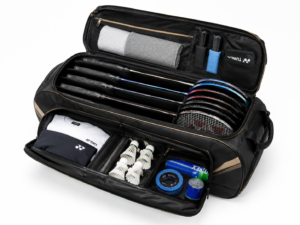
Designing a tennis bag for professional players and clubs requires a different approach compared to consumer-level products. These users demand higher performance, durability, and functional precision. The bag is not just a storage tool—it is part of daily training and competition workflow.
Professional tennis bags must prioritize capacity, structure, durability, and ergonomic efficiency. Design decisions must be based on real usage scenarios rather than visual appeal alone.
Understanding how professionals and institutions use tennis bags is essential for developing products that meet high-level expectations.
What Are the Core Design Requirements for Professional Tennis Bags?
Professional-level products must meet stricter functional and durability standards.
Key requirements include high capacity, reinforced structure, durable materials, and specialized compartments designed for intensive daily use.
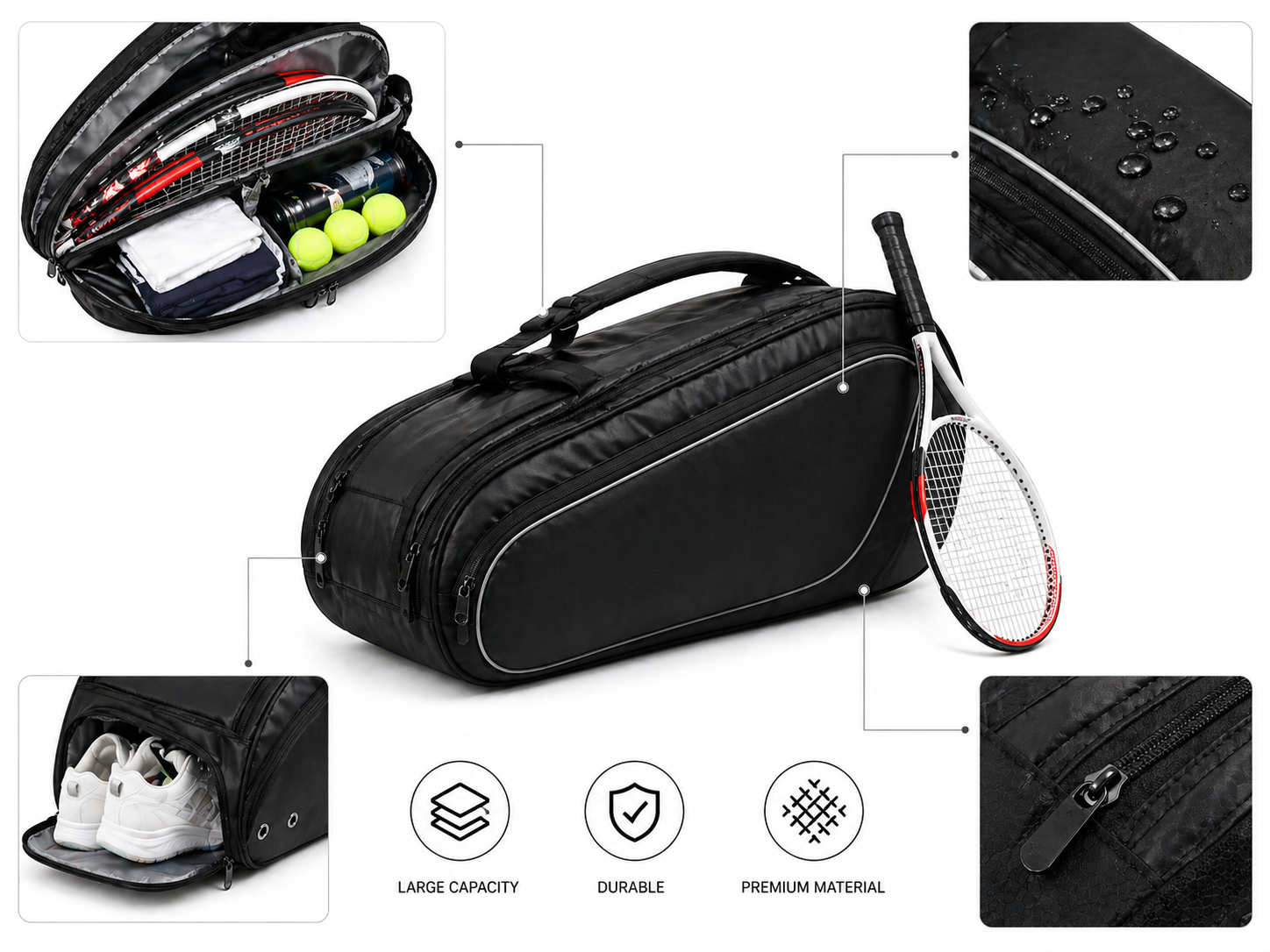
Professional players typically carry multiple rackets, shoes, clothing, and training accessories. This creates a need for larger capacity and efficient internal organization. Unlike casual users, they rely on consistent performance from their equipment, which means the bag must withstand frequent use and heavy loads.
Structural stability becomes critical in this context. Bags must maintain their shape regardless of load conditions. Reinforcement through internal panels and base support systems prevents collapse and ensures usability during transport and storage.
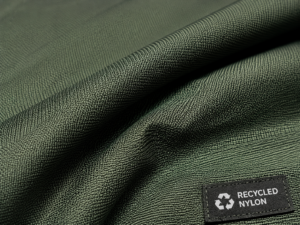
Material durability is another essential factor. High-density fabrics, reinforced stitching, and reliable hardware components reduce the risk of failure. Common issues seen in lower-quality products—such as zipper breakage or fabric wear—are not acceptable in professional environments.
A structured overview of key requirements:
| Requirement | Purpose |
|---|---|
| High capacity | Multi-racket and gear storage |
| Reinforced structure | Shape retention |
| Durable materials | Long-term use |
| Functional compartments | Organized storage |
Working with a specialized racket bag manufacturer ensures these requirements are integrated into both design and production processes.
How Do Clubs and Academies Define Tennis Bag Specifications?
Institutional buyers focus on consistency, functionality, and branding.
Clubs and academies specify tennis bags based on durability, standardized design, and the ability to support repeated, high-frequency use across multiple users.
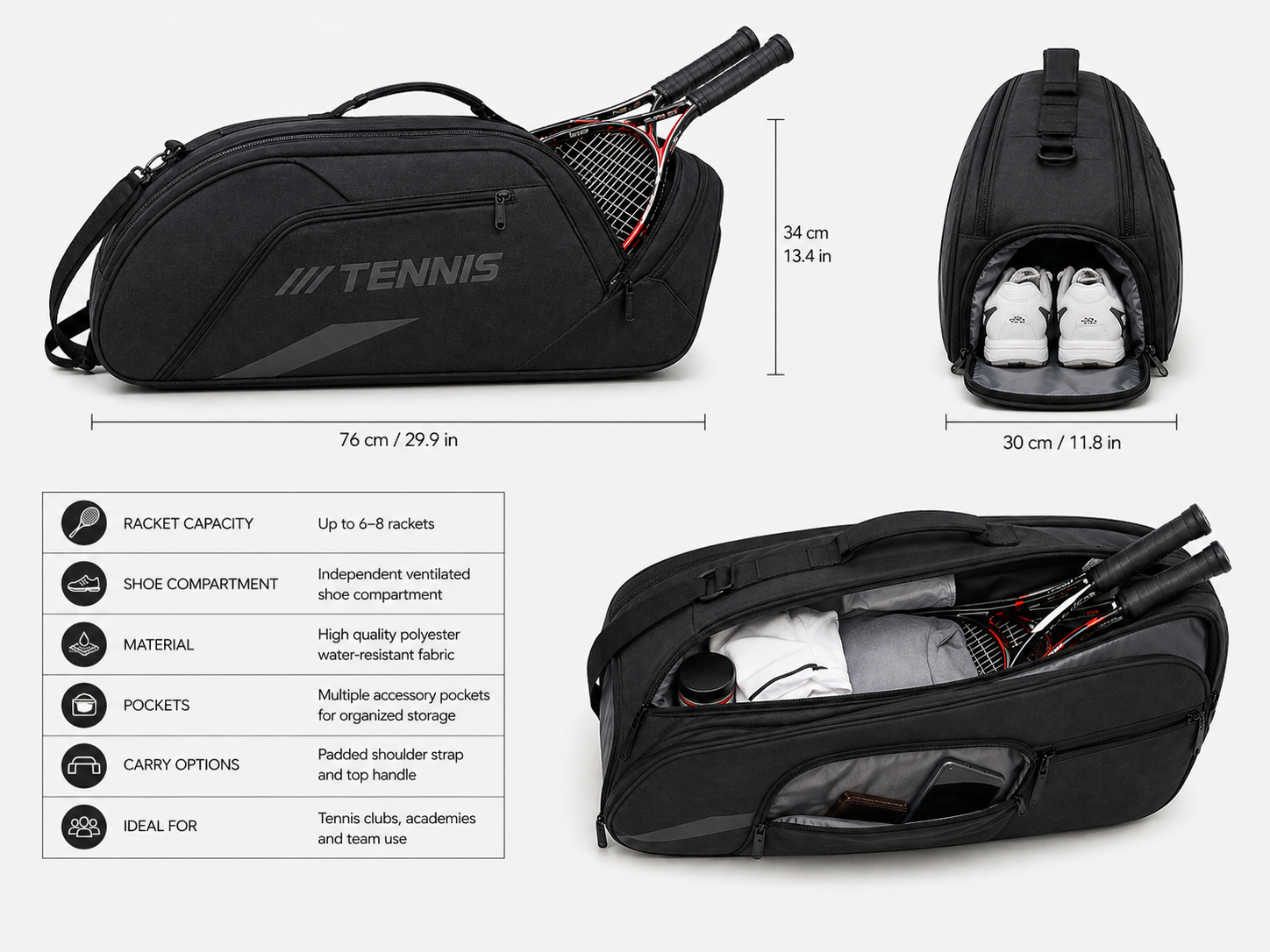
Unlike individual consumers, clubs and academies often purchase in bulk. Their priorities include product consistency, ease of use, and long-term reliability. Bags must perform well across different users, including players of varying skill levels and physical conditions.
Standardization is a key requirement. Clubs prefer consistent dimensions and layouts to simplify storage and organization. This also helps with inventory management and ensures that all players have access to the same level of equipment.
Branding is another important aspect. Custom logos and color schemes are often required to reflect the identity of the club or academy. However, these visual elements must not compromise functionality or durability.
Key specification focus areas include:
- Reinforced construction for high-frequency use
- Easy-to-use compartment layout
- Consistent product dimensions
- Custom branding integration
A reliable tennis bag supplier can support these requirements by combining customization capability with stable production quality.
How Should Compartment Design Be Optimized for Professional Use?
Compartment design directly affects efficiency and usability.
Professional tennis bags require clear functional zoning to separate rackets, shoes, clothing, and accessories without space conflict.
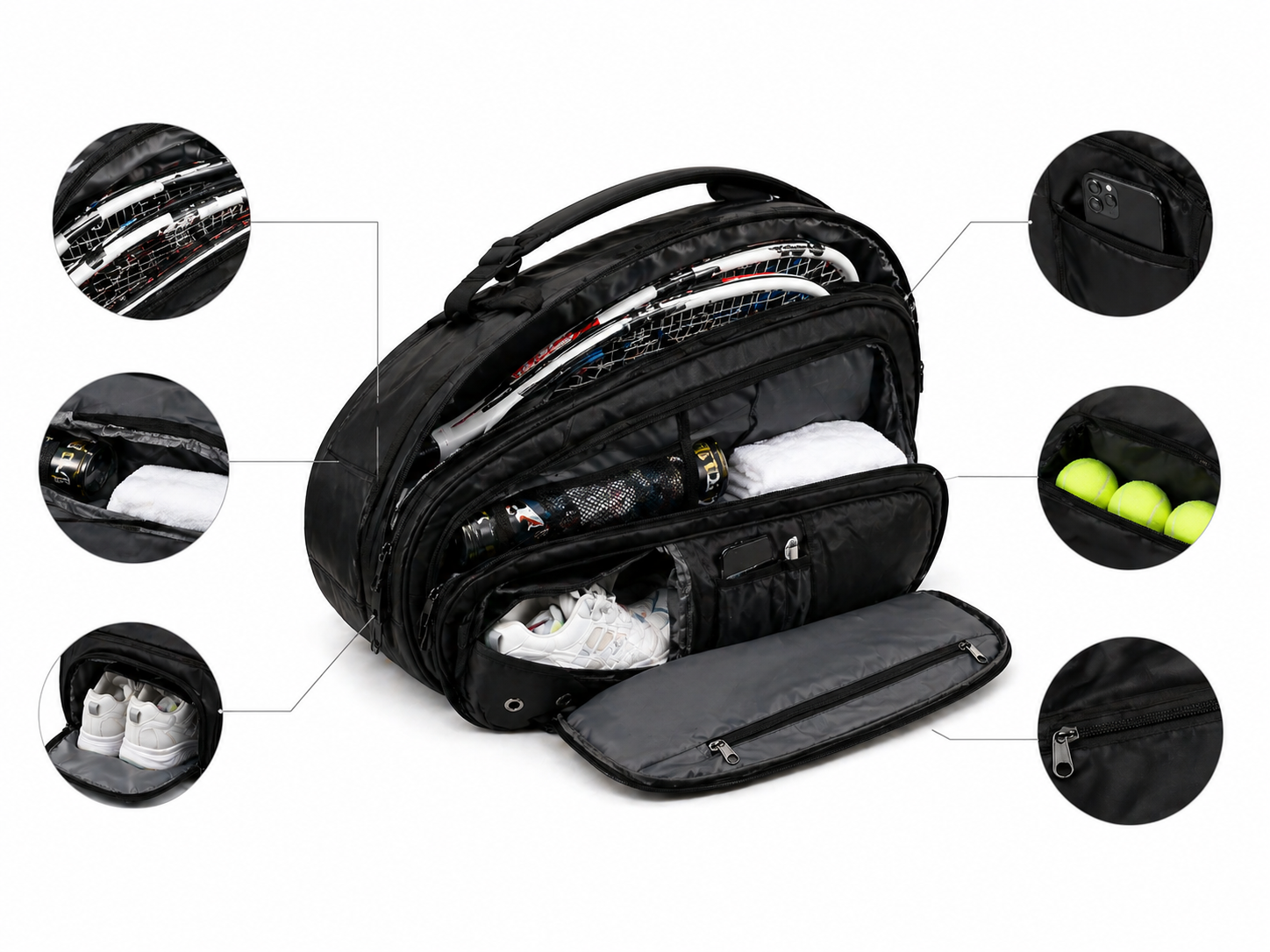
Poor compartment design is one of the most common sources of user dissatisfaction. When items mix together or storage space is inefficient, it slows down preparation and reduces convenience during training or competition.
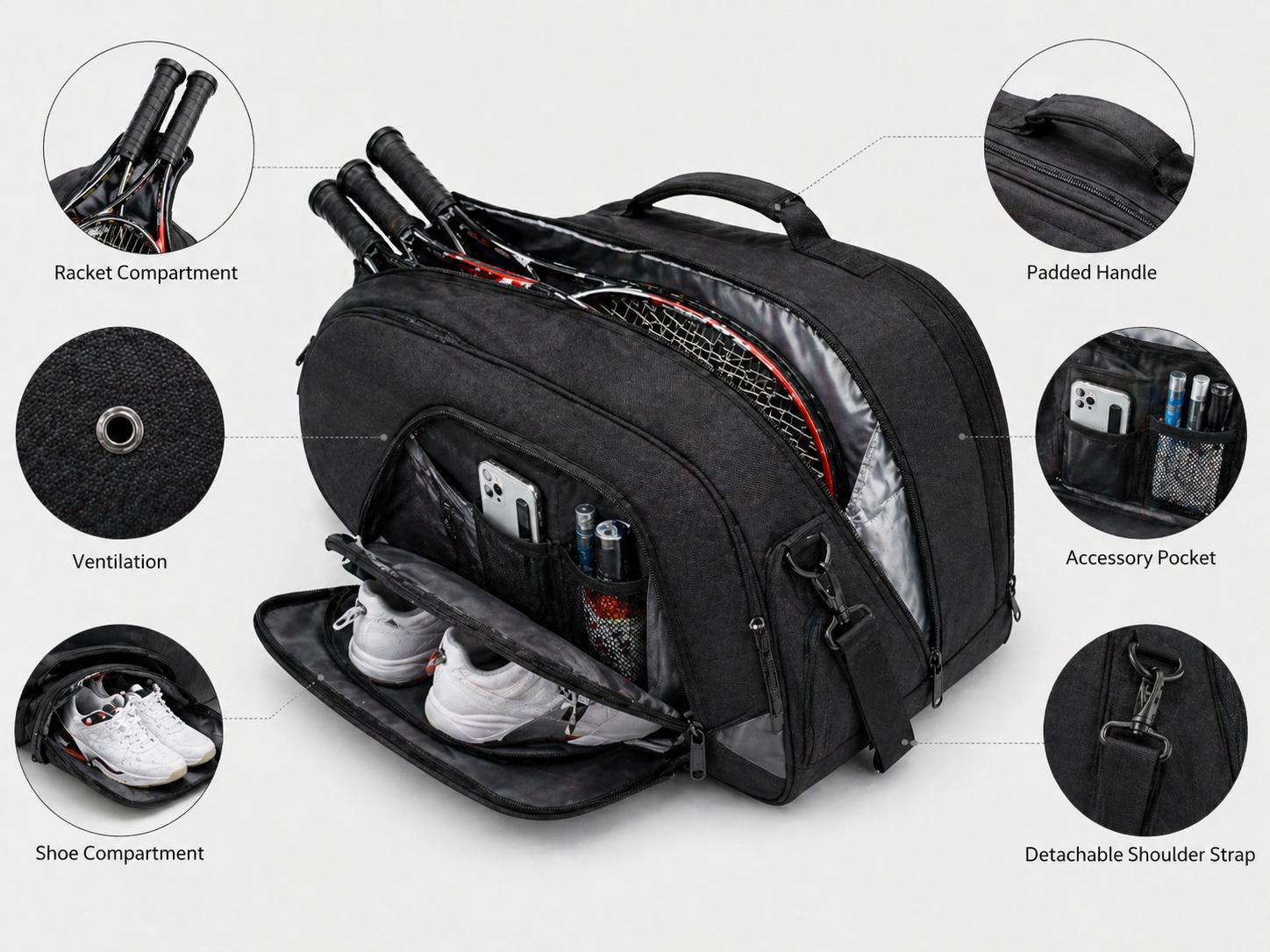
For professional use, compartment layout must be based on real scenarios. Racket compartments should allow quick access while providing protection. Shoe storage must be isolated to prevent contamination of other items. Additional pockets should be positioned for easy reach without interfering with main storage areas.
A well-structured layout typically includes:
- Dedicated racket compartments with protective padding
- Independent shoe compartments with structural support
- Separate sections for clothing and accessories
Proper proportioning is critical. Oversized compartments waste space, while undersized ones limit usability. Achieving the right balance requires iterative design and testing.
How Do Ergonomics Influence Tennis Bag Performance?
Ergonomics plays a key role in long-term usability.
Proper ergonomic design improves carrying comfort, reduces fatigue, and enhances overall user experience, especially for players who transport heavy equipment regularly.
Professional players often carry their bags over long distances, including travel between courts, training facilities, and tournaments. Poor ergonomic design leads to discomfort and reduced usability.
Key ergonomic factors include strap construction, padding, and weight distribution. Shoulder straps should be wide and padded to reduce pressure points. Breathable materials improve comfort during extended use. Load positioning must keep the weight close to the body to maintain balance.
Ergonomics is not only about comfort but also about performance. A well-balanced bag allows users to move more efficiently and reduces physical strain over time.
How Do Materials and Reinforcement Affect Professional-Level Durability?
Durability is a non-negotiable requirement for professional products.
High-performance materials combined with reinforced construction ensure that tennis bags can withstand repeated heavy use without structural failure.
Professional usage exposes bags to continuous stress. This includes heavy loads, frequent handling, and exposure to different environments. Materials must be selected to handle these conditions without degradation.
High-density fabrics improve abrasion resistance, while reinforced stitching enhances structural integrity. Internal support elements such as PE boards and foam padding maintain shape and protect contents.
Hardware components also require attention. Zippers, buckles, and handles must be strong enough to handle repeated use without failure. Upgrading these elements significantly reduces long-term maintenance issues.
How Does Capacity Planning Differ for Professional and Club Use?
Capacity requirements vary depending on user type.
Professional players require high-capacity bags for multiple rackets and gear, while clubs prioritize standardized capacity for shared usage and storage efficiency.
Professional players often carry several rackets, backup equipment, and personal items. This requires large-capacity bags with multiple compartments. The design must ensure that increased capacity does not compromise usability or structure.
Clubs, on the other hand, focus on consistency. Bags should have uniform capacity to simplify storage and distribution. This helps maintain organization within training environments and reduces complexity in equipment management.
Balancing capacity with usability is essential. Overly large bags can become difficult to carry, while insufficient capacity limits functionality.
How Can Customization Improve Professional Tennis Bag Design?
Customization enables precise alignment with user needs.
Custom design allows brands and institutions to tailor tennis bags to specific requirements, improving functionality, branding, and overall user satisfaction.
Through customization, specific features can be integrated based on user feedback. This includes adjusting compartment layout, selecting appropriate materials, and incorporating branding elements. Customization also allows adaptation for different use cases, such as tournament play or training environments.
For clubs and academies, customization ensures consistency across all equipment while reinforcing brand identity. For professional players, it allows fine-tuning of features to match personal preferences.
Conclusion
Designing tennis bags for professional players and clubs requires a focus on performance, durability, and usability. By aligning structure, materials, and ergonomics with real usage scenarios, brands can deliver products that meet the highest standards of the market.