Supply chain management has become one of the most critical factors in sports bag manufacturing. As brands expand product lines and global demand fluctuates, maintaining stable production, consistent quality, and reliable delivery is increasingly complex.
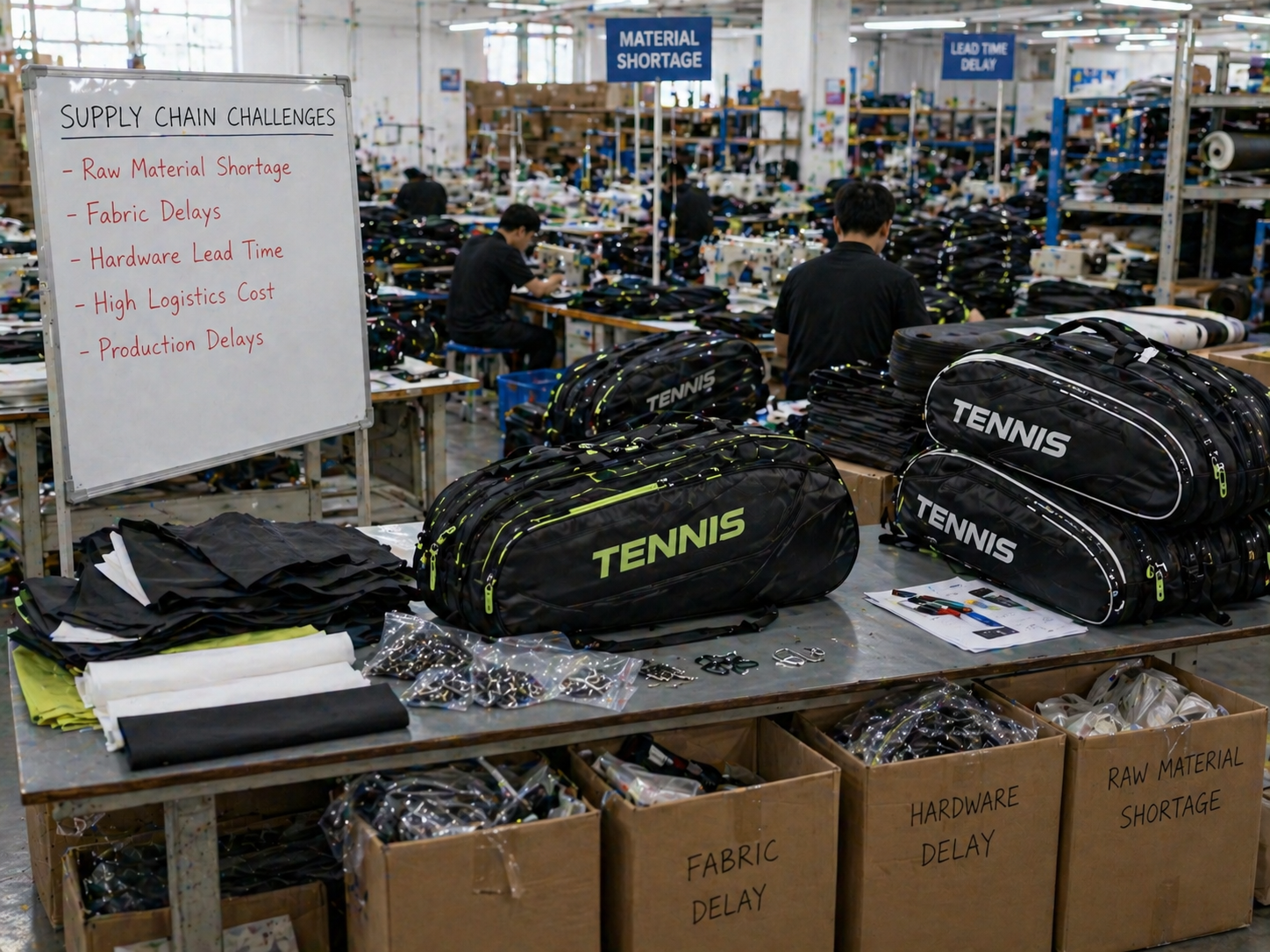
Sports bag supply chains are affected by material sourcing, production capacity, communication efficiency, and logistics. Managing these factors is essential to reduce delays and ensure consistent product quality.
Understanding common challenges and how to address them helps brands build more resilient and efficient supply chains.
What Are the Common Supply Chain Challenges in Sports Bag Manufacturing?
Supply chain issues often originate from multiple sources.
The most common challenges include material shortages, inconsistent quality, production delays, and poor communication between stakeholders.
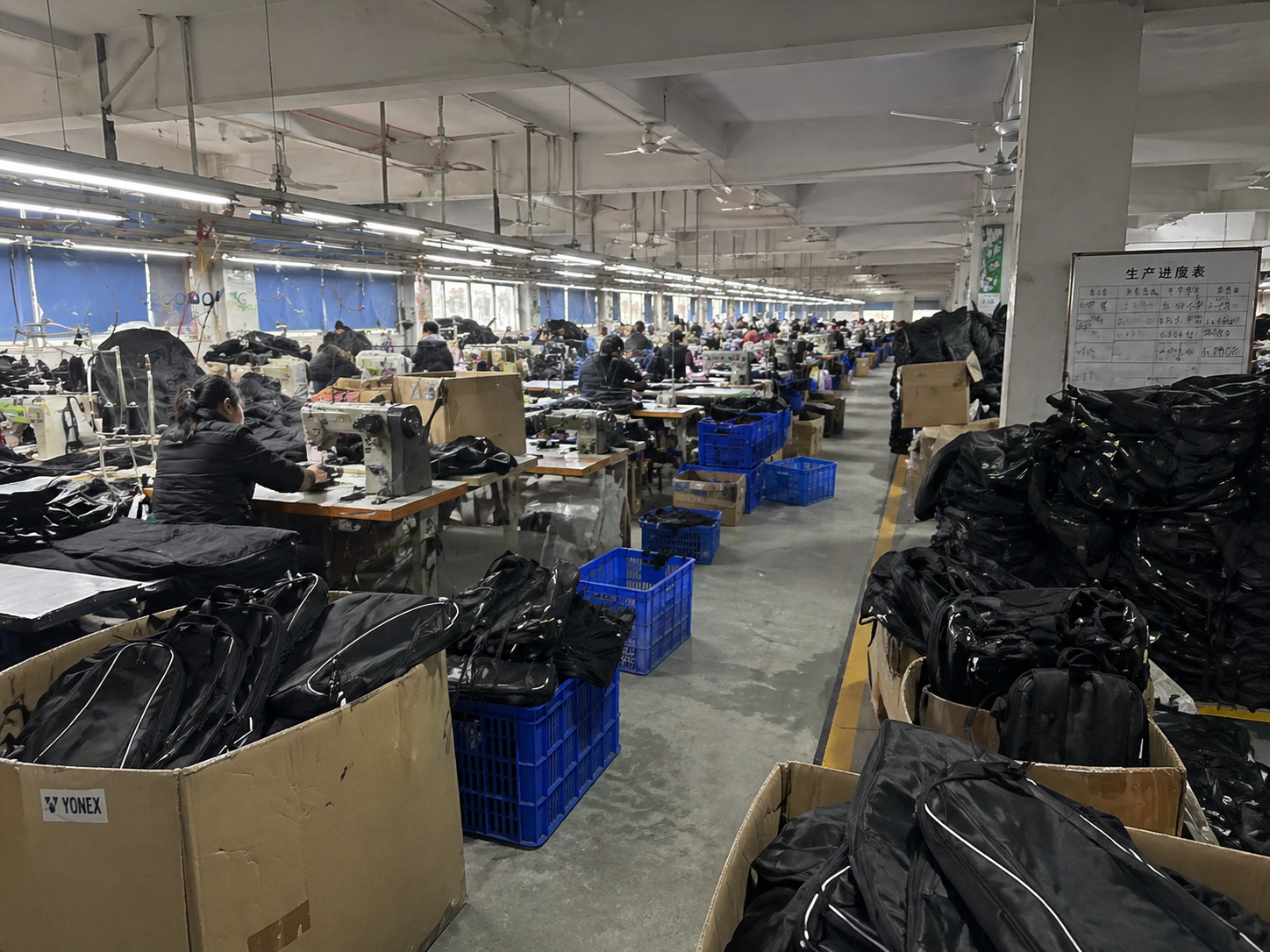
Material inconsistency is a frequent problem. Variations in fabric quality, color, or hardware components can lead to differences between production batches. This directly impacts product quality and brand reputation.
Production delays are another major issue. These may result from insufficient factory capacity, poor scheduling, or unexpected disruptions. Delays can affect product launch timelines and sales performance.
Communication gaps also create problems. Misunderstandings during product development or production can lead to incorrect specifications, rework, and additional costs.
A summary of key challenges:
| Challenge | Impact |
|---|---|
| Material inconsistency | Quality variation |
| Production delays | Missed deadlines |
| Communication gaps | Errors and rework |
| Capacity limitations | Order constraints |
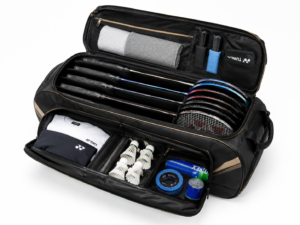
Working with an experienced badminton bag manufacturer helps reduce these risks through better process control and technical expertise.
How Do Material and Supplier Issues Affect the Supply Chain?
Material sourcing is the foundation of the supply chain.
Unstable material supply can disrupt production schedules and lead to inconsistent product quality.
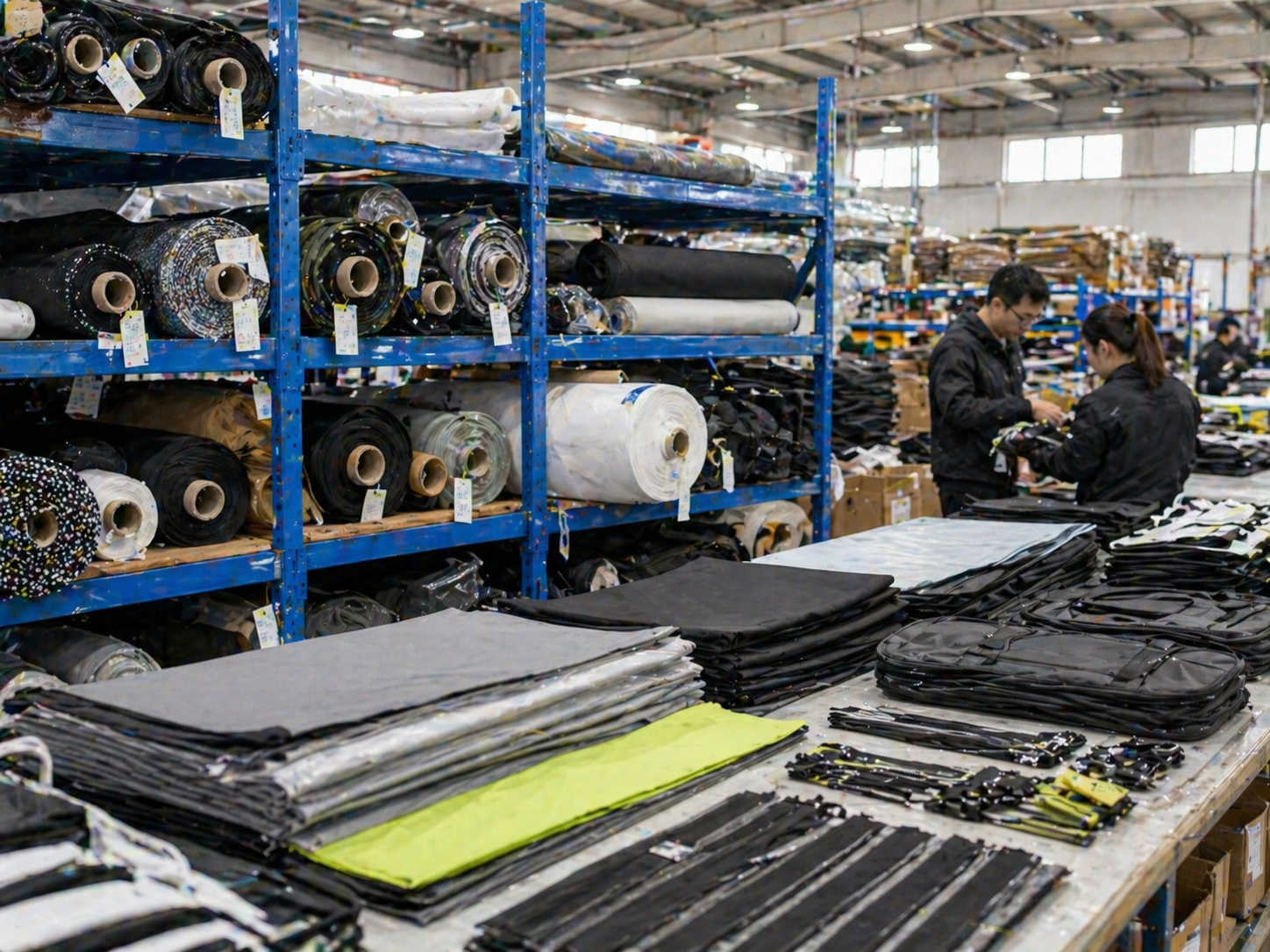
Sports bags rely on multiple materials, including fabrics, zippers, and reinforcement components. If any of these are delayed or inconsistent, the entire production process is affected.
For example, low-quality zippers or fabric substitutions can lead to product defects, even if the design is correct. This highlights the importance of stable supplier relationships and strict material standards.
Managing material supply requires careful planning, including selecting reliable vendors and maintaining consistent specifications across orders.
How Can Brands Manage Lead Times and Production Risks?
Lead time management is essential for maintaining delivery schedules.
Effective planning, clear communication, and realistic timelines help reduce production risks and avoid delays.
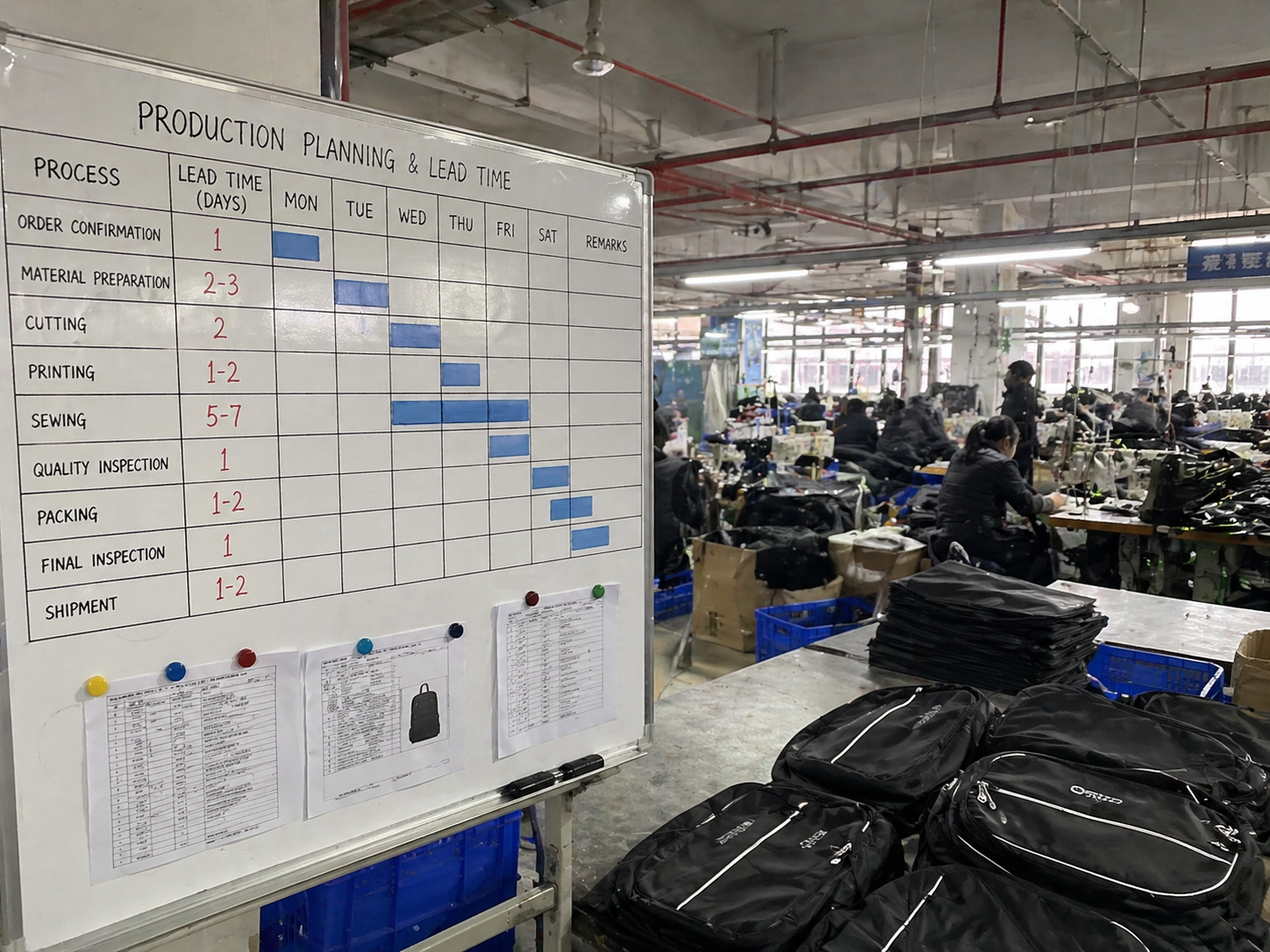
One common mistake is underestimating production timelines. Custom products often require multiple sampling stages, which can extend lead time. Without proper planning, this leads to delays in mass production.
Clear communication with suppliers is critical. Brands should confirm production schedules, material availability, and potential risks before placing orders.
Risk management also includes contingency planning. Having backup suppliers or alternative materials can help mitigate disruptions.
A reliable sports bag supplier can provide accurate lead time estimates and proactive updates, reducing uncertainty during production.
How Do Quality Control Issues Impact the Supply Chain?
Quality problems create downstream disruptions.
Inconsistent quality leads to rework, delays, and increased costs, affecting the entire supply chain.
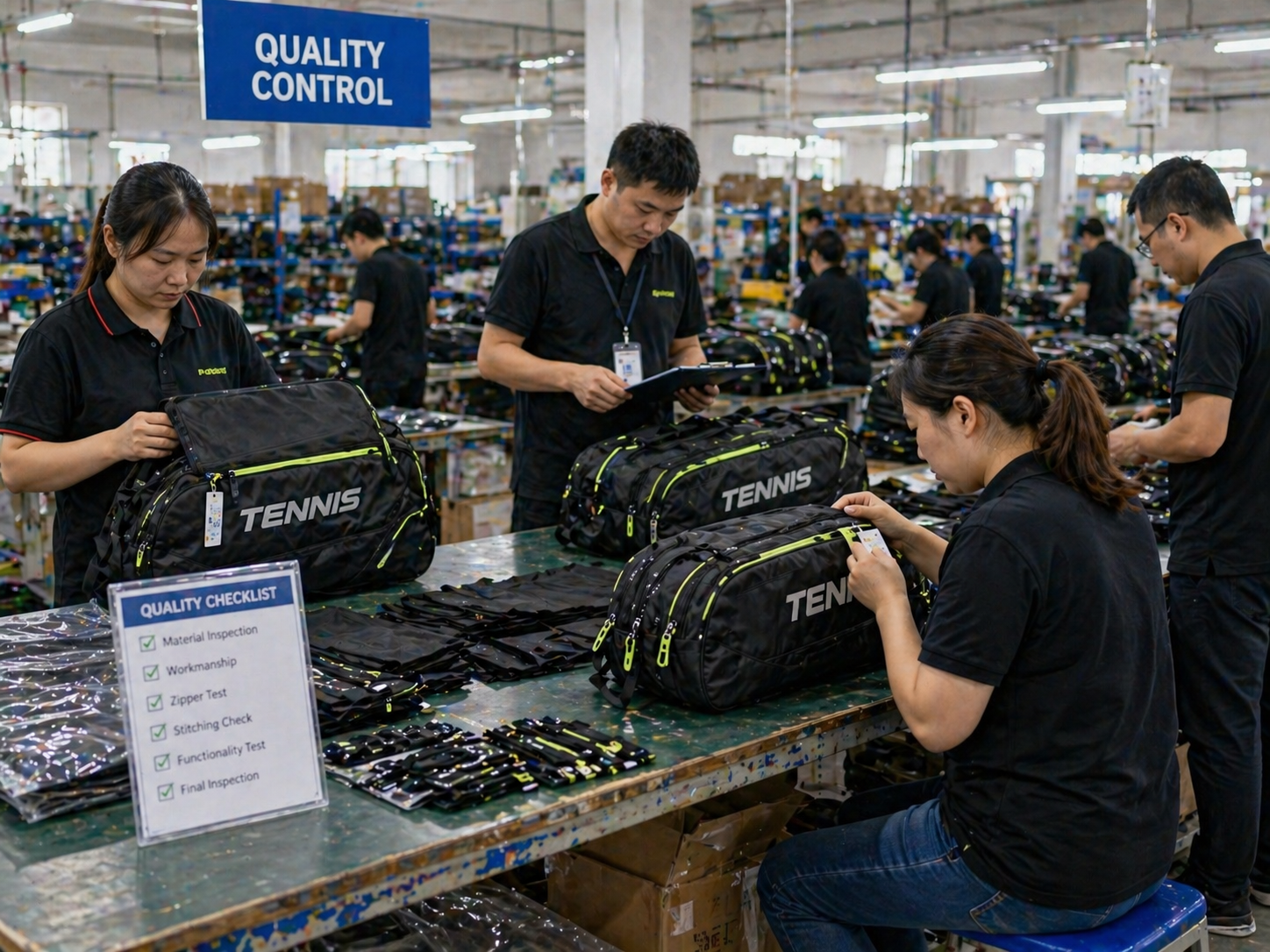
When defects are discovered late in the production process, they require rework or replacement. This not only delays delivery but also increases production cost.
Quality issues often stem from weak QC systems or inconsistent material supply. Ensuring quality at every stage of production helps prevent these problems.
Consistency between samples and bulk production is especially important. Differences between the two are a common source of supply chain disruption.
What Strategies Improve Supply Chain Efficiency in Sports Bag Manufacturing?
Efficiency improvements require both planning and execution.
Key strategies include supplier consolidation, standardized materials, improved communication, and long-term partnerships.
Supplier consolidation reduces complexity. Working with fewer, more reliable suppliers improves coordination and consistency. Standardizing materials across product lines simplifies procurement and reduces variation.
Improved communication ensures that all stakeholders are aligned on specifications and timelines. Digital tools and regular updates can enhance transparency.
Long-term partnerships with manufacturers lead to better understanding of product requirements and more efficient production processes.
How Does Production Capacity Affect Supply Chain Stability?
Capacity directly influences delivery performance.
Insufficient production capacity can lead to delays, while overloading factories reduces quality and efficiency.
Factories must balance workload to maintain efficiency. Overloaded production lines increase the risk of errors and delays. On the other hand, insufficient capacity limits the ability to scale.
Brands should evaluate factory capacity before placing large orders. Understanding production capability helps set realistic timelines and avoid bottlenecks.
How Can Brands Build a Resilient Supply Chain?
Resilience is key to long-term success.
A resilient supply chain combines reliable suppliers, flexible planning, and continuous monitoring to adapt to changing conditions.
Diversifying suppliers reduces dependency on a single source. Flexible planning allows adjustments based on market demand or production conditions.
Continuous monitoring helps identify issues early and implement corrective actions. This includes tracking production progress, quality performance, and delivery timelines.
Strong relationships with suppliers also improve responsiveness and cooperation during unexpected challenges.
Conclusion
Supply chain challenges in sports bag manufacturing can impact quality, cost, and delivery. Brands that focus on planning, communication, and reliable partnerships can improve efficiency and build a more stable and resilient supply chain.