Choosing a reliable racket bag manufacturer is not only about comparing prices. The better choice usually comes from checking product knowledge, sample accuracy, quality control systems, communication speed, and long-term production stability. A factory that understands sports bags at a deeper level can help reduce sourcing risk, improve product consistency, and support stronger brand growth.
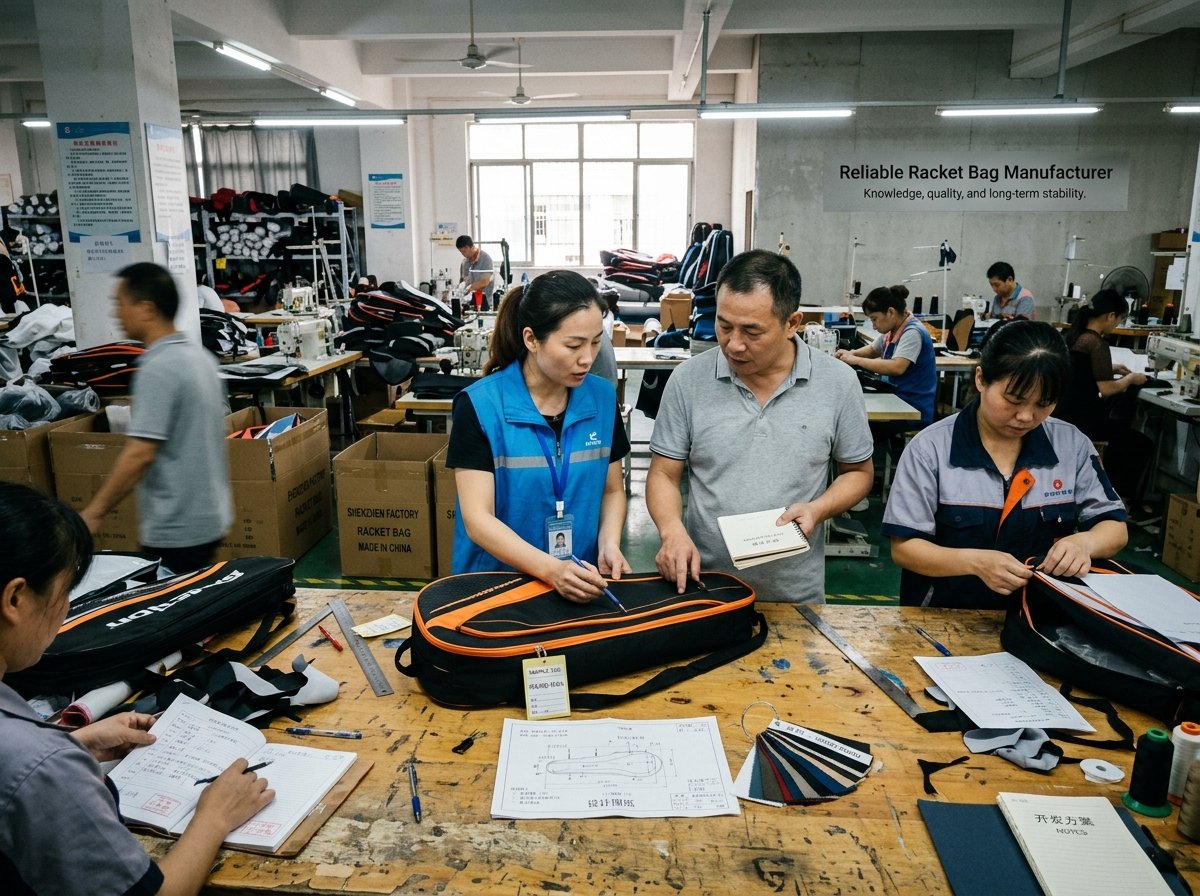
In the sports bag industry, many factories can present attractive photos and competitive quotations. Still, good-looking catalogs do not guarantee dependable production. The real difference appears when a supplier receives custom requirements, develops samples, manages material sourcing, controls bulk quality, and responds when issues appear. For importers, brand owners, and sourcing teams, the safest supplier is usually the one that treats racket bags as functional sports products rather than simple sewn items.
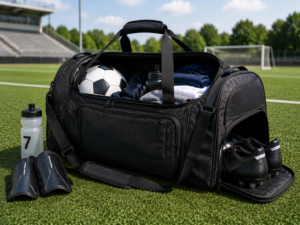
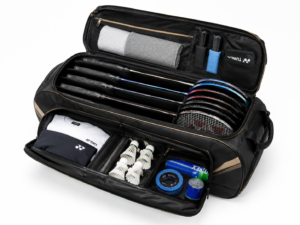
Racket bags are closely tied to user experience. Compartment length, shoe storage, wet-and-dry separation, zipper smoothness, shoulder comfort, and logo presentation all affect how the final product performs in the market. Because of that, supplier selection should focus on factory capability, not only on unit cost.
What Makes a Racket Bag Manufacturer Reliable?
A reliable racket bag manufacturer combines sports bag expertise, clear communication, stable production control, and the ability to turn product ideas into repeatable bulk orders. The right supplier should support both development speed and long-term consistency.
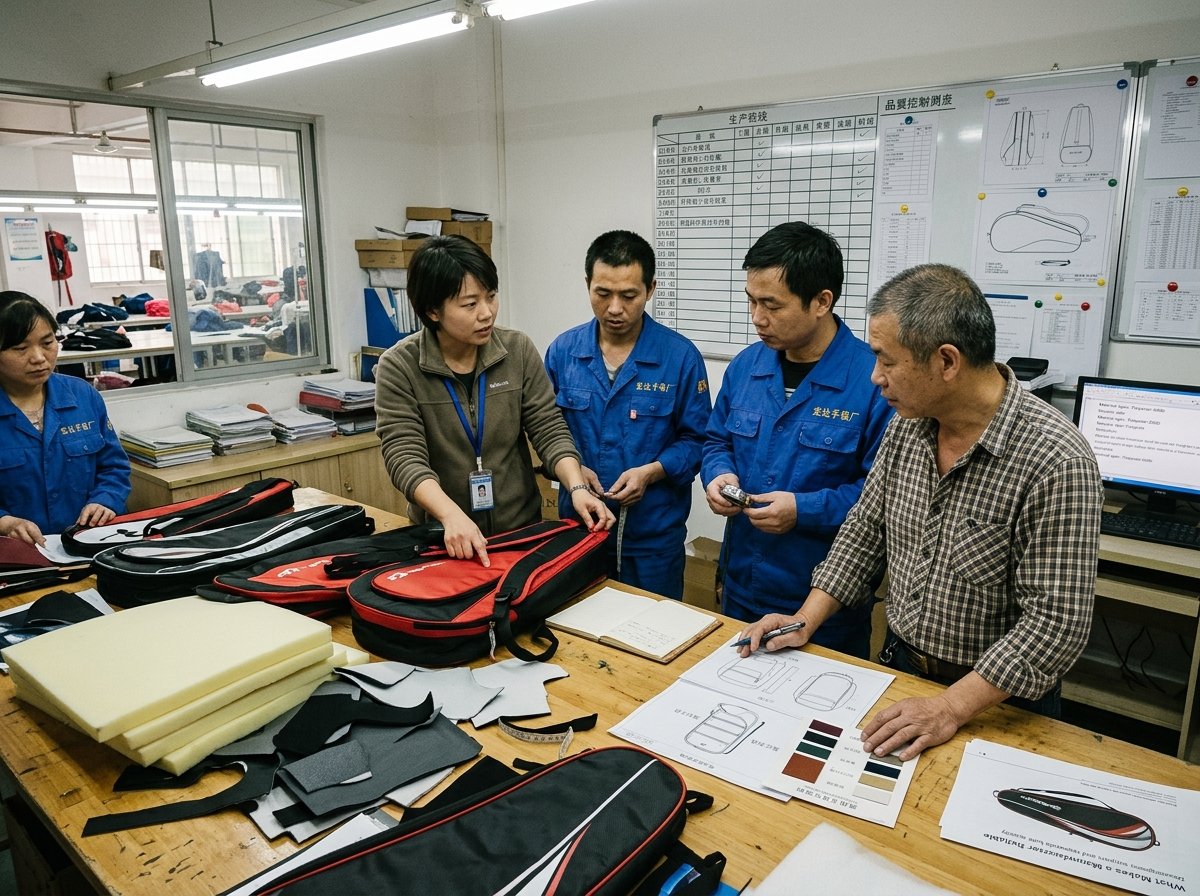
Reliability usually shows up early. Strong suppliers ask the right questions about structure, target market, material preference, logo method, packaging, and price positioning. They do not simply agree with every request. Instead, they explain what works, what should be adjusted, and what may affect cost or lead time. This kind of response often reflects real factory experience.
A dependable supplier should also understand the difference between making one good sample and delivering hundreds or thousands of units with the same look and performance. That is why many buyers prefer a specialized racket bag manufacturer instead of a general bag supplier with limited category focus. A factory that knows racket bag structure is more likely to control fit, shape, reinforcement, and sports-specific details from the beginning.
Signs of a reliable supplier
| Evaluation Point | What Strong Performance Looks Like | Why It Matters |
|---|---|---|
| Product knowledge | Understands racket length, storage layout, and sports use | Reduces functional mistakes |
| Sample capability | Turns ideas into accurate prototypes | Speeds up development |
| Production control | Follows clear inspection steps | Supports stable bulk quality |
| Communication | Gives direct and practical answers | Avoids delay and confusion |
| Custom support | Handles logo, material, color, and packaging needs | Helps brand differentiation |
| Delivery management | Gives realistic schedules and timely updates | Protects launch plans |
Reliable manufacturers also tend to think beyond a single order. They are more willing to support future line extensions, such as matching backpacks, duffel bags, shoe bags, and accessory bags. That kind of flexibility matters for brands that want a complete sports bag range instead of one isolated model.
How to Evaluate Helmet Safety Certifications When Choosing a Manufacturer?
Helmet safety certifications should be checked carefully when a supplier also offers protective sports products, but the same logic applies to racket bag sourcing: compliance should be practical, market-based, and tied to real materials and production control.
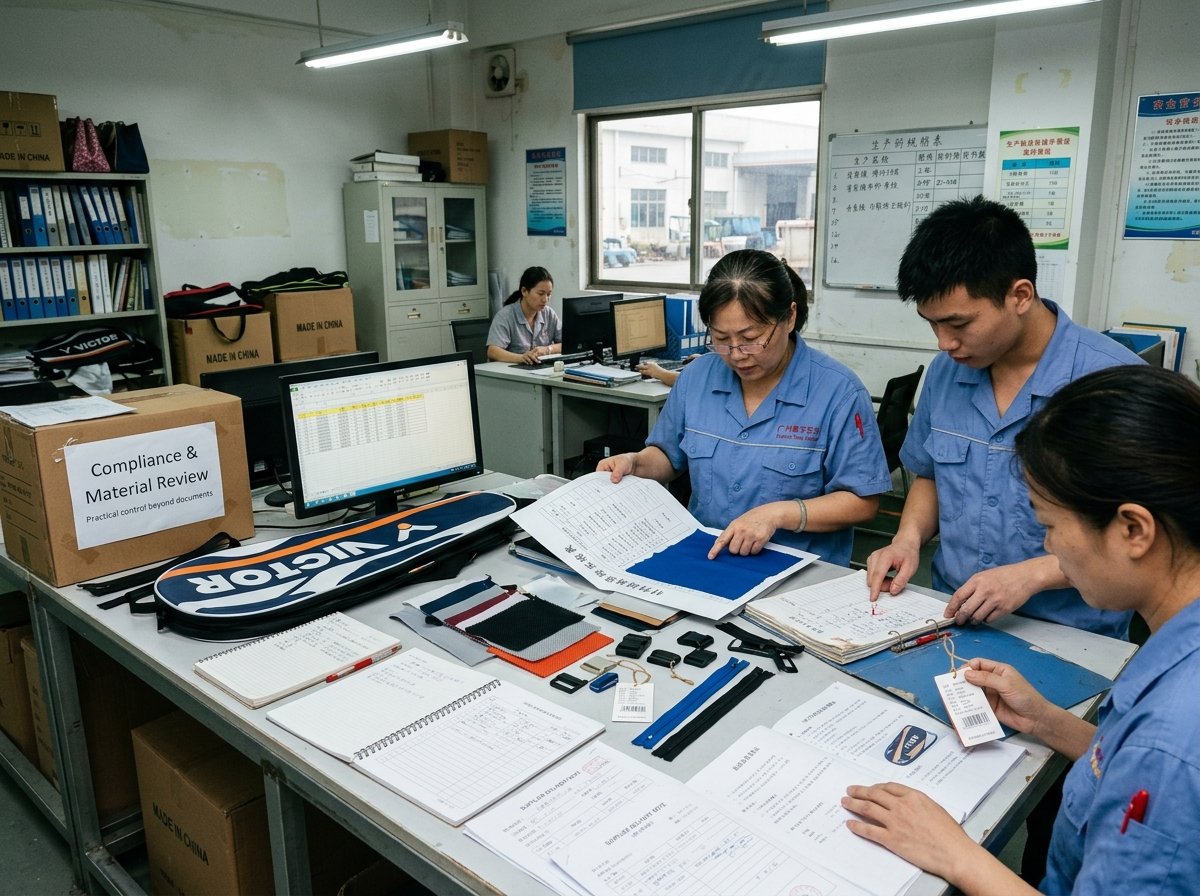
This topic may seem different from racket bags, but the sourcing logic is very similar. Buyers should not be impressed by long lists of documents alone. The real question is whether the manufacturer understands which standards matter, how testing is handled, and whether materials used in mass production truly match approved specifications.
For helmet products, certification review would focus on impact standards, lab testing, and regulatory compliance. For racket bags, the parallel checks are material compliance, restricted substance control, color fastness, hardware durability, and fabric performance. In both cases, buyers need evidence connected to the actual product, not general claims.
What should be checked in compliance review
| Item | Why It Matters | What Should Be Verified |
|---|---|---|
| Material source | Affects consistency and compliance | Supplier records and specifications |
| Testing support | Helps meet importer or retailer requests | Existing reports or testing ability |
| Bulk material control | Prevents difference between sample and order | Match with approved sample |
| Logo and print process | Impacts appearance and chemical control | Process details and test support |
| Hardware and accessories | Common source of user complaints | Durability and finish quality |
A capable factory should explain which materials are used, where the key accessories come from, and whether the same components can be maintained during bulk production. If these answers are vague, the risk level rises quickly. In practice, a supplier with category experience often handles compliance more smoothly because the team already understands common importer requests and can prepare materials accordingly.
Why Is Sampling Ability So Important?
Sampling ability is one of the clearest ways to measure whether a manufacturer can support a real project. Strong sample development usually means better communication, better technical understanding, and fewer problems later in production.
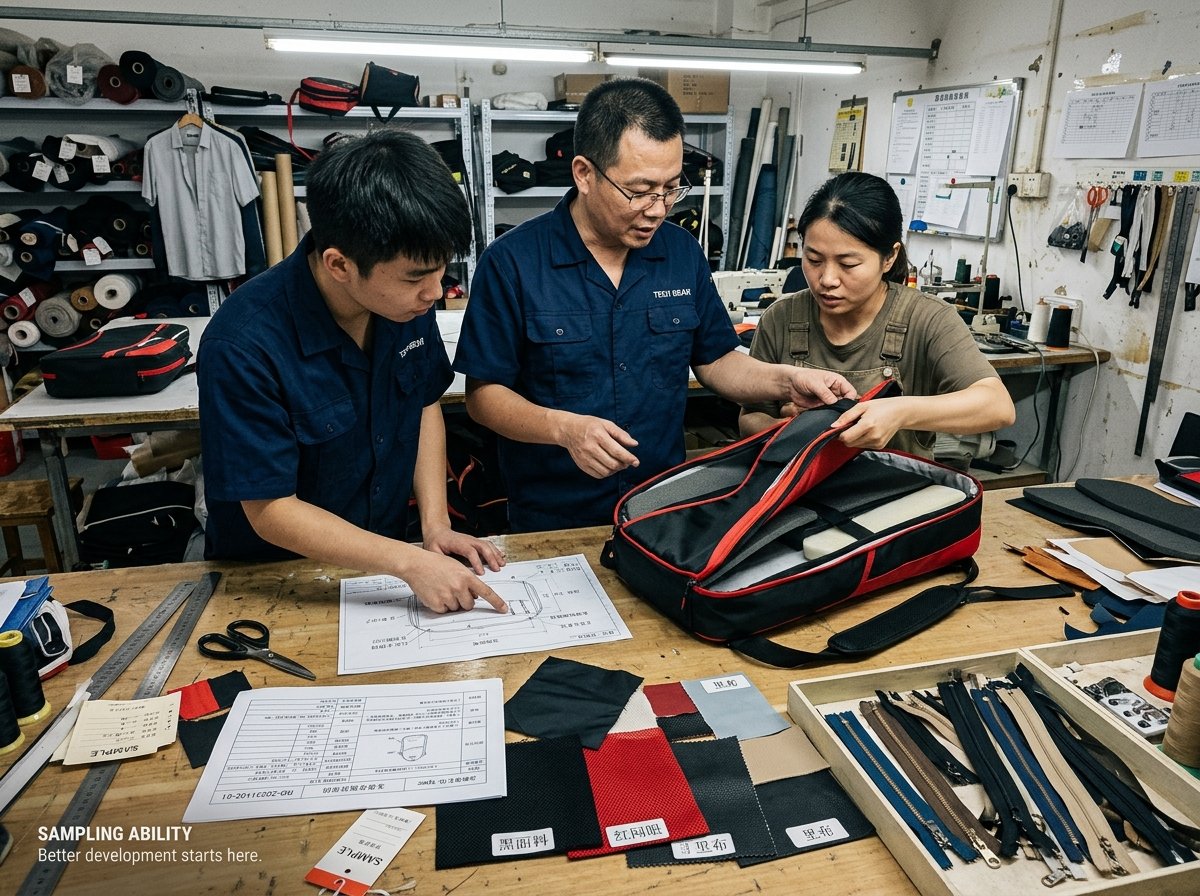
Many suppliers appear similar before sample work begins. The difference becomes obvious once a design drawing, target price, or reference photo is shared. Some factories can review the structure, suggest better material choices, and produce a sample that is close to the market goal. Others need repeated corrections and still miss important details.
In racket bag manufacturing, a good sample is not just about shape. It should reflect real use. That includes proper racket fit, comfortable carrying balance, practical side pockets, durable handles, and a structure that holds up after filling. A supplier that understands these points is much more valuable than one that only copies the outside appearance.
What strong sample development includes
| Sampling Factor | Strong Result | Weak Result |
|---|---|---|
| Structure understanding | Correct compartment and panel layout | Wrong bag proportions |
| Material suggestion | Recommends suitable fabric and trims | Gives no useful advice |
| Revision speed | Handles changes efficiently | Delays each update |
| Detail quality | Clean stitching and accurate dimensions | Rough finishing |
| Technical feedback | Identifies weak points early | Waits passively for instructions |
Sampling also shows whether the supplier can act as a development partner. Good factories often point out where a zipper path should change, where reinforcement should be added, or where a different fabric will improve shape and durability. That kind of input helps lower future complaint risk and shortens the path to final approval.
Key Quality Control Points in Helmet Manufacturing for Buyers
The key quality control points in helmet manufacturing are highly structured, and that same disciplined thinking is valuable when evaluating a racket bag supplier. In both product categories, quality should be managed as a process, not left to final inspection alone.
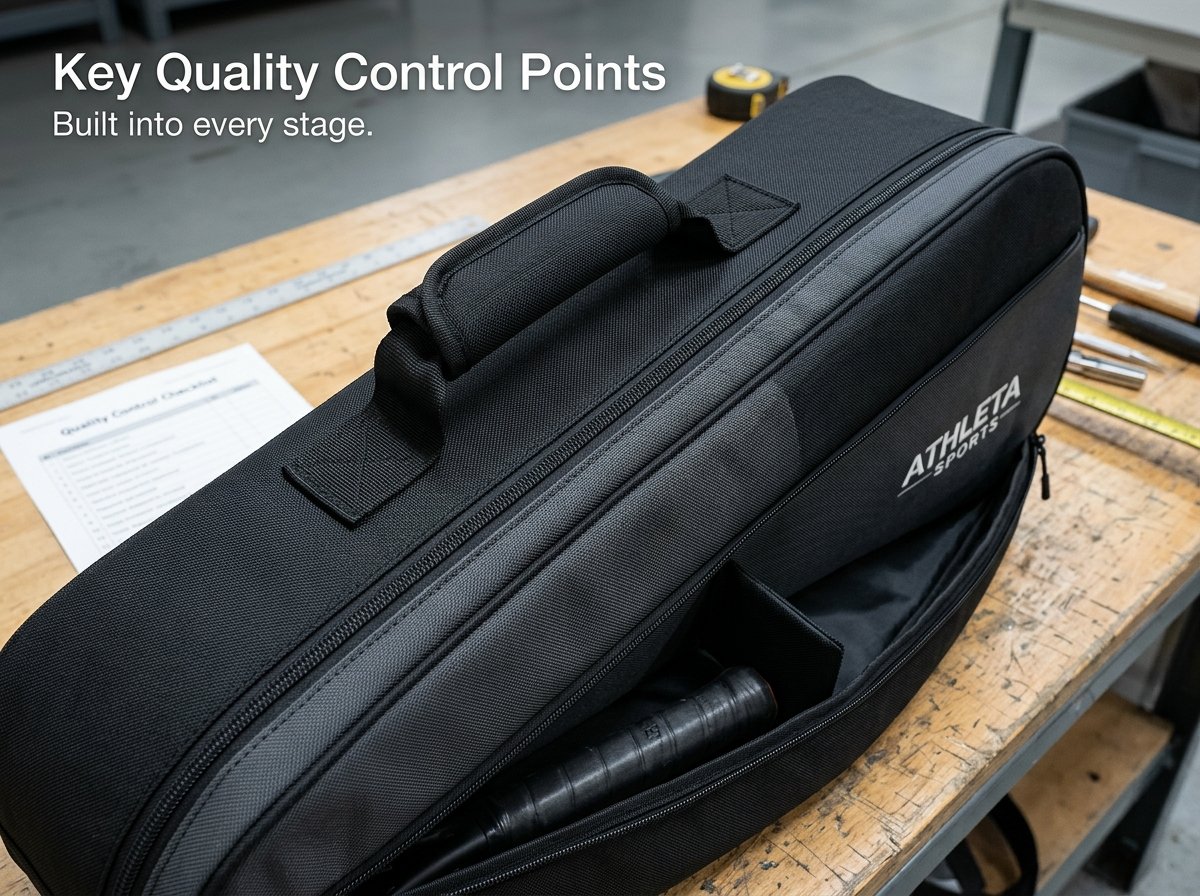
Helmet manufacturing focuses on shell quality, liner performance, strap strength, buckle testing, and certification consistency. These are strict control points because product failure carries serious consequences. While racket bags are a different type of product, buyers can still learn from this quality mindset. Reliable factories check every important stage instead of waiting until the end.
For racket bags, the most important control points usually include fabric matching, cutting accuracy, foam thickness, reinforcement at stress points, zipper installation, logo placement, and final size checking. Problems in these areas often cause returns, complaints, and poor retail performance.
Main quality control points in racket bag production
| QC Point | Common Risk | Effect on the Product |
|---|---|---|
| Fabric consistency | Bulk fabric differs from approved swatch | Color or hand-feel mismatch |
| Cutting accuracy | Panels do not align correctly | Poor appearance and fit |
| Foam and structure | Insufficient support | Bag loses shape |
| Strap reinforcement | Weak sewing at load points | Tearing during use |
| Zipper application | Rough movement or failure | High complaint rate |
| Logo position | Crooked or inconsistent branding | Damages shelf presentation |
| Final measurement | Wrong compartment size | Rackets or shoes fit poorly |
A factory with strong quality habits usually performs incoming material checks, in-line inspections, semi-finished inspections, and final packed-goods checks. These steps show that quality is built into the process. For sourcing teams, that is much more meaningful than promises alone.
Questions Importers Should Ask Before Selecting a Helmet OEM Partner
Importers should ask detailed questions before selecting any OEM partner, whether the product is a helmet or a racket bag. The goal is to uncover technical ability, process discipline, communication style, and long-term support capacity.
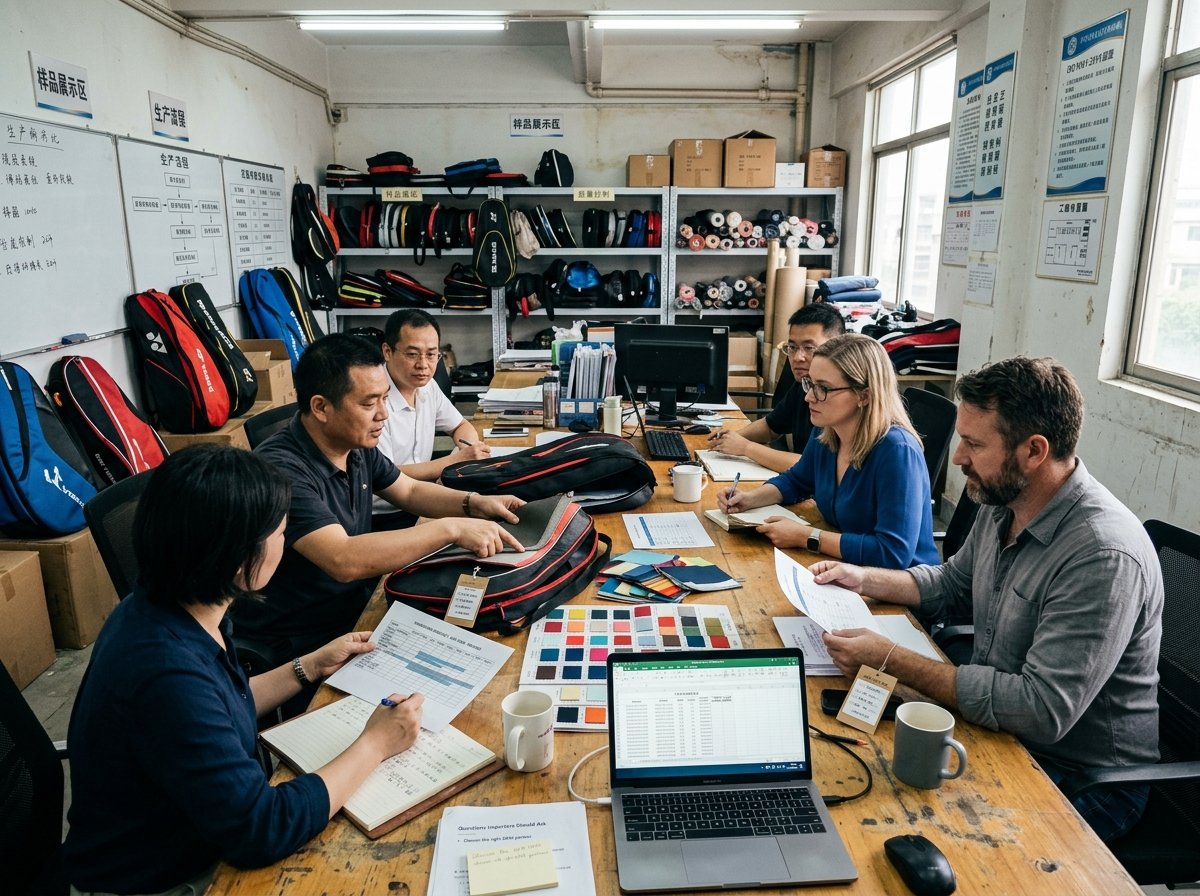
Asking the right questions helps reveal how a factory actually works. A polished presentation can only show so much. Practical answers about samples, materials, timing, and problem handling are often far more useful. Strong suppliers do not avoid technical questions. They answer with specifics, explain realistic limits, and suggest workable solutions.
Useful questions during supplier selection
| Question Area | Why It Should Be Asked |
|---|---|
| Sample-to-bulk consistency | Protects approved quality standards |
| Material options | Helps balance cost and performance |
| MOQ flexibility | Supports market testing and trial orders |
| Lead time control | Reduces delay risk |
| Packaging support | Important for retail and e-commerce use |
| Quality issue handling | Shows service reliability after shipment |
| Product development support | Helps with future model expansion |
These questions also help identify whether the supplier only takes orders or can truly support product development. A capable factory can often recommend better construction, better accessory choices, and better packaging methods based on target market needs. That is especially valuable for brands building multiple product lines under one sourcing plan.
Why Communication and Problem Solving Matter in Long-Term Cooperation
Communication and problem solving are often the hidden factors behind successful sourcing. Even a factory with decent production ability can become difficult to work with if updates are late, questions are ignored, or issues are not reported honestly.
Many supply chain problems begin with small communication failures. A logo size changes without approval. A material substitution happens quietly. A shipment delay is known internally but reported too late. These issues can damage launch schedules, increase cost, and weaken customer trust.
Reliable suppliers usually communicate differently. They confirm details clearly. They raise risks early. They provide realistic updates instead of overpromising. They also stay engaged when something goes wrong. This is one reason why experienced buyers often return to a proven racket bag manufacturer that has already shown stable follow-through. Strong communication does not only make projects easier. It also lowers supply chain risk and improves long-term cooperation.
Problem solving matters just as much. When a supplier can offer a corrective plan, adjust production details quickly, or improve a weak design area before mass production, the project becomes more secure. In competitive markets, this kind of support can make a major difference.
Conclusion
Choosing a reliable racket bag manufacturer requires more than checking catalogs and quotations. The strongest suppliers combine category knowledge, sample accuracy, material control, production discipline, and clear communication. These factors help protect product quality, reduce sourcing risk, and support stronger brand development over time. For importers and sourcing teams that want stable results instead of short-term promises, selecting a factory with proven sports bag experience and dependable execution is usually the smarter path.