Most tennis players spend serious money on rackets, shoes, strings, and training, yet spend surprisingly little time choosing the bag that carries everything. At first, almost any bag feels good enough. But after weeks of practice sessions, tournament travel, and daily commuting, the wrong bag quickly becomes frustrating. Shoulder straps begin digging into your back, wet towels mix with clean clothing, shoes create odor inside the main compartment, and small accessories constantly disappear inside poorly organized storage areas.
For many players, the real problem is not the racket itself. It is the bag carrying and protecting the equipment. Modern tennis players now travel with far more gear than before, including multiple rackets, shoes, grips, towels, electronics, clothing changes, snacks, and recovery accessories. Because of this, the debate between tennis backpacks and traditional tennis bags has become much more important in recent years.
Choosing the right bag is no longer only about appearance or storage size. It affects organization, comfort, equipment protection, travel efficiency, and long-term convenience. In this guide, we explain the real differences between tennis backpacks and traditional tennis bags while helping players choose the best option based on playing habits, storage needs, travel routines, and equipment protection requirements.
Why the Wrong Tennis Bag Creates Problems Faster Than Most Players Expect
Many players underestimate how heavily a tennis bag gets used during regular training and tournament travel. Unlike rackets that stay protected between matches, tennis bags constantly face sunlight, moisture, court dust, friction, heavy carrying weight, airport handling, and repeated opening and closing.
At first, low-quality bags may look perfectly fine online or in stores. The problems usually appear later during real-world use. Weak shoulder straps become uncomfortable during long tournament days. Cheap zippers begin sticking or breaking after repeated use. Poor internal organization makes it difficult to separate wet towels, shoes, clean clothing, and accessories.
Outdoor players face even more challenges. Sudden rain, damp benches, humid environments, and hot car trunks can all affect tennis equipment over time. Without proper waterproof construction or thermal protection, grips absorb moisture, towels stay damp, and racket strings gradually lose performance under excessive heat exposure.
Common Problems Players Experience
| Problem | Real-World Cause |
|---|---|
| Shoulder fatigue | Poor strap support and weight distribution |
| Wet clothing | Weak waterproof construction |
| Bad odors | No ventilation or shoe separation |
| Racket damage | Lack of thermal protection |
| Broken zippers | Cheap zipper systems |
| Messy storage | Poor internal organization |
A properly designed tennis bag solves these issues before they become daily frustrations.
The Real Difference Between a Tennis Backpack and a Traditional Tennis Bag
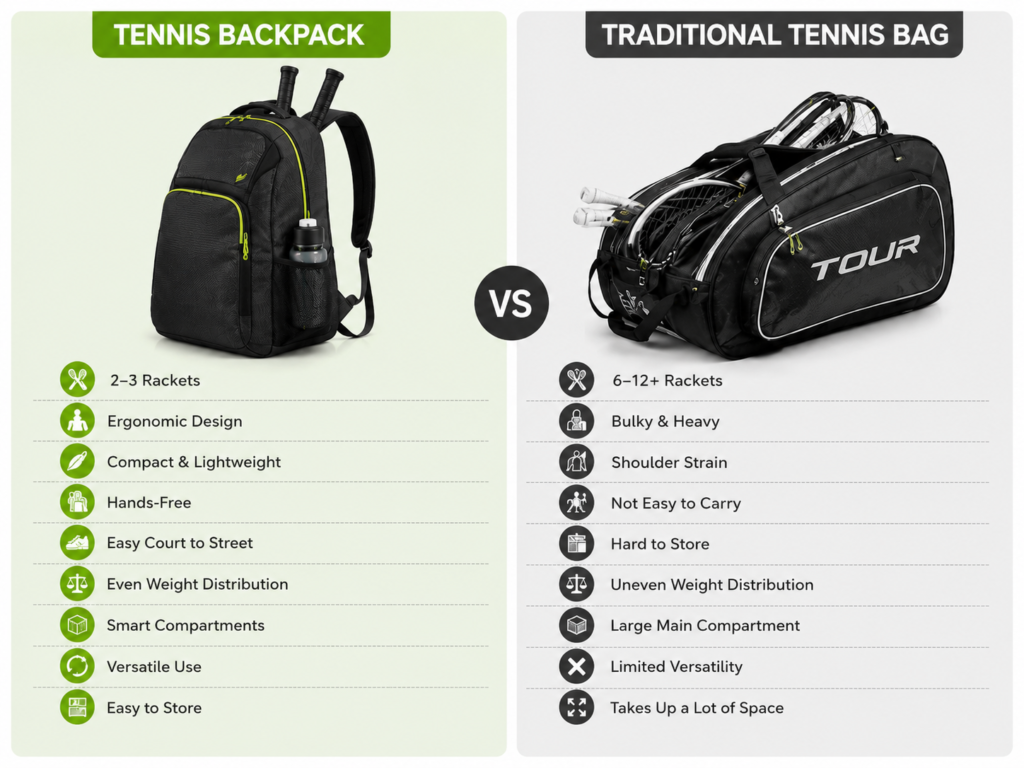
Although both products carry tennis equipment, they are built for completely different player lifestyles.
A tennis backpack focuses mainly on portability and flexibility. These bags are compact, lightweight, and easier to carry during commuting, school training, gym sessions, or casual club play. Most players using backpacks typically carry one or two rackets together with smaller accessories and personal items.
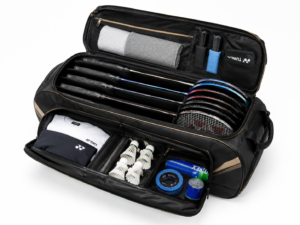
Traditional tennis bags, often called racket bags or tournament bags, are designed around storage organization and equipment protection. These bags are made for players who regularly carry multiple rackets, backup equipment, shoes, towels, clothing changes, and tournament accessories.
Quick Comparison
| Feature | Tennis Backpack | Traditional Tennis Bag |
|---|---|---|
| Best For | Casual & commuter players | Tournament & advanced players |
| Racket Capacity | 1–2 rackets | 3–12 rackets |
| Portability | Excellent | Moderate |
| Storage Organization | Basic to moderate | Advanced |
| Thermal Protection | Sometimes included | Common |
| Shoe Storage | Compact | Dedicated compartments |
| Travel Use | Daily commuting | Tournament travel |
The difference is not simply about size. It is about how the bag supports the player’s actual training routine and travel habits.
Which Option Works Better for Different Types of Players?
The best tennis bag depends heavily on how often you play and how much equipment you carry.
Casual & Recreational Players
For recreational players, tennis backpacks are usually the more practical choice. Most casual players carry basic gear only — one racket, a towel, water bottle, and small accessories. Large tournament bags often feel oversized and inconvenient for simple practice sessions.
Modern tennis backpacks also work well for players balancing sports with school, work, or commuting. Many now include laptop sleeves, charging pockets, and travel-friendly layouts, making them more versatile for daily use.
Club & Intermediate Players
Club-level players often sit somewhere between casual and competitive use. Once players begin carrying backup rackets, extra shoes, towels, and training accessories, compact backpacks may start feeling too limited.
This is where 3-pack and 6-pack tennis bags become more practical. They offer better organization without becoming excessively large or uncomfortable.
Tournament & Competitive Players
Tournament players usually require much larger storage systems. Long tournament days often involve multiple rackets, clothing changes, shoes, recovery tools, towels, nutrition supplies, and electronics.
For these players, larger racket bags provide several major advantages:
- Better racket protection
- Faster gear organization
- Dedicated shoe storage
- Wet and dry separation
- Thermal compartments
- Improved travel efficiency
Serious players usually prioritize organization and protection over lightweight portability.
Why Storage Layout Matters More Than Most Players Realize
Storage layout has a direct impact on convenience during real-world use. Many players focus heavily on appearance while ignoring how equipment is actually organized inside the bag.
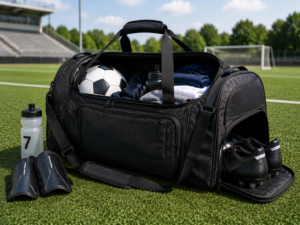
Poor organization quickly becomes frustrating. Shoes transfer dirt into clean clothing. Wet towels spread moisture across grips and accessories. Small items constantly disappear during practice or tournaments.
This is why premium tennis bags increasingly focus on intelligent storage design instead of simple racket capacity alone.
Features That Improve Daily Use
Dedicated Shoe Compartments
Tennis shoes collect sweat, dust, clay, and moisture very quickly. Without separation, the entire bag becomes harder to keep clean and organized.
Wet & Dry Separation
After long training sessions, sweaty clothing and damp towels create moisture inside the bag. Better compartment separation improves hygiene and organization.
Accessory Organization
Modern players carry much more than rackets alone. Grips, strings, phones, chargers, keys, tape, wallets, and snacks all require organized storage for easy access.
Good organization reduces stress during tournaments and practice sessions.
Why Waterproof and Thermal Protection Matter in Modern Tennis Bags
Many players only realize the importance of waterproof protection after equipment gets damaged during travel or bad weather.
Outdoor tournaments regularly expose tennis bags to rain, moisture, humidity, and wet court surfaces. Without proper protection, grips become damp, towels stay wet, and electronics may become damaged.
Modern waterproof tennis bags often use waterproof fabrics, reinforced seam construction, moisture-resistant lining materials, and higher-quality zipper systems to improve weather protection during outdoor use.
Thermal protection has also become increasingly important. Inside parked cars or outdoor tournament areas, temperatures rise extremely quickly. Excessive heat gradually affects string tension, grip texture, and racket consistency.
Thermal racket compartments use insulated lining materials to reduce temperature fluctuation inside the bag. Serious players increasingly consider this feature essential during tournament travel and summer training.
As sports equipment becomes more advanced and expensive, players expect higher protection standards from modern tennis bags. Waterproof construction and thermal protection are now commonly included in many premium and custom tennis bag designs.
Material Quality and Construction Make a Huge Difference
Two tennis bags may look very similar online while performing completely differently after several months of regular use. Material quality and construction standards directly affect durability, comfort, waterproof performance, and long-term reliability.
Common Tennis Bag Materials
| Material | Main Advantage | Best Use |
|---|---|---|
| Polyester | Lightweight & affordable | Everyday sports bags |
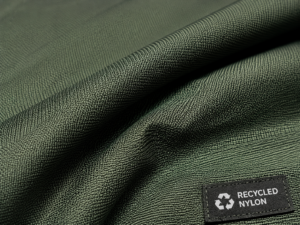
| Nylon | Better durability | Premium sports bags |
| TPU-Coated Fabric | Waterproof protection | Professional waterproof bags |
Polyester remains extremely common because it balances affordability and lightweight performance well. However, lower-grade polyester often wears faster during heavy tournament use.
Premium bags increasingly use nylon or TPU-coated materials because they provide stronger abrasion resistance, better waterproof protection, and improved long-term durability.
Construction Details That Matter
Experienced buyers and sports brands usually pay close attention to:
- Reinforced stitching
- Load-bearing shoulder straps
- Waterproof zipper quality
- Material thickness
- Handle reinforcement
- Internal lining durability
These details directly affect long-term user experience far more than appearance alone.
How to Choose the Right Tennis Bag for Your Playing Style
Choosing the right tennis bag depends mostly on your actual playing routine rather than simply buying the largest option available.
Choose a Tennis Backpack If:
- You play casually
- You commute frequently
- You carry only 1–2 rackets
- You prefer lightweight portability
- You want a more versatile daily-use bag
Choose a Traditional Tennis Bag If:
- You train several times weekly
- You compete regularly
- You carry multiple rackets
- You need better organization
- You travel for tournaments
The best bag is not necessarily the most expensive one. It is the bag that best matches your training habits, storage needs, comfort preferences, and travel routine.
Conclusion
The difference between a tennis backpack and a traditional tennis bag goes far beyond simple storage capacity. Both options are designed for different player lifestyles, equipment needs, and travel habits.
For casual players and commuters, tennis backpacks often provide the best balance of portability, convenience, and lightweight comfort. For tournament athletes and serious competitors, larger racket bags deliver better organization, waterproof protection, thermal storage, and long-term equipment safety.
Modern tennis bags now play a much bigger role in travel efficiency and equipment protection than many players realize. Storage layout, waterproof construction, zipper durability, ergonomic carrying systems, and material quality all directly affect long-term user experience.
High-quality custom tennis bags with professional waterproof construction, thermal protection, ergonomic organization systems, and durable materials can significantly improve both product performance and player satisfaction.